The most profound shift in safari luxury is happening in the economics of who benefits when you book. A new generation of lodges has moved beyond minimizing harm to actively reversing it, embedding regenerative impact into every operational system so that a guest's presence funds wildlife protection, restores degraded land, and strengthens the communities that have always been the true custodians of Africa's wilderness.
RHINO RIDGE SAFARI LODGE
- Why This Lodge is Unmissable: Rhino Ridge Safari Lodge is owned by the surrounding Zulu community: genuine stewardship rather than performative philanthropy. Every night you spend here translates directly into funded anti-poaching patrols, operational schools, and accessible healthcare for the families whose land this has always been. It is a Fair Trade Tourism‑certified lodge in KwaZulu‑Natal and one of the few properties in southern Africa where a biophilic design philosophy extends beyond aesthetics into genuine ecological accountability. A 186-panel solar farm delivers 60% of the lodge's energy needs, while an active spekboom plantation works continuously to offset carbon emissions.
- A Journey Through History: The guides who lead your game drives understand this landscape with an intimacy earned over lifetimes, their knowledge rooted in generational connection. Community is key, with certain village members owning 50% of the lodge, a distinction that is prevalent in hospitality and your experience. Staff share stories of ancestral connection to the land, offering a perspective and particular authority of proud family heritage. That same principle of provenance extends to the kitchen, where ingredients arrive from within 120 miles of the lodge, the surrounding land nourishing the table just as it has nourished the community for generations.
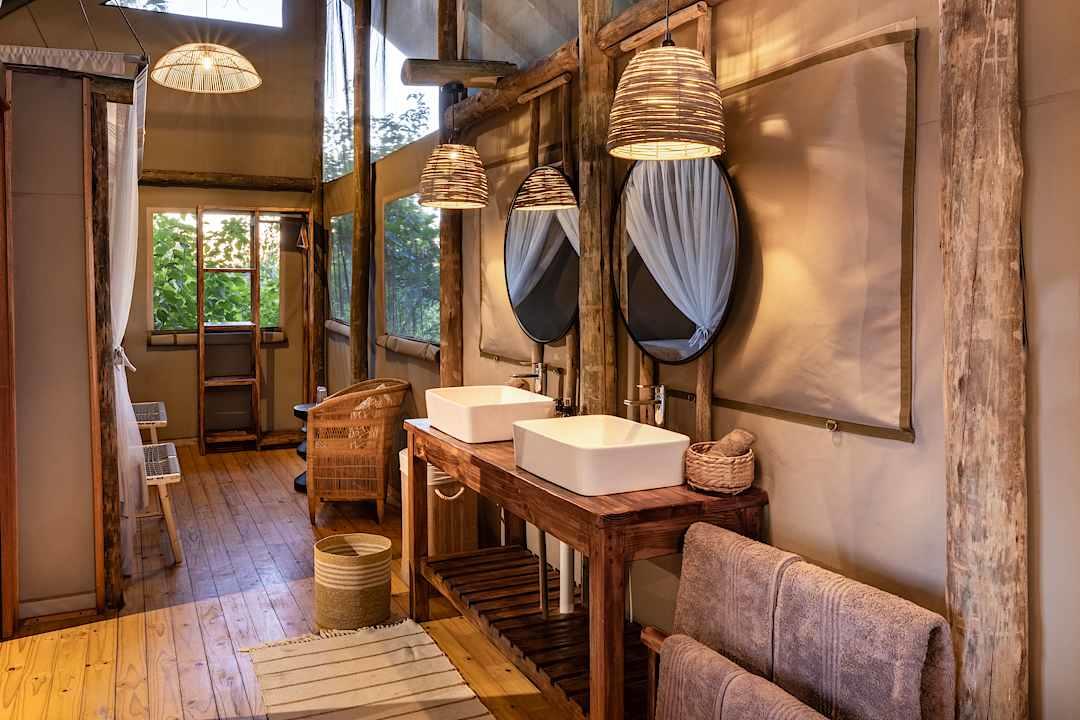
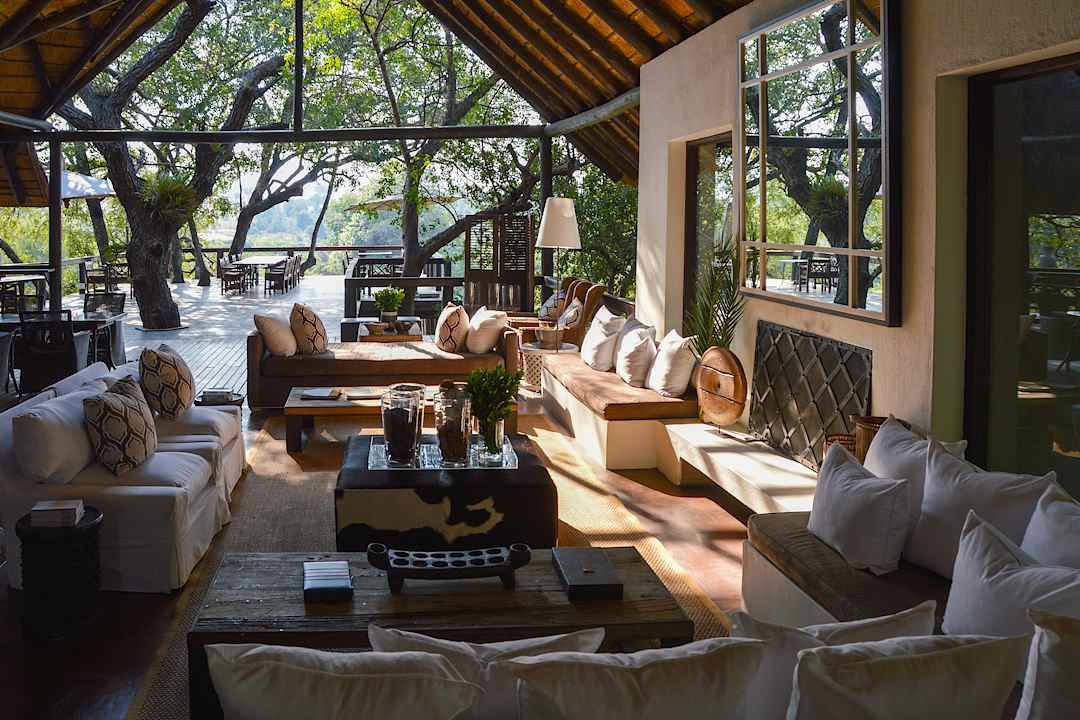
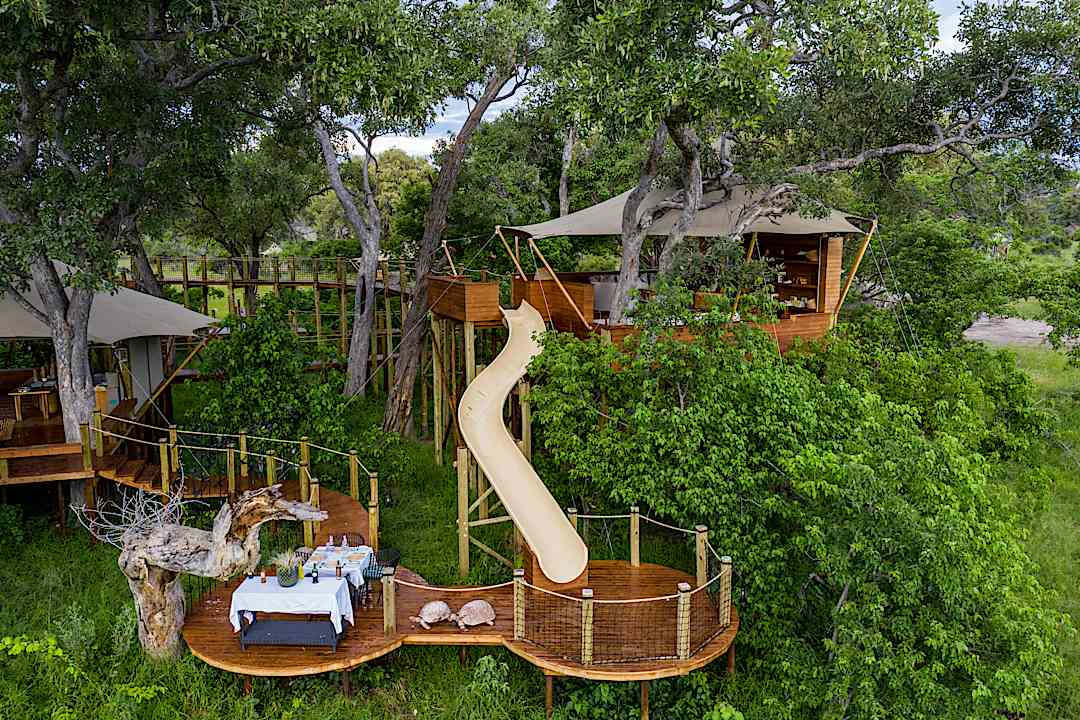
- What to Expect: The suites sit on raised platforms among indigenous forest, elevated above the forest floor so root systems, wildlife corridors, and undergrowth remain completely undisturbed beneath you. A construction of thatch, reeds, and locally sourced wood combines with natural ventilation to create a closed-loop relationship between the architecture and its environment. Warm air moves through open-weave thatch while the forest scent, damp earth, wild ficus, and birdsong fill the suite at every hour. You sleep suspended among the canopy, the forest moving around you, the absence of intrusive infrastructure, a precise and considered choice made by architects and conservationists working toward the same goal.
Where to Enjoy Your Visit
- The Elevated Suites: Suites built on raised platforms above the indigenous forest floor, constructed from thatch, reeds, and locally sourced wood, where natural ventilation replaces air conditioning and the canopy moves at eye level around you.
- The Forest Walkways: A network of elevated pathways connecting the suites to the rest of the lodge, suspended above the forest floor so the ecosystem beneath continues to function undisturbed. Walking between spaces becomes an act of observation, with undergrowth, birdlife, and the forest's movement visible below and around you at every step.
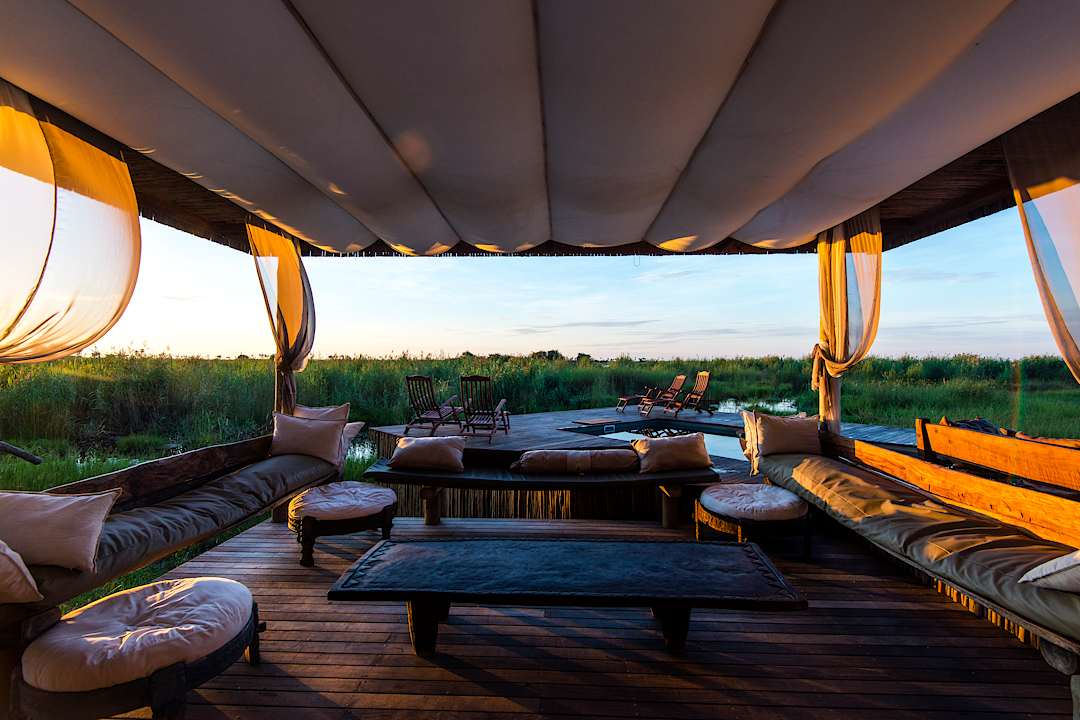
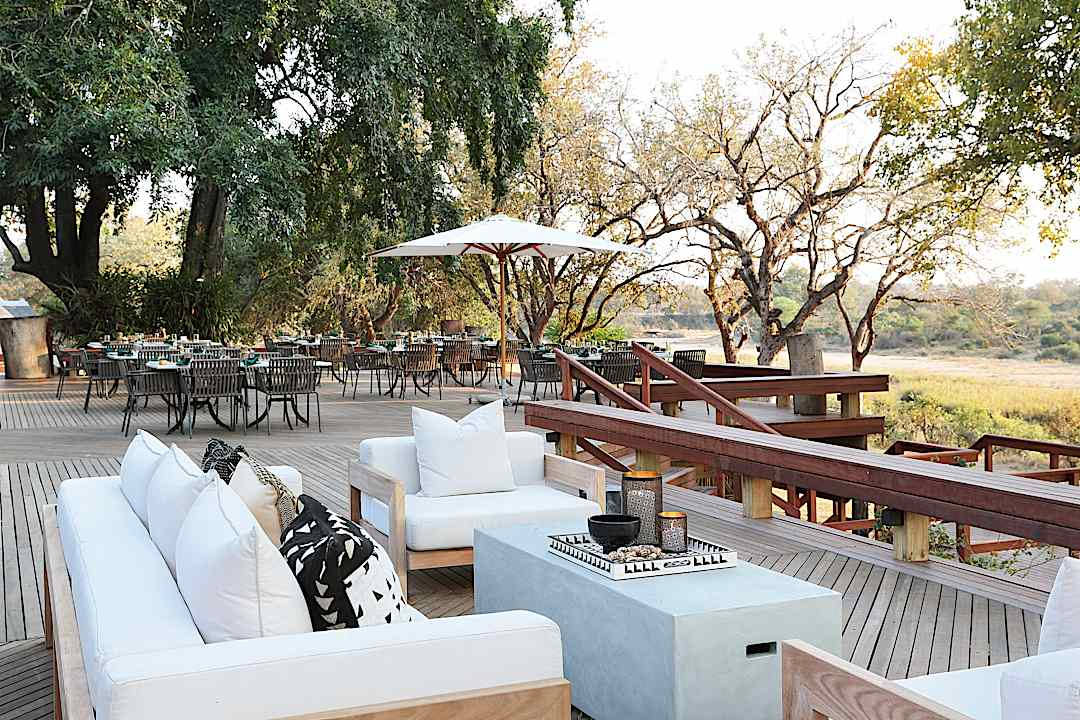
- The Waterhole Viewing Deck: An open deck positioned to overlook one of the reserve's active waterholes, where the ebb and flow of wildlife arrivals and departures replaces any structured itinerary.
Booking: Request a suite with views toward the reserve's natural waterholes. Book eight to 12 months ahead for peak season (June-October). Specify interest in walking safaris when reserving, as this unlocks conservation depth that goes well beyond a standard game drive.
EMBOO NEW GENERATION CAMP
- Why This Lodge is Unmissable: Emboo New Generation Camp is Kenya's first fully solar-powered camp, operating with a complete fleet of electric safari vehicles, zero generators, and zero diesel. A certified B Corporation and the first camp in the Maasai Mara to achieve closed-loop infrastructure, where energy, water, and waste cycles integrate completely, making it a carbon‑neutral and, in practice, often carbon‑negative operation. Every aspect of the camp, from 24/7 solar power to vertical hydroponic gardens producing a farm-to-table dining experience, demonstrates what happens when innovation drives an entire operation from the ground up. A stay here is a proof of concept: evidence that luxury and genuine accountability are symbiotic.
- A Journey Through History: Emboo's location within the northern corridor of the Serengeti-Mara system places guests at the center of one of the largest movements of wildlife on Earth, a deliberate positioning designed to immerse rather than observe. The Maasai Mara carries a deep and layered history of conservation, community, and contested land use. A stay at Emboo connects you to that complexity through guides who understand the reserve as a living system with its own continuity and its own demands.
- What to Expect: Eight luxury tented suites sit within indigenous forest overlooking the Talek River, positioned along one of the reserve's most active wildlife corridors. Silent electric Land Rovers transform the bush entirely: without diesel rumble, the soundscape opens in ways combustion engines permanently foreclose. You hear the crunch of dry grass compressing under a lion's paw, the low-frequency rumble of elephant communication felt as much as heard, a subsonic language passing between family members feet from your vehicle. At dusk, as the vehicles glide back through golden grass, the only sounds are the guinea fowls’ clatter and the deep, resonant call of a fish eagle carrying across the river. A vertical hydroponic garden produces ingredients steps from your table, eliminating food miles entirely and uninterrupted nights, free from generator hum, mean the sounds of the Mara arrive unfiltered.
Where to Enjoy Your Visit
- The Hydroponic Garden: A vertical growing installation steps from the camp's dining space, where the ingredients for each meal are cultivated without soil or an external supply chain. A short walk connects your dining experience directly to a closed-loop food-production system operating in real time.
- The Electric Vehicle Depot: Visit before your morning drive and a guide can walk you through the vehicle's mechanics and explain precisely how Maasai Mara sunlight is converted into a zero-emission safari experience. It is the one place in the camp where Emboo's entire technological philosophy is visible in a single space, the absence of diesel canisters and exhaust fumes making the argument for silent safaris more convincing.
- The Talek River Deck: An open-air gathering space cantilevered above the Talek River, where sundowners and meals place you directly above one of the reserve's most active wildlife corridors. The deck is the camp's communal anchor, where the biophilic design principle of dissolving the boundary between shelter and landscape is felt most immediately.
Booking: Request a suite with a direct view over the Talek River. Book 10 to 12 months ahead for peak migration season (July-October). Specify interest in the camp's closed-loop systems and electric-vehicle program when reserving.
GORILLA FOREST LODGE
- Why This Lodge is Unmissable: One of the only luxury properties situated within Bwindi Impenetrable National Park itself, Gorilla Forest Lodge offers a unique form of proximity. Spend your nights sleeping inside the UNESCO World Heritage Site, within the living habitat of nearly half the world's remaining mountain gorillas. Its construction was permitted only after proving its regenerative impact and every choice since has carried the same justification. A stay directly supports local conservation and community projects through A&K Philanthropy, with revenue flowing to the artisans whose traditional Ugandan building methods are embedded into every material detail of the lodge.
- A Journey Through History: Bwindi Impenetrable Forest is one of Africa's oldest and most biodiverse ecosystems, a primordial landscape largely unchanged for more than 25,000 years and now the last viable stronghold for the mountain gorilla. The species' recovery from the edge of extinction is one of conservation's most closely watched narratives, a story still being written, with Bwindi at its center. Traditional Ugandan craftsmanship embedded throughout the lodge connects you to a cultural lineage that predates every conservation designation surrounding it, the artisans whose techniques shaped the interiors belonging to the same community whose future is bound to the forest's survival.
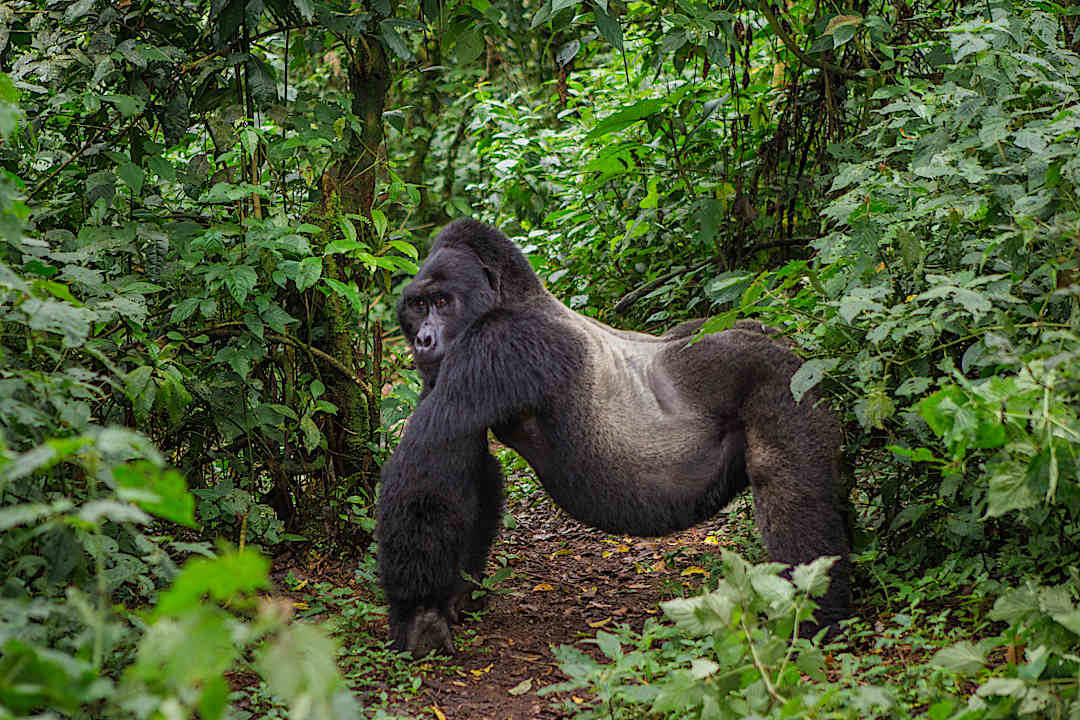
- What to Expect: Villas of local timber and organic texture sit within the forest canopy, their biophilic design making them invisible to the gorilla families moving through the surrounding habitat, invisibility here being an operational necessity rather than an aesthetic choice. Open louvers draw in cool, humid air carrying wild ginger and the soft percussion of rain on dense leaf cover. A private terrace places you fully inside the Bwindi ecosystem, unmediated. The proximity is the defining distinction. Trekking from within the forest you are funding transforms the encounter from observation into participation, the mountain gorilla moving through its habitat and yours simultaneously.
Where to Enjoy Your Visit
- The Private Terrace: Each villa's terrace places you directly within the Bwindi canopy, with no managed garden or landscaped buffer between you and the forest. This is the lodge's quietest and most consistently rewarding space, where the density, sound, and movement of an ancient ecosystem become the entire experience.
- The Gorilla-Trekking Departure Point: The starting point for an encounter that redefines what a wildlife experience can mean. Guides brief you on the mountain gorilla's conservation status, the specific family group you are tracking, and the direct connection between your booking and the funding that keeps them in this habitat. The trek begins as an excursion and arrives as something considerably more significant.
- The Craft and Community Space: A dedicated space where the traditional Ugandan craftsmanship embedded throughout the architecture is given context, where the artisans, the techniques, and the community relationships behind every material detail are made visible. For a traveler seeking genuine provenance of place, this is where the full accountability of a stay at Gorilla Forest Lodge becomes tangible and specific.
Booking: Request a villa with a direct forest-facing terrace. Book 12 months or more ahead as gorilla-trekking permits are issued in strictly limited numbers and represent the most constrained availability in East African conservation travel. Specify interest in the community craft program and A&K Philanthropy partnerships when reserving.
SINGITA KWITONDA LODGE
- Why This Lodge is Unmissable: Set on 178 acres at the edge of Volcanoes National Park in Rwanda, Singita Kwitonda Lodge offers eight contemporary suites and a four-bedroom villa, each built around a single measurable goal: expanding the mountain gorilla's viable habitat. An on-site nursery has produced over 60,000 tree saplings planted around the lodge, actively extending the range of the gorilla population. Gorilla trekking here is categorically different from a proximity experience: this is a lodge whose presence is making the gorilla's world physically larger. Locally sourced materials and a deliberate program of community engagement ensure revenue flows directly to regional artisans and workers.
- A Journey Through History: Volcanoes National Park carries one of conservation's most emotionally charged narratives: the mountain gorilla's slow recovery from near extinction. Rwanda's relationship with its gorilla population has evolved into genuine regenerative stewardship, and Singita Kwitonda sits at the current edge of that evolution, its reforestation program representing the transition from protecting what remains to actively recovering what was lost. The woven ceilings and hand-fired terracotta brickwork throughout the lodge continue a craft lineage whose practitioners are part of the same conservation economy the lodge is designed to sustain.
- What to Expect: Suites finished with woven ceilings and hand-fired terracotta brickwork sit at the edge of one of the last places on Earth where a mountain gorilla encounter is possible. Run a hand across the terracotta and feel the texture of a tradition centuries deep. The air at altitude is sharp and clear; in the early morning, mist rolls in from the volcanic peaks carrying the mineral coolness of high-altitude forest. Farm-to-table dining draws on ingredients grown in the on-site garden, the same soil the lodge's reforestation program is actively expanding for gorilla habitat. Your breakfast grows in the ground that directly extends its range. On trek, guides point to reforested corridors visible from the trail: new habitat, measurably created, the gorilla's future range made larger by your stay.
Gorilla trekking from Singita Kwitonda operates at a different register from a standard permit experience. Guides connect every element of the trek to the funded outcomes your booking is directly supporting: the vegetation density, the gorilla family's ranging patterns, and the reforested corridors visible from the trail.
Where to Enjoy Your Visit
- The Artisan Suites: Rooms finished with hand-fired terracotta brickwork and woven ceilings, each element produced by a local craftsperson whose skills are embedded in the lodge's conservation economy. The suites sit at the boundary of Volcanoes National Park, where every surface makes the connection between the built environment and the surrounding landscape immediate and specific.
- The Akarabo Nursery and Garden: The lodge's on-site nursery and vegetable garden is simultaneously a food-production system and a habitat-expansion program. Over 60,000 saplings have been propagated here for reforestation planting, while the garden produces the ingredients that arrive at your table steps away. A visit to this space makes the closed-loop relationship between dining, soil stewardship, and gorilla range expansion visible and tangible.
- The Volcanoes National Park Trekking Trail: The departure point for an encounter that carries the full weight of what Singita Kwitonda has been designed to deliver. Guides use the trail as a living classroom, pointing to reforested corridors, explaining ranging behavior, and connecting the landscape around you to the specific conservation outcomes your stay is funding.
Booking: Request a suite with a direct outlook toward the volcanoes. Book 12 months or more ahead; gorilla-trekking permits in Rwanda are issued in strictly limited numbers. Specify interest in the Akarabo Nursery program and the lodge's reforestation outcomes when reserving.