Top 9 Things to Do in Europe with Family

Mother and daughter overlooking Rome

Rome, Italy

The top things to do in Europe with family are best enjoyed when they are sequenced correctly. They are destined to fail if you visit a Roman ruin at midday when your five-year-old is already melting down or pick a beach day because of a postcard instead of a tide chart. The experiences on this list have been chosen because they can be woven into a single itinerary rather than visited as isolated stops and because each one holds up to the practical test a family trip requires: will this still be enjoyable in hour three with children who didn't choose to be here?

That sequencing problem compounds across ages. An eight-year-old and a 15-year-old rarely want the same 40 minutes inside a museum and a destination that reads as effortless for one age group can be a battle for another. A hands-on mosaic workshop holds a 10-year-old's attention in a way a guided lecture won’t, while a coastal town with tide pools works for a toddler in a way a formal garden doesn't. Matching the activity to the actual children on the trip, not a generic "family-friendly" label, is most of what separates a trip that goes smoothly from one that doesn't.

Extraordinary travel begins with a human touch and our destination specialists design every journey with meticulous care and attention to detail. A Zicasso travel expert with a family itinerary builds the trip around your children's ages, attention spans, and interests, then handles the logistics that would otherwise fall to a parent mid-vacation. Because no two families move at the same pace, the experiences below can become a slower, culture-and-cuisine week for one family and a faster, castle-and-coastline circuit for another.

1. Bring History to Life on Tours of Ancient Sites

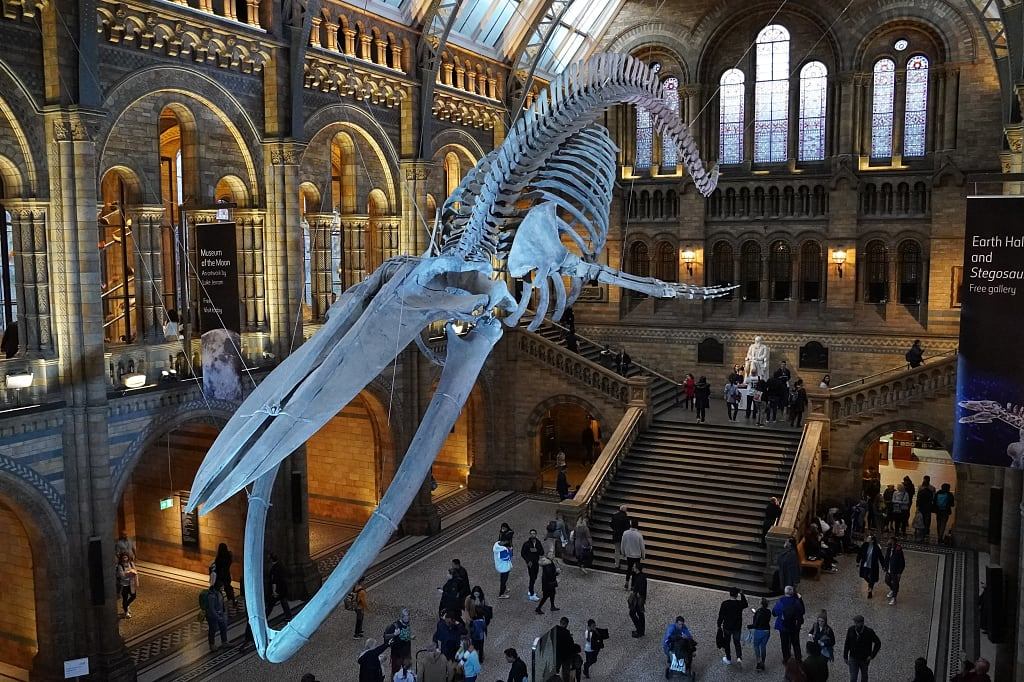
Natural History Museum in London
London, England

A textbook can tell a child that Rome had an empire, but standing in the Colosseum's underground passages, where gladiators and animals waited before being hauled up into daylight, turns an abstract fact into a physical space a child can walk through and imagine occupying. That difference, between being told about the past and standing inside it, is what makes ancient sites work for family travel. The history isn't performed for children; it's simply still there, unresponsive to whether anyone finds it entertaining.

The sites that work best for families aren't necessarily the most famous ones, but those where a private guide can translate ruins into a story pitched at a specific child's age. It’s the difference between a 40-minute lecture on Roman engineering and a 20-minute account of what a gladiator ate for breakfast.

What to Expect

  • Colosseum underground: A private, behind-the-scenes access tour descends into the hypogeum, the underground network where gladiators and animals waited before being raised into the arena above.
  • Pompeii's frozen city: Petrified bread ovens, wheel-rutted stone streets, and preserved plaster casts give children a startlingly literal sense of a single afternoon frozen in time.
  • Acropolis early climb: A pre-opening private visit reaches the Parthenon before the heat and crowds arrive, leaving room for a guide to answer the questions that come up mid-walk rather than rushing past them.
  • Ephesus marble avenue: Walking the same marble street Roman citizens once used, past a still-standing library facade, makes an ancient city feel inhabited rather than roped off.
  • Mosaic workshop session: A hands-on session with a local artisan, piecing together tesserae the way Roman craftsmen did, turns passive sightseeing into something a child made with their hands.

Where to Enjoy Your Visit

  • Rome: The Colosseum, Roman Forum, and Palatine Hill anchor a single, walkable ancient core suited to a family's first full day of ruins.
  • Naples and Pompeii: A day trip from Naples reaches Pompeii's preserved streets, with the National Archaeological Museum's artifact collection as a natural pairing.
  • Athens: The Acropolis and its museum sit within walking distance of the Plaka neighborhood's shaded cafés, which is useful for a mid-visit break.
  • Ephesus: Accessible from Kusadasi or Izmir, this is Turkey's best-preserved ancient city and a strong pairing with an Aegean coastal stay.
  • London: The British Museum's Rosetta Stone and Parthenon Marbles galleries offer an indoor, weather-proof way to extend the ancient history thread.

To explore further, browse Zicasso's Europe travel guide for region-by-region planning support.

2. Match the Right Mediterranean Beach to the Right Age

Carcavelos Beach in Portugal
Lisbon, Portugal

Not every beach that photographs well is one a family should book. A three-year-old needs a shelving, shallow entry, and calm water more than scenery; a restless teenager needs snorkeling, paddleboards, or a beach club with something to do between swims. Treating "Mediterranean beach" as a single category is where a lot of family trips go wrong, since the wrong match doesn't ruin a day so much as quietly waste it.

The difference is logistical as much as scenic: a private guide who knows which cove has a lifeguard and a gentle slope and which one is better suited to older kids who can handle a rockier entry changes the actual experience far more than which country the beach is in.

What to Expect

  • Navagio cove landing: A boat trip to Zakynthos's Shipwreck Beach, reachable only by water, turns the arrival itself into part of the excitement for older kids.
  • Elafonisi shallow lagoon: Crete's pink-sand lagoon stays shallow far out from shore, making it one of the more manageable options for toddlers and nervous swimmers.
  • Cala Macarelleta cove: A quieter Menorcan cove with calm, clear water suits families who want swimming without a beach club's crowds.
  • Algarve tide pools: Portugal's Algarve coastline includes rock pools at low tide that turn an afternoon into a small marine biology lesson for curious kids.
  • Amalfi private cabana: A reserved beach club spot in Positano solves the practical problem of towels, shade, and lunch without a family having to manage it themselves.

Where to Enjoy Your Visit

  • Zakynthos: Navagio Beach and the Blue Caves anchor this Ionian island's family appeal.
  • Crete: Elafonisi in the southwest pairs well with Chania's old town for a beach-and-culture split.
  • Menorca: Quieter than Mallorca or Ibiza, its coves suit families who want a slower pace.
  • The Algarve: Lagos and Albufeira offer a mix of family-friendly accommodations, with scenery and beach access via private boat or cabana.

For a closer comparison of specific coastlines, explore Zicasso's guide to the Best Beaches in the Mediterranean.

3. Turn Art Museums Into Interactive Discovery, Not a Silent Walkthrough

Sculptures at Rijksmuseumin in Amsterdam
Amsterdam, Netherlands

Most children's resistance to art museums isn't about the art, but the format: a silent, slow walk past objects they're told not to touch, with no clear task to complete. Reframe the museum as a scavenger hunt or a hands-on studio session instead of a guided lecture and the resistance mostly disappears because the child now has something to do rather than endure.

The cities that reward this approach most are the ones where a private guide or workshop host can build that structure in advance: a specific list of paintings to find, a mosaic or ceramics class booked for after the galleries, or a route timed to avoid the exhibit's most crowded hour.

What to Expect

  • Rijksmuseum scavenger hunt: A guide-led search for specific details hidden in Dutch Golden Age paintings turns Amsterdam's largest museum into a game rather than a march.
  • Barcelona mosaic class: A hands-on trencadís tile workshop, in the same broken-ceramic technique Gaudí used at Park Güell, lets kids build something rather than only observe it.
  • Vatican Museums early entry: A pre-opening private tour reaches the Sistine Chapel before tour groups arrive, giving kids room to actually look up rather than shuffle through.
  • Louvre highlights route: A guide who curates a tight, 12-work path through the Louvre keeps the visit to an attention span kids can sustain rather than the full collection.
  • Athens pottery painting: A private ceramics session modeled on ancient Greek vase-painting techniques connects a gallery visit to something a child takes home.

Where to Enjoy Your Visit

  • Amsterdam: The Rijksmuseum and Van Gogh Museum sit within the same walkable museum quarter.
  • Barcelona: Park Güell and the Sagrada Família anchor a Gaudí-focused day, paired with a hands-on mosaic session.
  • Rome: The Vatican Museums and Sistine Chapel pair naturally with a morning at the Colosseum.
  • Paris: The Louvre and Musée d'Orsay offer contrasting collections, classical and Impressionist, within a short taxi ride of each other.
  • Athens: The Acropolis Museum's ground-floor galleries give context before a hands-on pottery class elsewhere in the city.

For more inspiration, see Zicasso’s Best Cities for Art Lovers in Europe.

4. Take to Europe's Trails at a Pace Built for Young Legs

Kids walking in the Alps in Austria
Alps of Austria

Hiking with children fails when the trail is chosen for the view instead of how much a seven-year-old can take before the complaining starts. A well-matched trail solves this by building in a destination partway through, be it a waterfall, a hut with hot chocolate, or a lake to skip stones on. This gives the walk a purpose beyond the summit.

Austria and Switzerland do this particularly well through a dense network of mountain huts and cable cars that let a family hike one direction and ride the other, which keeps a trail challenging without requiring a child to walk the whole thing twice.

What to Expect

  • Hallstatt salt mine hike: A gentle valley trail near this lakeside village ends at a working salt mine, giving the walk a concrete destination kids can look forward to.
  • Swiss cable-car loop: A cable car up and an easy trail down through alpine meadows means the tough climb is skipped and the reward, wildflowers, cowbells, mountain views, isn't.
  • Cinque Terre coastal path: A shorter stretch of Italy's famous cliffside trail between two villages ends with gelato and a swim, turning a hike into a full day's adventure.
  • Lake District pony trek: England's Lake District pairs walking trails with pony-trekking options for younger children who need a break from their feet.
  • Dolomites hut-to-hut: A single, well-timed leg of this alpine route stops at a rifugio serving speck and hot chocolate, a built-in incentive for the final stretch.

Where to Enjoy Your Visit

  • Hallstatt, Austria: This lakeside village pairs an easy valley trail with a salt mine tour and a boat ride across the lake.
  • Interlaken, Switzerland: A base for cable cars into the Jungfrau region, with trails suited to a range of ages and stamina levels.
  • Cinque Terre, Italy: Monterosso and Vernazza offer a manageable, shorter coastal walk between two of the five villages.
  • The Lake District, England: Ambleside and Windermere anchor a region built for gentler family walking and pony trekking.
  • The Dolomites, Italy: Cortina d'Ampezzo serves as a base for shorter, rifugio-linked trail sections.

For more on planning an active family trip, see Zicasso's guide to the Best Places to Hike in Europe.

5. Explore Castles and Palaces Without the Ticket-Line Meltdown

Neuschwanstein Castle in Germany
Bavaria, Germany

A castle visit is either a fairy tale come true or a logistics failure, and the difference usually comes down to a single decision made weeks ahead. Neuschwanstein alone can run a three- to four-hour ticket-office wait in peak season, which is an eternity for a child promised a fairy-tale castle and instead standing in a parking lot. A pre-booked or private entry doesn't just save time; it preserves the experience the trip was built around.

Beyond the logistics, castles do something for children that few other sites do: they make abstract historical concepts (kingship, siege warfare, court life) into something explorable, with turrets to climb and battlements to run along rather than only glass cases to look at.

What to Expect

  • Neuschwanstein early slot: A pre-booked morning entry reaches Bavaria's fairy-tale castle before tour buses arrive, turning a potential four-hour wait into near-solitude on the approach bridge.
  • Edinburgh Castle ramparts: Scotland's clifftop fortress lets kids walk the same battlements soldiers once defended, with cannons still in place along the wall.
  • Windsor changing of the guard: Timed to coincide with the ceremony, a visit to the world's largest inhabited castle pairs pageantry with rooms still in royal use today.
  • Chambord staircase race: France's double-helix staircase, long associated with a design credited to Leonardo da Vinci, lets two children climb at once without ever meeting mid-flight.
  • Bran Castle legend tour: A guide who leans into this Transylvanian castle's Dracula associations turns a history lesson into the kind of story kids remember.

Where to Enjoy Your Visit

  • Füssen, Germany: The base town for Neuschwanstein and neighboring Hohenschwangau Castle.
  • Edinburgh, Scotland: The castle anchors a walkable Old Town suited to a full family day.
  • Windsor, England: A short trip from London, easily paired with a day in the capital.
  • Loire Valley, France: Chambord and Chenonceau sit within a short drive of one another for a castle-focused day.
  • Bran, Romania: A day trip from Brasov, often paired with the walled city of Sighisoara.

Explore further with Zicasso's guide to Fairy-tale Destinations to Visit on Vacation and Best Castles to Visit in the United Kingdom.

6. Wander Grand Gardens Built for Discovery, Not Just Scenery

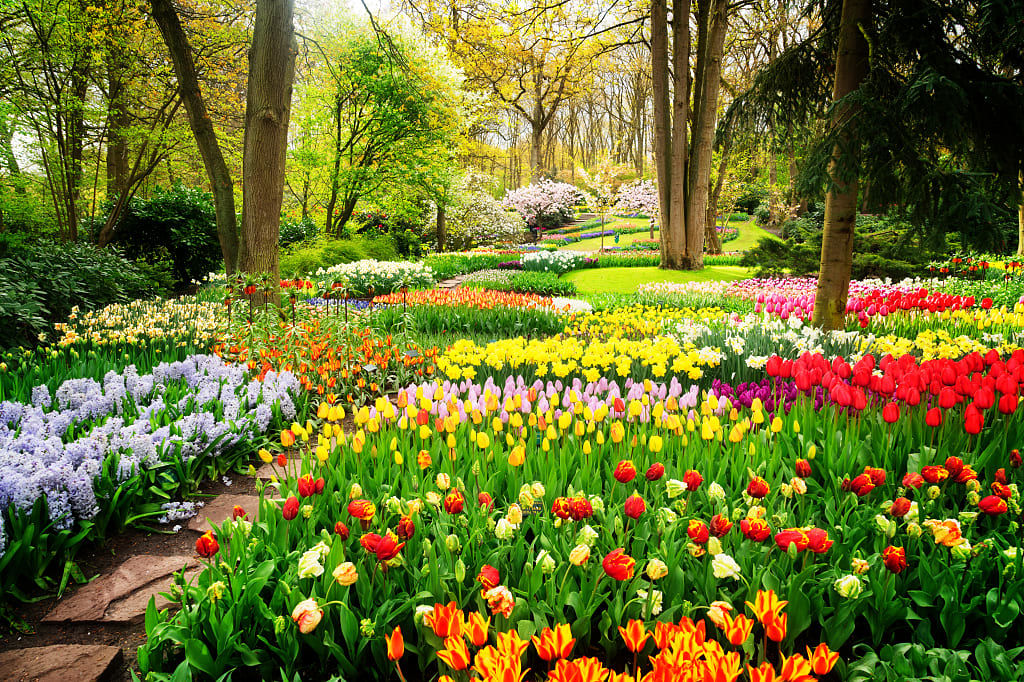
Beautiful and colorful garden in Netherlands
Keukenhof gardens, Lisse, Netherlands

A formal garden risks boring a child unless there's something to actively find inside it, like a maze with a real dead end, a hidden fountain, or a folly tucked behind a hedge row. The gardens that work best for families aren't necessarily the grandest, but the ones designed with enough spatial complexity that a child can get pleasantly, briefly lost.

That's a different criterion than a garden's historical pedigree, though the two often overlap: the same 17th- and 18th-century estates built to impress adult visitors with scale also, almost by accident, built in the twists and turnabouts that make a maze fun for a child three centuries later.

What to Expect

  • Versailles hedge maze remnants: Exploring the Gardens of Versailles's fountain groves and statuary gives kids a sense of scale that indoor palace rooms don't allow.
  • Hampton Court maze run: England's oldest surviving hedge maze, planted in the 17th century, still successfully gets first-time visitors lost.
  • Villa d'Este water games: Tivoli's Renaissance garden includes fountains rigged with hidden water jets, a feature designed centuries ago specifically to surprise and delight visitors.
  • Keukenhof tulip fields: The Netherlands' seasonal flower displays can turn a garden walk into a color-scavenger exercise for younger kids.
  • Sanssouci terraced vineyard: Potsdam's palace grounds descend in stepped vineyard terraces that make for a naturally playground-like walking route.

Where to Enjoy Your Visit

  • Versailles, France: A short trip from Paris, best visited with a private guide who can time the fountain shows.
  • London, England: Hampton Court Palace combines the maze with Tudor state rooms.
  • Tivoli, Italy: A day trip from Rome, often paired with nearby Hadrian's Villa.
  • Lisse, Netherlands: Keukenhof is seasonal, generally open only in spring, so timing the trip matters.
  • Potsdam, Germany: A short train ride from Berlin, easily combined into a single day.

See our Best Flower Shows in Europe for more details.

7. Cycle Europe's Family-Friendly Routes at Whatever Speed Works

kids biking in the Alps, Austria
Alps of Austria

Cycling gives restless kids something physical to do while still covering ground slowly enough to actually see a place rather than blurring past it from a car window. The routes that work best for families are flat, car-free, or built with a rest stop, a gelato shop, or a lakeside bench within a distance a child can reach.

The Netherlands does this most reliably through sheer density of dedicated cycling infrastructure, but a private guide matters everywhere else because they know which route has a bailout point if a child's legs give out halfway.

What to Expect

  • Amsterdam canal cycling: Flat, dedicated bike paths along the canals make this one of the most forgiving cities in Europe for a first family cycling day.
  • Loire Valley château loop: A gentle, mostly flat route links two or three châteaux, with vineyard stops that double as rest breaks.
  • Lake Constance shoreline ride: This route along the German-Swiss-Austrian border stays flat and scenic, with swimming stops built into the day.
  • Mallorca coastal path: A car-free coastal cycling route pairs sea views with frequent café stops for families needing regular breaks.
  • Danube bike trail segment: A short, flat stretch of this long-distance route passes vineyards and riverside villages without requiring the full multi-day commitment.

Where to Enjoy Your Visit

  • Amsterdam, Netherlands: The city's flat geography and bike infrastructure make it the easiest starting point for family cycling.
  • Loire Valley, France: Amboise and Blois anchor a manageable château-to-château ride.
  • Lake Constance, Germany/Switzerland/Austria: Lindau and Konstanz serve as good shoreline bases.
  • Mallorca, Spain: Alcúdia's coastal path suits families wanting sea views without steep climbs.
  • Wachau Valley, Austria: A short, flat segment of the Danube trail through vineyard-covered hills.

For more, see Zicasso's guide to the Best Cycling Destinations in Europe.

8. Step Into Storybook Villages Built Around Real History, Not Just Charm

Old streets of an Italian village
Old village in Italy

A village markets itself as "fairy tale" often enough that the phrase risks meaning nothing, but a handful of European towns earn it because their half-timbered houses, cobbled lanes, and hilltop settings are actual survivors of medieval times. This matters regarding how convincingly the "storybook" framing lands with a child old enough to ask whether it's real or recently constructed.

The best of these villages also give a family a reason to stay put for a half-day rather than snap a photo and move on. They might do this through a chocolate shop, a puppet workshop, or a town square built for wandering instead of driving through.

What to Expect

  • Rothenburg wall walk: Walking the intact medieval city walls of this Bavarian town lets kids look down into the storybook streets from above and through them.
  • Hallstatt lakeside wander: This Austrian village's pastel houses rising straight from the lake edge make for a slower, photograph-heavy afternoon.
  • Colmar canal district: Alsace's half-timbered "Little Venice" district pairs canal-side wandering with a strong regional pastry culture.
  • Bibury cottage lane: This Cotswolds village's honey-stone cottages line a single, short, deeply photogenic lane, manageable even for very young children.
  • Český Krumlov castle view: This Czech town's river bend and hilltop castle give kids a literal storybook silhouette to spot from multiple angles.

Where to Enjoy Your Visit

  • Rothenburg ob der Tauber, Germany: Best visited with time to walk the full wall circuit.
  • Hallstatt, Austria: Pairs naturally with the region's hiking and salt-mine activities.
  • Colmar, France: A short trip from Strasbourg, easily combined with a Christmas-market visit in season.
  • Bibury, England: A day trip from Oxford or the wider Cotswolds circuit.
  • Český Krumlov, Czech Republic: A short trip from Prague, often paired as a single overnight.

To explore further, see Zicasso’s customizable Introduction to Europe Tour: Netherlands, Germany, Italy, France.

9. Find Food Experiences That Turn Picky Eaters Into Curious Ones

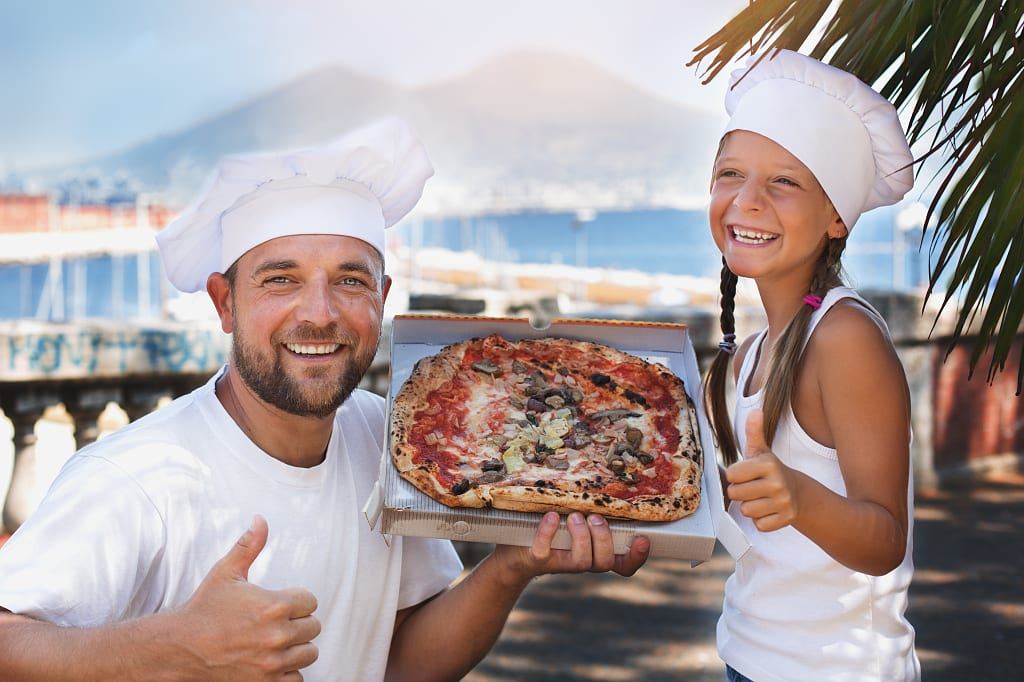
Pizza making class in Naples, Italy
Naples, Italy

A private cooking class gives a child ownership over the food before it's judged. A kid who rolled the pasta or shaped the chocolate is far more likely to taste it than one simply presented with an unfamiliar plate. This makes hands-on food experiences one of the more reliable ways to expand a picky eater's range without a fight.

The strongest food experiences for families tend to be the ones with a visible, physical process behind them rather than a tasting menu that asks a child to sit quietly and appreciate. For example, dough being shaped, chocolate being tempered, or cheese being pulled.

What to Expect

  • Bologna pasta class: A hands-on lesson shaping tortellini or tagliatelle from scratch turns pasta from a dinner item into something a child made themselves.
  • Belgian chocolate workshop: Tempering and molding chocolate in a working Belgian atelier gives kids a tangible, edible result to take pride in.
  • Provençal market morning: Shopping a local market alongside a chef before cooking the ingredients together connects a meal to where it actually came from.
  • Swiss cheese-making visit: A visit to an alpine dairy where kids can help stir the curd demystifies where cheese comes from in a way no store ever could.
  • Neapolitan pizza lesson: Learning to stretch dough and build a Margherita in the city that invented it gives kids a concrete skill alongside the meal.

Where to Enjoy Your Visit

  • Bologna, Italy: Considered by many Italians as the country's culinary capital, with cooking schools throughout the historic center.
  • Bruges, Belgium: Chocolate workshops sit within walking distance of the city's canal district.
  • Aix-en-Provence, France: A base for market visits paired with countryside cooking classes.
  • Gruyères, Switzerland: Home to working dairies alongside a well-preserved medieval town.
  • Naples, Italy: The birthplace of pizza, with hands-on classes available throughout the city.

To plan effortless, food-forward family days, explore Zicasso's Europe food and wine tours and vacations and the guide to the Best Food and Wine Destinations in Europe.

Plan Your Family Trip to Europe

Father and son exploring Milan
Milan, Italy

None of these experiences need to take place in isolation. A few days of ancient ruins in Rome connect naturally to a coastal stretch near Naples, a castle circuit through Bavaria sits a short train ride from alpine hiking and cycling, and a cooking class in Bologna pairs easily with a storybook detour through a nearby hill town. The routing, as well as matching each stop to what a specific child can sustain, is what turns a list of good ideas into a trip that holds together.

That's the role a Zicasso travel specialist plays for a family: not simply suggesting destinations, but sequencing them around age, stamina, and interest, then handling the entry times, private guides, and reservations quietly in the background so the trip stays enjoyable rather than becoming a source of stress. Explore Zicasso's family vacation guide for further planning support or begin building a custom itinerary with our European family vacations.

30,000+ Verified Traveler Reviews