The 3-City Problem: Why Rome, Florence, and Venice Need More Than Train Tickets

View of Rome at sunset, Italy.

View of Rome at sunset, Italy.

Every year, thousands of travelers plan their first trip to Italy the same way. They choose Rome, Florence, and Venice, book high-speed trains, reserve a hotel in each city, and assume the trip is solved. On paper, it looks effortless. The logistics are so straightforward that they create a false sense of confidence.

That is the problem. The challenge of this classic itinerary has never been getting from one city to the next, but understanding that each of them asks something different of you. Rome rewards range and momentum, Florence rewards focus and restraint, and Venice rewards patience and a willingness to give up control. Treat them as interchangeable stops connected by efficient rail and the trip becomes a sequence of arrivals and departures. Treat them as three different travel experiences and the itinerary starts to take shape for what it really is, one of pacing, not transportation.

Extraordinary travel begins with the human touch and our destination specialists design every journey with meticulous care and attention to detail. Your specialist builds a private, fully personalized route that sequences Rome, Florence, and Venice around your pace rather than a timetable, with access to people, ateliers, and vantage points most visitors never find on their own.

Getting the Order Right

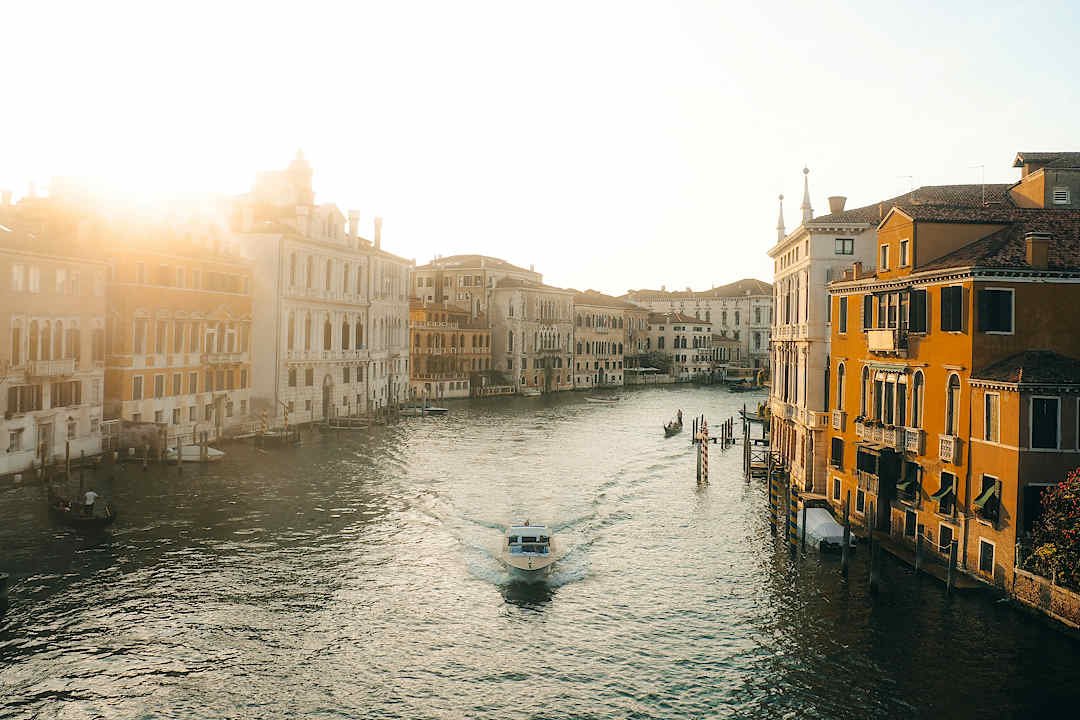
Canals in Venice, Italy.

The real question is not which train to book first, but how to distribute your time, attention, and energy across three cities that operate at a completely different pace. Travelers tend to think of Rome, Florence, and Venice as a tidy progression of famous places, but what they are really moving through is a progression of travel states. Rome is expansive and stimulating, Florence is concentrated and contemplative, and Venice is disorienting in the best possible way. If those states are arranged badly, the itinerary works against itself.

That is why sequence matters so much. Rome often works best first, when energy is highest and you can take full advantage of early-access mornings, long walking days, and dinners that stretch late into the evening. Florence usually follows well because it asks for less movement, more concentration, and the willingness to spend real time inside a museum, workshop, or chapel instead of chasing a checklist. Venice often belongs at the end, when the trip is ready to exhale. Its canals, slower navigation, and quieter tempo feel like a final shift into stillness, not another city to conquer.

The train journeys, whether 90 minutes or a little over two hours, are almost incidental once the sequencing is right. What matters is preserving the right energy for each stop. Front-load too much stimulation and Florence can feel like a city you are too tired to appreciate. Rush Florence to recover time and Venice becomes a beautiful place to collapse in rather than one to experience properly. A well-designed itinerary is not simply well connected. It is calibrated. A Zicasso travel specialist’s value lies in making that calibration personal.

Four nights in Rome, three in Florence, and three in Venice is one proven approach, but it is only a starting point. A family with young children may want to rebalance the trip around downtime and hands-on experiences, while a couple looking for quiet may choose to linger in Venice and compress Rome. Zicasso’s Best of Italy Tour: Rome, Florence, Tuscany and Venice reflects this kind of sequencing, treating transitions between cities as part of the experience.
Rome: Why the City Refuses to Be Rushed

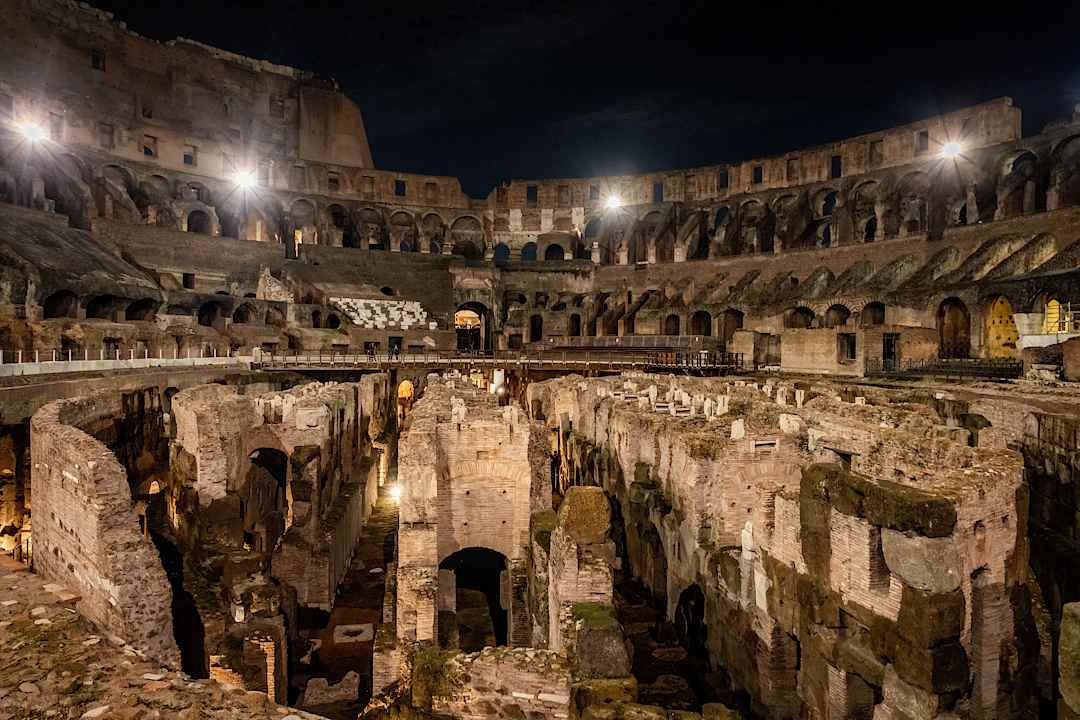
Colosseum night tour, Rome.

Rome's difficulty is its size, but also its density of eras. A single city block can hold a Republican-era wall, a Baroque church built directly over it, and a trattoria that's served the same family recipe since the 1940s. This gives you 3,000 years compressed into a quarter of a mile. That is why Rome rewards odd hours over long ones: the Forum at 7 am, before the tour groups arrive, is a place people once inhabited. The same ruins at noon, ringed by selfie sticks, are just a monument. A private guide walking that same ground before sunrise can point out where a Renaissance family looted marble from an imperial basilica to build their own palace three streets away. This creates a layered story that a rushed midday visit has no room for.

What to Expect:

  • Layered history: Ancient ruins, Renaissance palaces, and Baroque piazzas often sit within a single walkable radius, compressing centuries into an afternoon.
  • Early access matters: A private, before-hours entry to the Colosseum or Vatican Museums changes the experience entirely because you see the spaces, not the crowds surrounding them.
  • Long evenings: Roman dinners routinely start at 8.30 or later, with courses paced over two or three hours, not rushed between sights.
  • Neighborhood contrast: The formality of the historic center gives way quickly to the looser, louder energy of areas like Trastevere and Testaccio after dark.
  • Walking as transportation: Many of Rome's best moments happen between destinations, not at them. This could be a courtyard glimpsed mid-walk or a fountain with no name on any map.

Where to Enjoy Your Visit:

  • Trastevere at dusk: Narrow lanes fill with the smell of cacio e pepe and the sound of accordion players outside centuries-old churches.
  • Campo de' Fiori mornings: The daily market gives way to aperitivo hour by early evening, demonstrating how one piazza “lives” two lives.
  • The Appian Way: A private guide can walk you along the original Roman road, past catacombs most visitors never reach.
  • Monti's ateliers: Small leather and jewelry workshops tucked behind Via del Boschetto are largely untouched by mass tourism.
  • A private terrace at golden hour: Few views rival the city's rooftops turning amber as the light drops behind St. Peter's dome, a bottle of Frascati opened just as the bells at Trinità dei Monti start to ring.

Zicasso's Private Tour of Rome, Florence, and Venice builds this early-access, late-evening pacing into Rome from the outset. It doesn’t treat the city as a single, rushed day. Our Top Things to Do in Rome has more information.

Florence: Why Slowness is the Point

Galleria dell'Accademia, Florence.

Florence's problem is scale in reverse. The city is small enough to walk end to end in 20 minutes, which tricks travelers into believing they can see it in a day. It can't because the density isn't spread across the city; it's concentrated inside a handful of rooms. The Uffizi holds roughly 2,000 works across dozens of galleries and the Accademia's entire draw is one room built around a single statue.

Rushing that concentration erases the point of stopping at all, which is why so many people leave Florence with a blur of gallery hallways instead of a specific memory of the David's face or a single Botticelli panel. A specialist who times a private Uffizi morning around the museum's least-crowded hour lets a guide linger in the Botticelli room the way a scholar would rather than shepherding a group past it in 90 seconds.

What to Expect:

  • Compact but dense: Florence's historic center is walkable end to end in 20 minutes, yet holds enough art and architecture to fill days.
  • Timed entry realities: The Uffizi and Accademia require advance booking and a private specialist can secure entry windows that avoid the worst crowds.
  • Artisan traditions: Leatherworking, gold-beating, and bookbinding workshops still operate as they have for generations, many open to private visits.
  • A city built for pausing: Piazzale Michelangelo, the Boboli Gardens, and countless quiet courtyards reward travelers willing to simply sit.
  • Tuscany at the doorstep: Florence functions as a natural base for day trips into Chianti or San Gimignano without adding another hotel change.

Where to Enjoy Your Visit:

  • The Oltrarno district: Home to Florence's working artisan studios, a short walk from the tourist-heavy center, but a different world.
  • San Miniato al Monte at sunset: The church behind the classic panoramic view of the Duomo and the Arno, best enjoyed slowly rather than as a photo stop.
  • A private Uffizi morning: Before-hours access lets a specialist guide linger on individual rooms instead of shuffling past them.
  • Chianti vineyards: A half-day escape into the surrounding hills, often built around a slow-roast lunch where the winemaker walks the table through which hillside the herbs on the plate were foraged from that morning.
  • Santa Croce's quiet cloisters: Just steps from the crowded piazza, a genuinely calm space with centuries of history.

Zicasso's Highlights of Rome, Florence, and Venice Tour builds in this kind of unhurried Florence stay, giving each gallery and workshop room to breathe rather than compressing the city into a single, busy day. See our Best Places to Visit in Florence for more details.

Venice: Why the Water Sets the Schedule

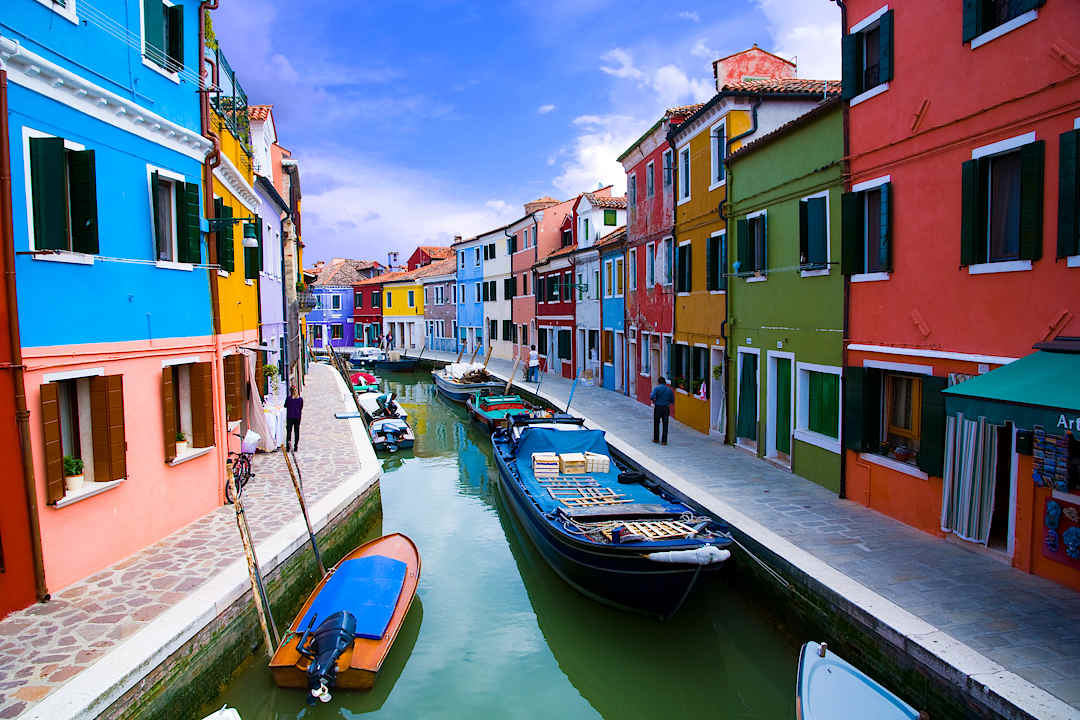
Colorful houses in Burano,  Venice.
Colorful houses in Burano, Venice.

No trains run inside Venice, which reorganizes everything about how the city should be visited. With streets that dead-end into canals, footbridges that only make sense once you've crossed them twice, and a layout with no grid to memorize, Venice punishes the instinct to navigate it like a normal city, Instead, it rewards the opposite, asking that you arrive expecting to get lost on purpose, whether on foot or by private boat, until the maze becomes the appeal rather than the obstacle. That disorientation is also what concentrates the crowds so unevenly. Most visitors, uncomfortable being lost, stay within sight of St. Mark's Square and the Rialto Bridge, which means an entire city's worth of quiet sestieri sits two or three streets away, largely untouched.

What to Expect:

  • No cars means a different perspective: Movement happens on foot or by water, which changes pacing and how a day should be structured.
  • Crowd concentration: Most visitors never leave the St. Mark's–Rialto corridor, leaving entire sestieri comparatively quiet.
  • Private water transport: A private boat transfer or Grand Canal tour offers a vantage point and pace no walking route can replicate.
  • The lagoon beyond Venice: Murano's glassblowers and Burano's lace-makers and painted houses sit a short boat ride away, each with its own distinct character.
  • Light and tide: Early morning and late evening bring a stillness to the canals that midday tourist traffic erases.

Where to Enjoy Your Visit:

  • Dorsoduro: A quieter sestiere favored by locals and art students, home to the Gallerie dell'Accademia without the Rialto crowds.
  • A private Doge's Palace tour: Private, guided access into the secret passageways and prison cells beyond the standard route.
  • Burano's canals: Brightly painted houses and centuries-old lace workshops, a deliberate contrast to Venice's grander scale.
  • Cannaregio at evening: The city's old Jewish quarter, largely residential, where wine bars fill with locals rather than tourists.
  • A sunrise Grand Canal ride: Before the day-trip crowds arrive by train, a private boatman can idle the engine near the Rialto fish market as vendors set out that morning's catch, the canal otherwise silent.

Zicasso's Rome, Florence, and Venice: Highlights and Hidden Treasures of Italy Tour is designed around private, water-based access that moves past the St. Mark's crowds into the city's quieter corners. See our Top Things to Do in Venice for further information.

Plan Your Rome-Florence-Venice Itinerary

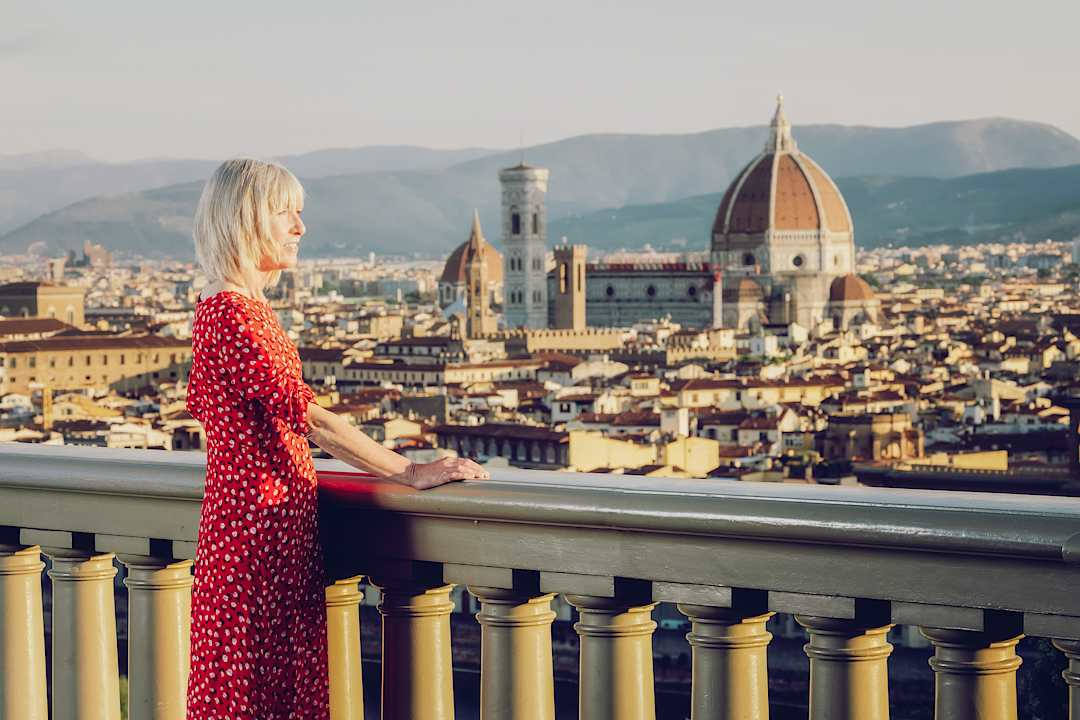
Woman admiring the view in Florence, Italy.

The three-city problem is about recognizing that Rome, Florence, and Venice each demand stamina, stillness, and a willingness to get lost, respectively. It demands you build an itinerary that honors all three instead of averaging them into one generic pace. Get the sequencing and the access right, and the 90-minute train rides become a quiet, scenic pause between three very different chapters of the same country. This is what it should be.

A Zicasso travel specialist can build that sequencing around your pace, whether that means extra time in Florence's galleries, a private evening on the Venetian lagoon, or a Rome itinerary built around its after-dark neighborhoods. Explore more ways to experience Italy's most famous trio with Zicasso's best Rome, Florence, and Venice itineraries or browse our full collection of Italy tours and trip packages to start designing a fully personalized trip.

30,000+ Verified Traveler Reviews