Walk Alongside Expert Rangers: Witness Pangolins in the Wild

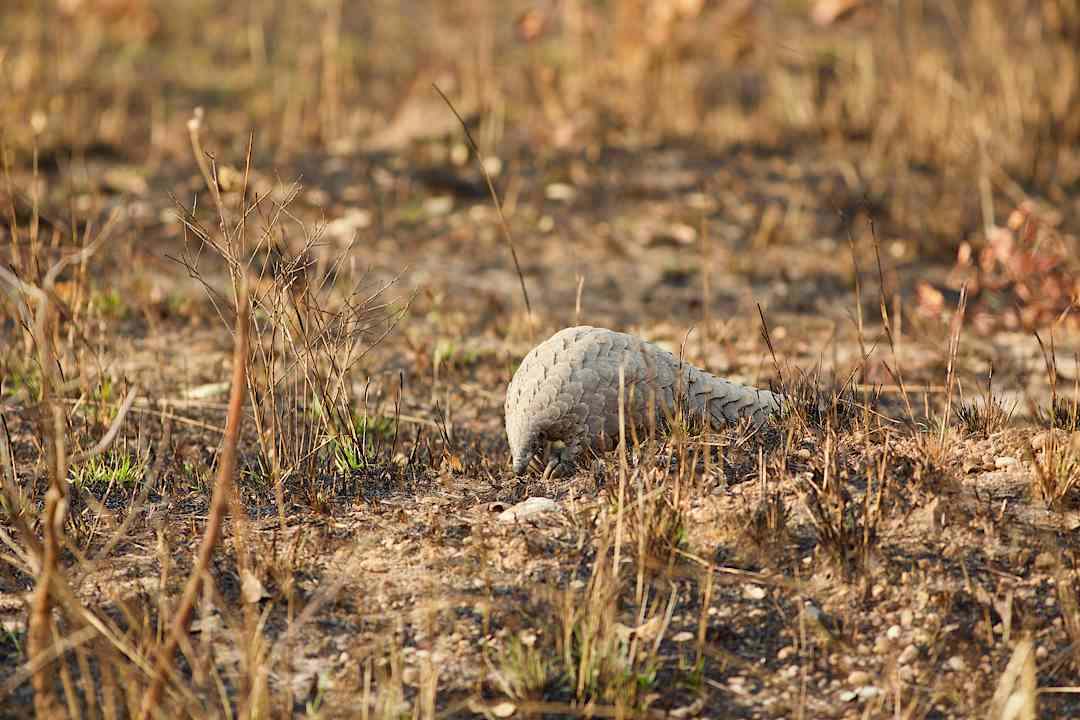
Pangolin in nature, Namibia.

Pangolin in nature, Namibia.

Redefine what travel means to you with the opportunity to witness pangolins in the wild, walking beside researchers and experts who dedicate their lives to protecting one of Africa's most enigmatic and highly endangered creatures. Accept the invitation to a rare African wildlife encounter and the privilege of witnessing conservation in real time.

These scale-armored beings exist with ancient purpose, their presence moving you beyond words, as a kind of hush or stillness. Discover redefined luxury when you align your deepest values with a moment that feels like being entrusted with a secret the earth rarely shares.

Your custom bush safari in search of the rare pangolin begins with a human touch. Our safari specialists will connect you with the wonder and responsibility of ethical pangolin-tracking experiences, crafting an itinerary for meaningful immersion in landscapes and living conservation efforts. Browse the experiences waiting to be discovered, then plan your journey with a Zicasso safari consultant.

What’s at Stake

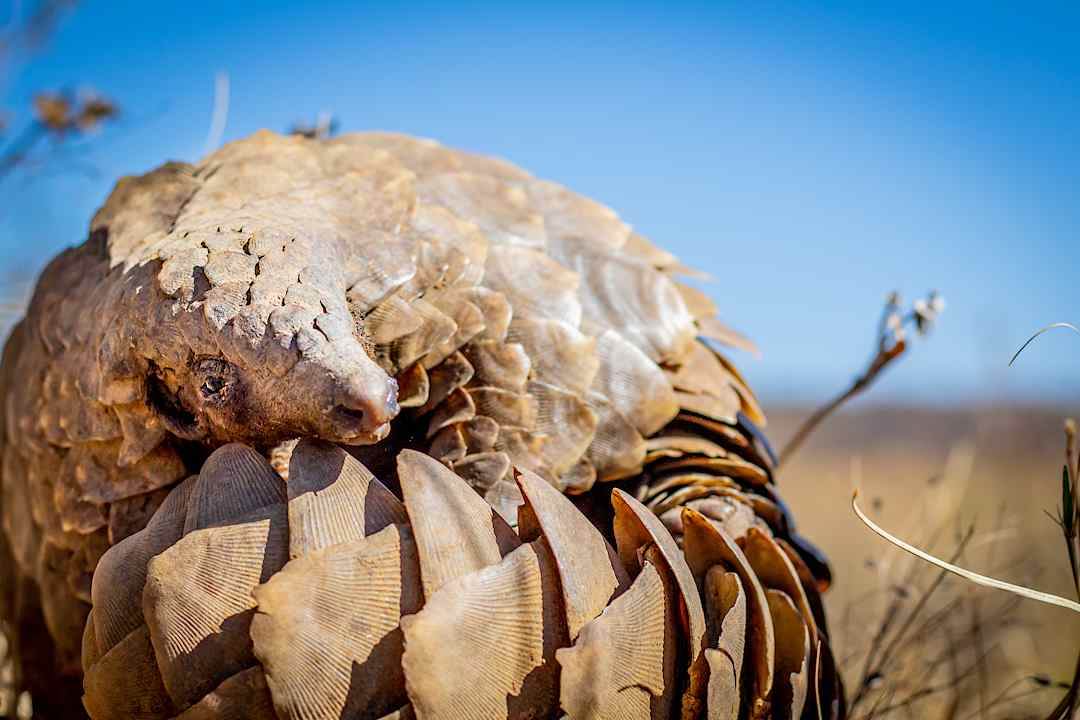
Rolled Pangolin, Africa.

The African bush after dark is a different world entirely. The temperature drops sharply, the sand holds the faint warmth of the day, and something old and unknowable moves through the darkness just beyond the beam of your torch. You are here to find a pangolin, and understanding what that means requires first reckoning with an uncomfortable truth.

  • The crisis: Pangolins are the world's most trafficked mammal, with over a million poached in the past decade alone. Their scales are harvested for traditional medicine despite no scientific evidence of any benefit. All eight species are sliding toward extinction while most of the world looks the other way.
  • The silence: Unlike lions or elephants, whose loss makes news, pangolins go quietly. No drama, no headlines, just an ancient lineage slipping away in the dark. Those who do witness them carry a responsibility to bring that story back.
  • The privilege: To see a pangolin now is to join what may be among the last generations granted this privilege. When one appears, unhurried and entirely indifferent to your presence, the stillness it asks of you is real. Fragility and resilience, held in equal measure, just beyond the beam of your torch.

The Biology of Survival: What is a Pangolin?

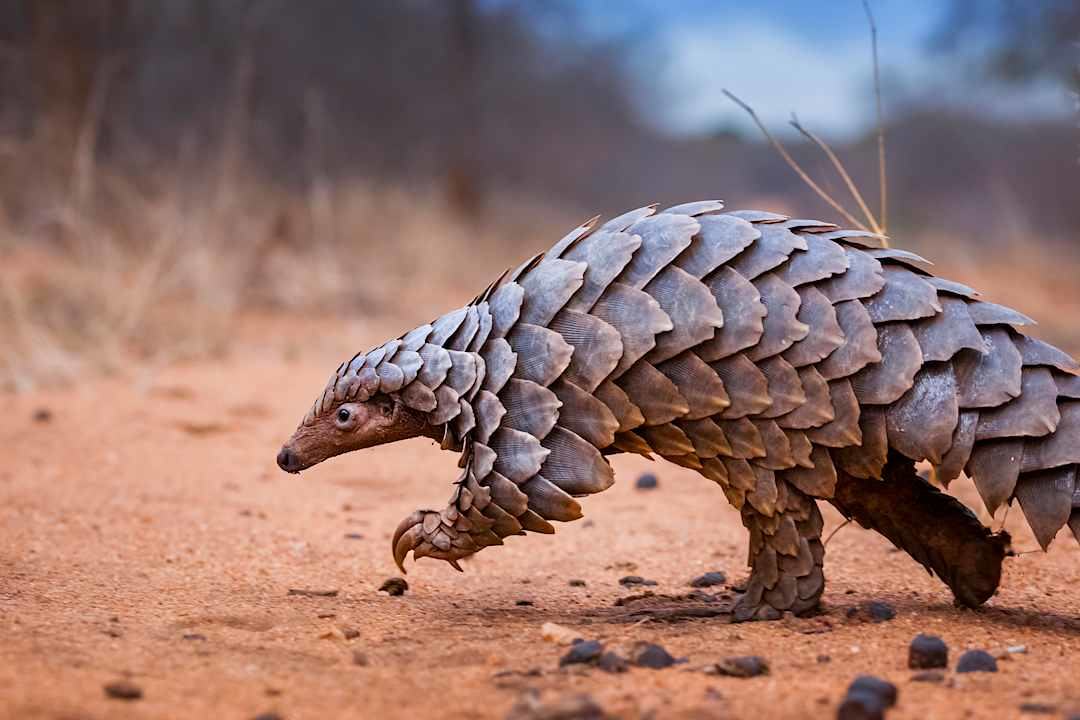
Pangolin, Namibia.
Pangolin, Namibia.

To fully appreciate the privilege of witnessing a pangolin, it helps to understand the extraordinary creature before you.

  • Ancient architecture: The pangolin is covered in interlocking keratin scales arranged like roof tiles. Comprising the same protein as human fingernails, this armor has been carried by pangolins for roughly 80 million years, long before the ecosystems we recognize today existed. Beneath that armor, pangolins are warm, mammalian creatures of surprising delicacy: small eyes adapted to darkness, powerful claws evolved for excavating termite mounds, and long adhesive tongues capable of extending well beyond the length of the skull to reach deep into insect colonies.
  • Eight species: Distributed across Africa and Asia, their adaptations reflect the environments they navigate. Ground pangolins walk upright on their hind legs across the Southern African bush, while tree pangolins coil through the Central African forest canopy on prehensile tails. All species share one universal defense: curling into a tight, impenetrable ball, each plate locked against the next, their head tucked safely within.
  • Fatal vulnerability: That same defense, sufficient against lions and hyenas for tens of millions of years, makes them devastatingly easy for poachers to collect. A curled pangolin is compact, still, and simple to lift. The adaptation that secured their survival across deep time is precisely what now puts them at risk, and understanding it transforms the act of witnessing one into something more than a wildlife sighting.

The Geography of Hope

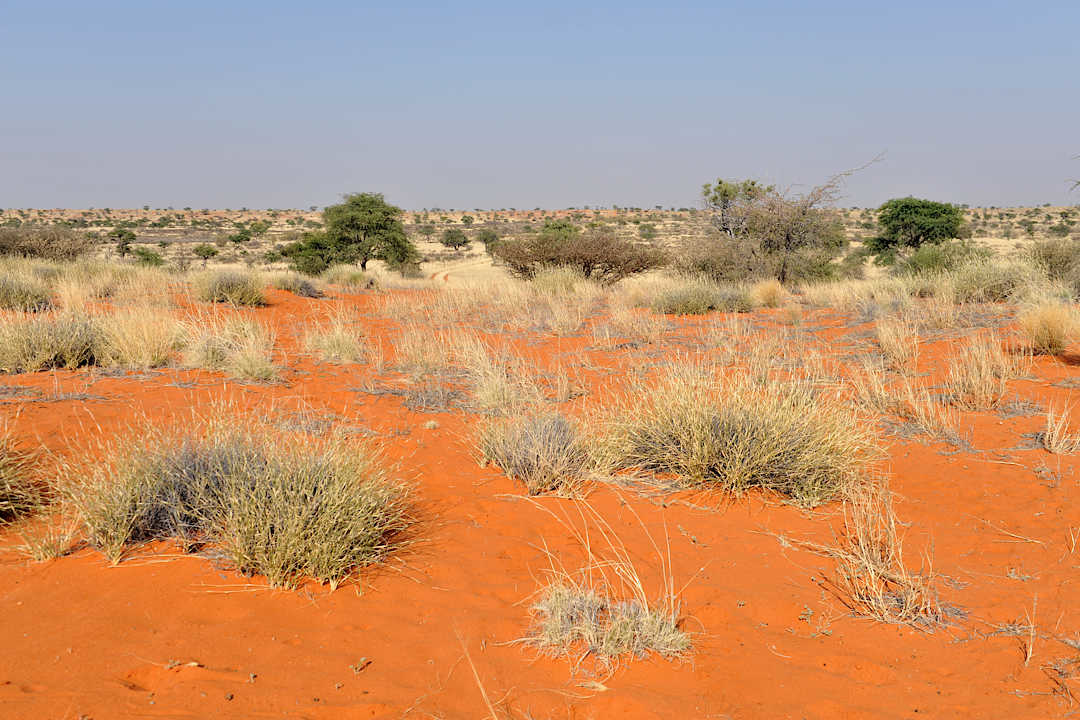
Kalahari Reserve,  South Africa.
Kalahari Reserve, South Africa.

Not every reserve offers a genuine opportunity to encounter pangolins. The locations below have earned their reputations through active research programs, dedicated monitoring teams, and landscapes that make the search viable. Geography, ecology, and scientific infrastructure combine to create the conditions where an encounter becomes possible.

SOUTH AFRICA

  • Tswalu Kalahari Reserve, Northern Cape: The open red-sand terrain of the Kalahari creates ideal conditions for thermal imaging. As night temperatures drop sharply across the arid landscape, a foraging pangolin's body heat registers clearly against the cooling ground, allowing researchers to detect movement from meaningful distances without disturbing the animal. Tswalu hosts one of Africa's most established pangolin research and rehabilitation programs, and is widely regarded as offering the continent's most consistent opportunity for a managed encounter.
  • Phinda Private Game Reserve, KwaZulu-Natal: Active pangolin monitoring runs across Phinda's diverse habitats, from sand forest to wetland. Occasional guided nocturnal searches are offered to guests as part of the reserve's broader conservation program.
  • Samara Private Game Reserve, Eastern Cape: Samara operates a dedicated pangolin conservation project encompassing rehabilitation and monitored release, with research teams tracking animals that have been treated and reintroduced to the wild.

ZIMBABWE

  • Malilangwe Wildlife Reserve: Comprehensive pangolin research and anti-poaching initiatives operate here, with limited guest participation available in active monitoring activities alongside the reserve's conservation team.

KENYA

  • Lewa Wildlife Conservancy: Pangolin monitoring has become an important component of Lewa’s broader conservation programming. The density of vegetation and the vast territories individual animals cover mean sightings are among the rarest outcomes, even with dedicated effort, though the program continues to deepen its research capability.
  • Ol Pejeta Conservancy: Emerging pangolin research efforts, developed in partnership with wildlife organizations, are establishing the foundations for more consistent monitoring across the conservancy.

TANZANIA

Select private concessions within the Serengeti ecosystem and in southern Tanzania are developing pangolin-monitoring programs, though these are in early stages and access to research walks is not yet standardized.

For more details to inspire your trip, take a look at our 7 Luxury Southern Africa Safari Destinations You’ve Likely Never Heard Of.

The Anatomy of the Search

Pangolin sighting in Zambia.

The search for a pangolin is conducted on foot, after dark, in small groups, with a researcher at the front holding a thermal imaging device and years of hard-won instinct. In contrast to a traditional game drive, this is a guided immersion into the nocturnal ecosystem and the protocols that govern every step of it are the very things that give the experience its meaning.

How the Search Works

  • Walks begin shortly after sunset and run two to four hours, following routes chosen by researchers based on recent activity data, wind direction, terrain, and moon phase.
  • The thermal device reveals heat and at the right moment, the unmistakable signature of a pangolin moving across cooling sand.
  • Groups are kept small, typically two to four guests. Minimum distance requirements are strictly observed and if the animal shows any sign of stress, the group withdraws immediately.

The Ethics of Presence

  • Your participation directly funds patrol operations, habitat monitoring, and scientific documentation. A living pangolin, valued by travelers, holds demonstrably more economic weight than a poached one.
  • Ethical operators prioritize animal welfare above guaranteed sightings and ensure local communities share meaningfully in the value generated by protection. Confirm these commitments before booking.
  • Conducted through legitimate programs, your visit makes you an active participant in conservation economics rather than a passive observer.

What to Wear

  • Long trousers, long sleeves, and neutral colors, like khaki, olive, or brown, for protection against thorns and insects in terrain you cannot always see clearly
  • Sturdy closed-toe boots with solid ankle support for uneven ground after dark.
  • A warm fleece or lightweight jacket for the long stretches of stillness, as temperatures in the Kalahari and Eastern Cape can drop sharply between sunset and midnight.

Work with your Zicasso safari specialist to secure your place. They coordinate directly with local experts who maintain ongoing relationships with research programs and understand which sites are currently offering active walks.

The Psychology of the Encounter

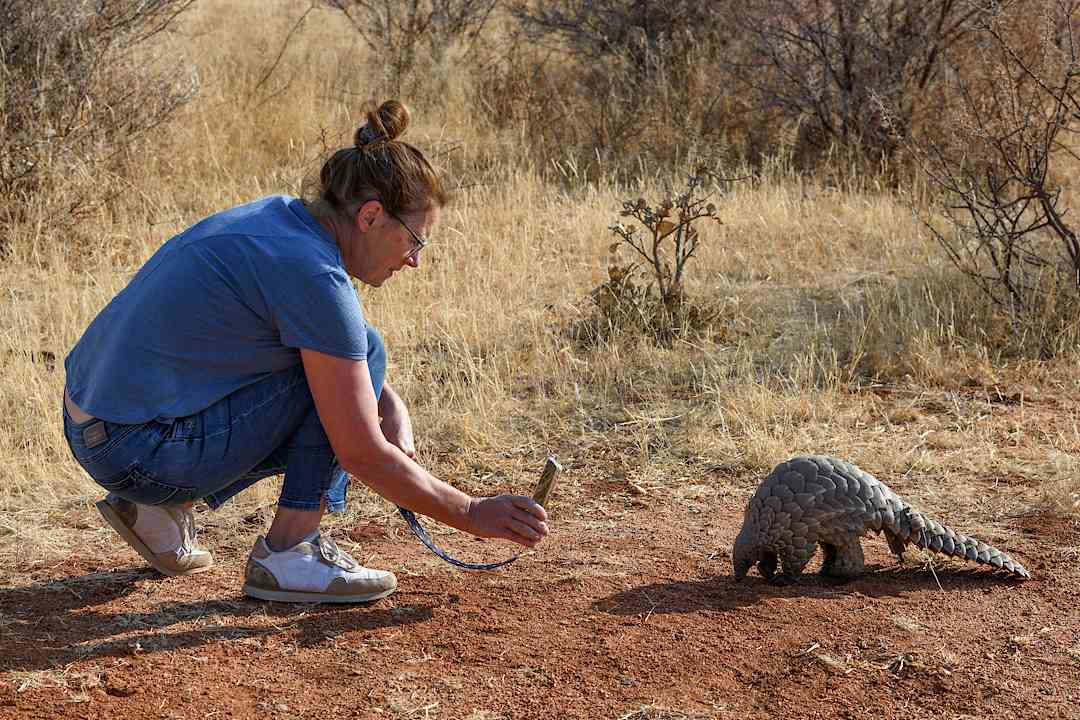
Woman taking a photo of a Pangolin in Namibia.

There is a particular quality to waiting in the dark in the African bush that resists description until you are inside it. Boots pressed into sand still warm from the afternoon sun, you follow a researcher sweeping a thermal device in slow arcs across the terrain, navigating entirely by trust, relying on expertise it took years to build. If the pangolin appears, something changes in the group without anyone asking it to. Voices stop. Breathing slows. You have encountered a creature that has survived almost unchanged for tens of millions of years.

The Reality of the Search

  • Even experienced researchers describe encounters as convergences of timing, terrain, weather, and chance that resist prediction. A single animal may cover several square miles in one night and cloud cover, wind shifts, and terrain all shape the outcome.
  • A sighting is a statistically rare outcome, even within programs specifically designed to enable them.
  • The encounter, when it comes, arrives entirely on the animal's terms.

When the Animal Stays Hidden

  • Every hour in the field generates valuable data: wind conditions, temperature, moon phase, behavioral signs read in the sand, all of it feeding the longitudinal research that tracks pangolin movement, territory, and population health over time.
  • Walking through nocturnal Africa alongside people who have devoted their careers to protecting a species most of the world cannot name is its own form of luxury.
  • The shift from traveler expecting a sighting to participant accepting uncertainty often proves more durable and meaningful than the sighting itself.

Plan Your Safari Opportunity to See a Pangolin

Pangolin, Limpopo.
Pangolin, Limpopo.

As the world’s only scaled mammal, to witness a pangolin in the wild is to meet one of nature’s great rarities. Their fragile, almost prehistoric presence becomes even more powerful when you know that all eight species are sliding along a spectrum from vulnerable to critically endangered, their habitat quietly disappearing. Embarking on your search for a pangolin with an operator that funds research, anti-poaching work, and community engagement turns your once-in-a-lifetime sighting into something larger.

You have the chance to make a small but meaningful contribution to ensuring pangolins remain a living part of safari stories, not just a legend told around the fire. Consider some of these African safari tours and vacation packages, then reach out to your Zicasso safari specialist to plan your adventure.

30,000+ Verified Traveler Reviews