9 Best Places to Visit in Spain with Family

Mother and daughter at Park Guell in Barcelona, Spain.

Park Guell in Barcelona, Spain

Spain’s best places to visit for families offer medieval history, coastal geography, and fun-filled adventure, close enough together that a trip rarely means choosing one option over another. Our guides map where the combination works for you, from a hilltop city built to control a river crossing to a cave system holding one of the largest underground lakes in the world.

Cobblestone lanes narrow enough to get pleasantly lost in, granite arches still carrying the weight of 2.000 years, and market stalls stacked with fruit chosen one at a time by small hands: each destination offers its own texture rather than a repeat of the last. Children track broken-tile trencadís patterns through a garden one architect called home for two decades, listen for guitar and handclaps answering each other in a flamenco hall, or stand beneath stone arches built without a drop of mortar. The pace shifts by region, coastal in San Sebastián, dense and layered in Toledo, but every stop gives your family something specific to notice beyond the landmark itself.

Extraordinary travel begins with a human touch and our destination specialists design every family journey with care, insight, and personal attention. As you consider a trip to Spain with your family, use the following information as a guide before connecting with our travel experts to help plan your trip.

1. Toledo

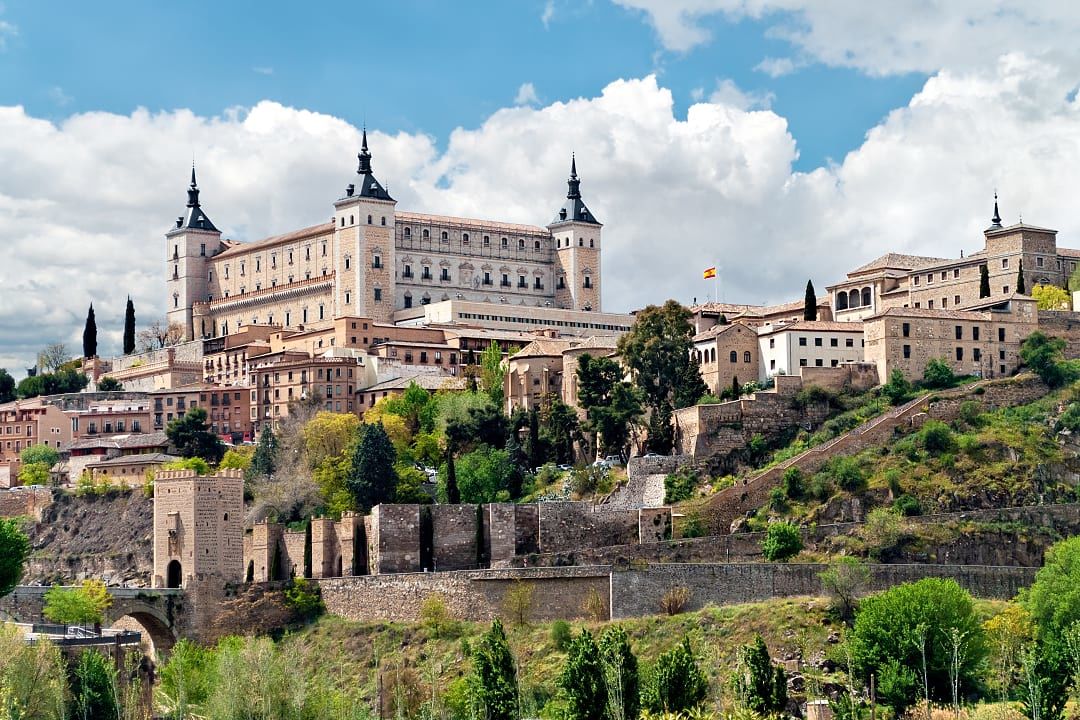
View of The Alcázar of Toledo in Spain.
The Alcázar of Toledo in Spain

Why Toledo Works for Families

Toledo sits on a hilltop above a bend in the Tagus River and that geography is the whole story: a fortified city built to control the crossing below, layered by Roman, Visigothic, Islamic, Jewish, and Christian communities who each left their mark on the same walled core. For families with teenagers, that layering makes Toledo less a checklist of monuments and more a walkable lesson in how a single city can hold four or five distinct histories without erasing any of them.

A History Worth Walking Through

Toledo is a UNESCO World Heritage City, recognized for how densely its monuments and historic streets sit within one hilltop core. The Alcázar has dominated the skyline for centuries, a fortress-palace that reflects the city's long role as a seat of military and political power. Mudéjar architecture, the blending of Islamic decorative craft with Christian-era buildings, is still one of the city's defining visual languages. The Monastery of Santa Clara la Real is a striking example: it incorporates two earlier Mudéjar palaces and carries more than 750 years of continuous history.

What to Expect
  • Toledo Cathedral: One of Spain's largest Gothic cathedrals, dense enough with stained glass, carved choir stalls, and major artwork that a straightforward walkthrough can overwhelm younger children fast. Give each family member a "detail mission," a stained-glass window, a carved animal, a royal symbol, before you go in, and let the cathedral become a shared hunt instead of a formal tour.
  • Alcázar of Toledo: Both a working military museum and a hilltop vantage point over the whole river bend, its position is the reason Toledo controlled the crossing below for a thousand years, a fact that clicks the moment you're standing on the ramparts. Visit later in the day, when older children can pair the fortress views with a walk through the streets below and connect what they just saw to the ground they're standing on.
  • Sword-making and damascening demonstrations: Toledo's steel and gold-inlay craft dates back to Roman-era blade production and still supports working ateliers in the old town, giving families a living trade to watch rather than an artifact behind glass. Watch a working artisan and ask how the technique has stayed tied to this one city for centuries.
  • Monastery of San Juan de los Reyes and Santa María la Blanca: A late-Gothic royal monastery and a former synagogue with rows of white horseshoe arches, two of the clearest single-building examples of Christian and Jewish Toledo, sit a five-minute walk apart. Visit both in one afternoon so the city's religious layering becomes something your family sees back to back, not something they read about separately.

Beyond the Highlights

The Cristo de la Luz Mosque, a compact 10th-century mosque-turned-church, delivers a faster, more concrete introduction to Islamic Toledo than a full-day citywide route, useful for families working with limited time. The Monastery of Santa Clara la Real deserves the same consideration for the opposite reason: it rewards families willing to slow down, since its two absorbed Mudéjar palaces preserve a side of the city's architecture most visitors walk past entirely.

Recommended length of stay: 2–3 days
2. Barcelona

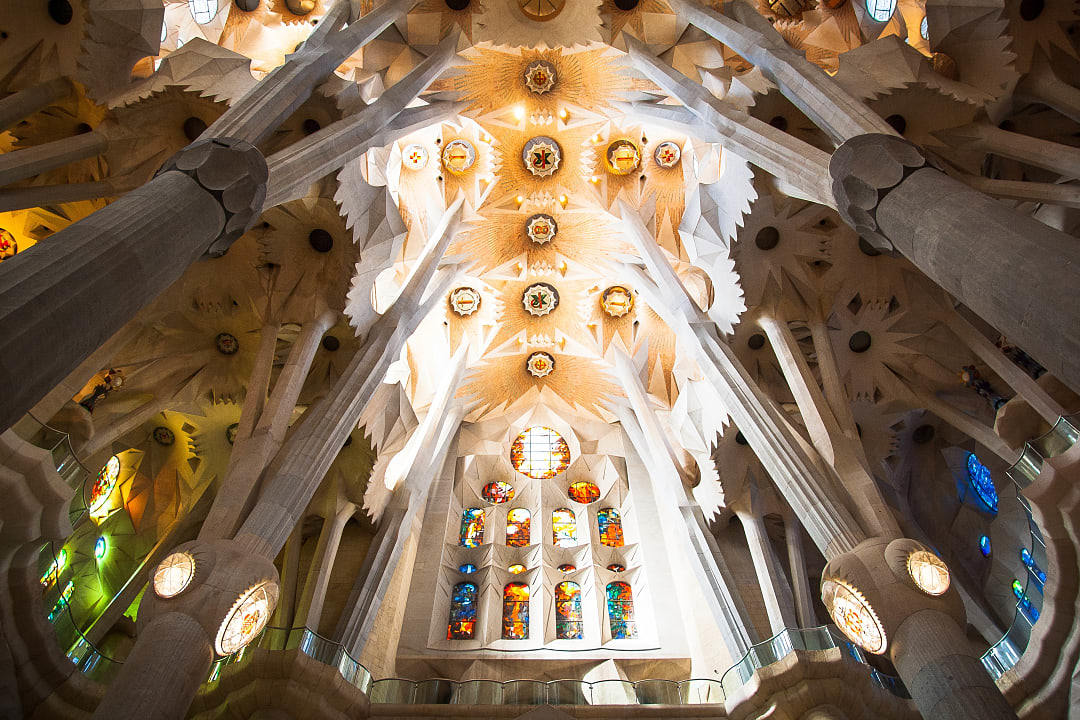
Interior of La Sagrada Familia  in Barcelona, Spain.
Interior of La Sagrada Familia in Barcelona, Spain

Why Barcelona Works for Families

Barcelona works for every age because its strongest draws, Gaudí's architecture and its market and neighborhood culture, reward slow, curious looking rather than a fixed itinerary. A 10-year-old chasing broken-tile trencadís patterns through Park Güell and a grandparent tracing the Gothic Quarter's medieval street plan are having compatible days, not competing ones.

A History Worth Walking Through

Barcelona's identity combines Roman origins, a medieval mercantile past, Catalan political history, and a modern reinvention led in large part by one architect. Park Güell has held UNESCO World Heritage status since 1984 and Gaudí lived in the house now known as Casa Museu Gaudí from 1906 to 1925, a detail that turns the park from a photo backdrop into a place he called home. The Sagrada Família's construction began in 1882 and still continues today.

What to Expect

  • Sagrada Família: Still under active construction more than 140 years after it began, the basilica lets children watch a building actively being built rather than only a finished monument, with forest-like stone columns and stained glass that casts colored light across the floor as the sun moves. Book the roughly 50-minute guided visit and if your family includes younger children or anyone sensitive to crowds, target the 9 to 10am quiet hour.
  • Park Güell: Gaudí lived here for nearly two decades and the park reads less like a garden than a full-scale design experiment, with broken-tile trencadís surfaces, animal figures, colored glass, curved lines with no straight edges anywhere. Turn the visit into a design hunt so children are looking for something specific rather than wandering past it.
  • La Boqueria Market: A working food market rather than a tourist stop, it gives families a fast, sensory read on Catalan daily life’s color, smell, and noise that no museum can replicate. Let each child pick one unfamiliar fruit or snack to try; small, specific choices work better here than a general wander.
  • Gothic Quarter and the Museum of Catalan History: The Quarter's medieval street plan is largely original, but it stays mostly decorative without context. Pair a walk through it with the museum so the streets outside gain a story your family can actually place.

Beyond the Highlights

Casa Museu Gaudí deserves more attention than it gets: it was Gaudí's home for nearly two decades and still holds original furnishings, offering a more personal look at the architect than the monuments provide. Torre Bellesguard, designed between 1900 and 1909, is a lesser-visited work that fuses Catalan Modernisme with the city's medieval history, and it rewards families who've already done the Sagrada Família and Park Güell and want something less crowded.

Recommended length of stay: 3–4 days

3. Seville

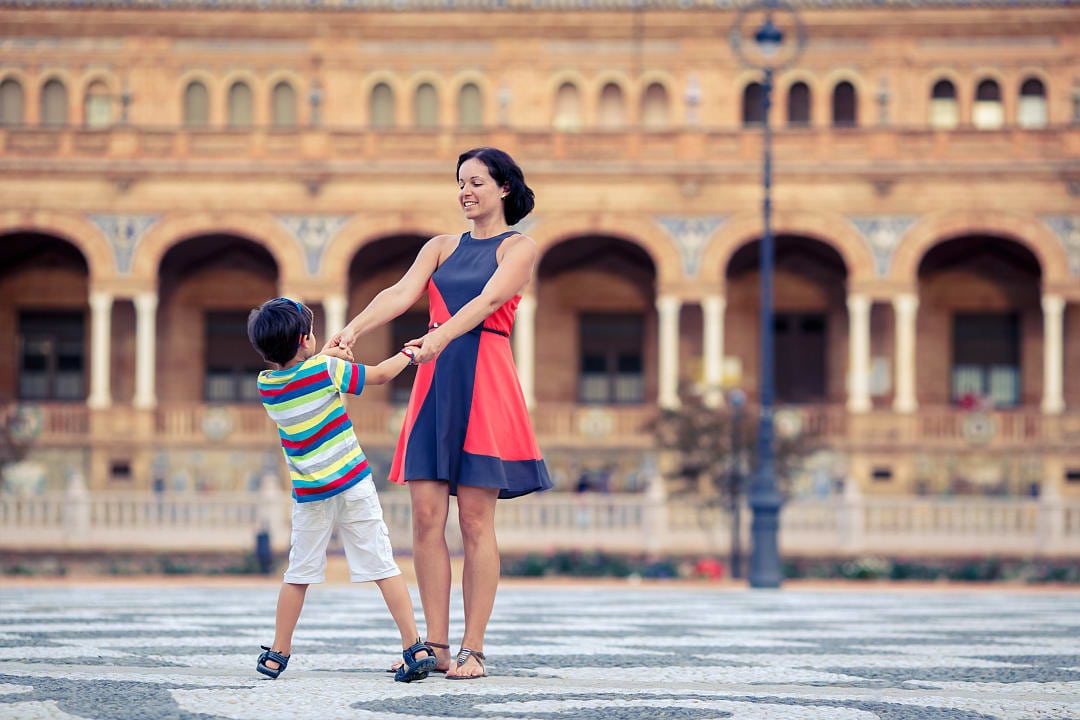
Family at the Plaza de Espana in Seville, Spain
Plaza de España in Seville, Spain

Why Seville Works for Families

Seville's center holds three UNESCO World Heritage monuments within walking distance of each other: the Cathedral and Giralda, the Royal Alcázar, and the Archive of the Indies. This means a family can move between centuries without long transfers eating into the day. The city's Moorish and Christian layers sit close enough together that even young children start to notice the shift from one architectural style to the next.

A History Worth Walking Through

The Royal Alcázar began as a 10th-century fortress built by Muslim rulers on top of an earlier Roman settlement. Peter I's 14th-century Mudéjar Palace, one of its defining additions, blends Islamic craftsmanship with a Christian royal commission, a combination unusual enough that it still surprises first-time visitors. After the Reconquest, the Alcázar became a residence of the Catholic Monarchs and it is still an official residence of Spain's royal family today when they're in the city. The Giralda tells a similar layered story: a former Almohad minaret carrying centuries of later Christian additions.

What to Expect

  • Royal Alcázar: Often cited as Europe's oldest still-active royal palace, its rooms move through five architectural eras: Islamic, Mudéjar, Gothic, Renaissance, and Baroque, inside one continuous building. Split the visit into a "styles" game, spotting one element from each era, then use the gardens as a slower-paced break afterward.
  • Seville Cathedral and the Giralda: The tower began as an Almohad minaret before becoming a Christian bell tower and its ramp, not stairs, was originally built so guards could ride horses to the top. Most children find this detail more interesting than the climb itself. Visit early and frame the ascent as that same ramp adventure rather than a straightforward climb.
  • Santa Cruz: The old Jewish quarter's lanes are narrow and mazelike enough that getting mildly lost here is part of walking it. Let a different family member lead each block, turning navigation itself into the activity.
  • Flamenco: A living Andalusian art form built on the interplay of guitar, voice, handclaps, and dance, a distinction that's easier to hear than to explain in advance. Choose an early performance and ask children to listen for how the four elements answer each other.

Beyond the Highlights

Casa de la Ciencia is worth building into a hot afternoon: a hands-on science museum that balances out a morning of palaces and cathedrals. Isla Mágica, built inside former Expo '92 facilities and themed around the Age of Discovery, as well as its adjoining Agua Mágica water park, deserve more consideration from families who assume Seville is purely a heritage destination.

Recommended length of stay: 2–3 days

4. Málaga

View of Malaga Bullring and Harbor in Spain.
Bullring and Harbor in Malaga, Spain

Why Málaga Works for Families

Málaga solves a real planning problem: how to combine beach days with genuine cultural depth without constant transfers. Nearly 3,000 years of Phoenician, Roman, Islamic, and Christian history sit within a compact port city, close enough to the sand that a family can move between a Roman theater and a beach chair in the same afternoon.

A History Worth Walking Through

The Alcazaba preserves the city's Islamic-era defensive and palace architecture, with Gibralfaro Castle occupying the strategic hill directly above it, a pairing that lets visitors compare two eras of fortification within a single short walk. Málaga's port has anchored its identity as a Mediterranean trading gateway for most of its history. Pablo Picasso was born here and that connection anchors an entire artistic route running from his birthplace to the Picasso Museum Málaga.

What to Expect

  • Roman Theatre to the Alcazaba: The theater sits directly at the foot of the Moorish fortress above it, so a single short walk moves your family from ancient Rome to medieval Islamic Málaga without a transfer in between. Walk the route slowly enough to let the shift in eras register; it takes under an hour either way.
  • Gibralfaro Castle: The hill's strategic position is what made it worth fortifying in the first place and it's still the best place in the city to see the Alcazaba, the port, and the coastline as one connected picture. Go near sunset, whether on foot or by shuttle, when the light makes that connection easiest to see.
  • Picasso Museum Málaga: Housing work by the city's most famous native son, this collection gives children a concrete reason to care about an artist they've likely only seen in textbooks. Have each family member choose one work and invent a title or backstory for it rather than attempting a full walkthrough.
  • La Caleta Beach or Playa de la Misericordia: Both sit close enough to central Málaga that beach time doesn't cost your family a full travel day the way it does in most Spanish cities. Reserve the afternoon here rather than trying to squeeze in a second museum.

Beyond the Highlights

The Roman Theatre and Alcazaba pairing deserves more attention because it lets families compare two very different eras of Málaga within one short, low-effort route. The Picasso Birthplace Museum is an easy add-on that gives biographical grounding to the larger collection at Picasso Museum Málaga, useful for families who want context before the art rather than after it.

Recommended length of stay: 2–3 days

5. Granada

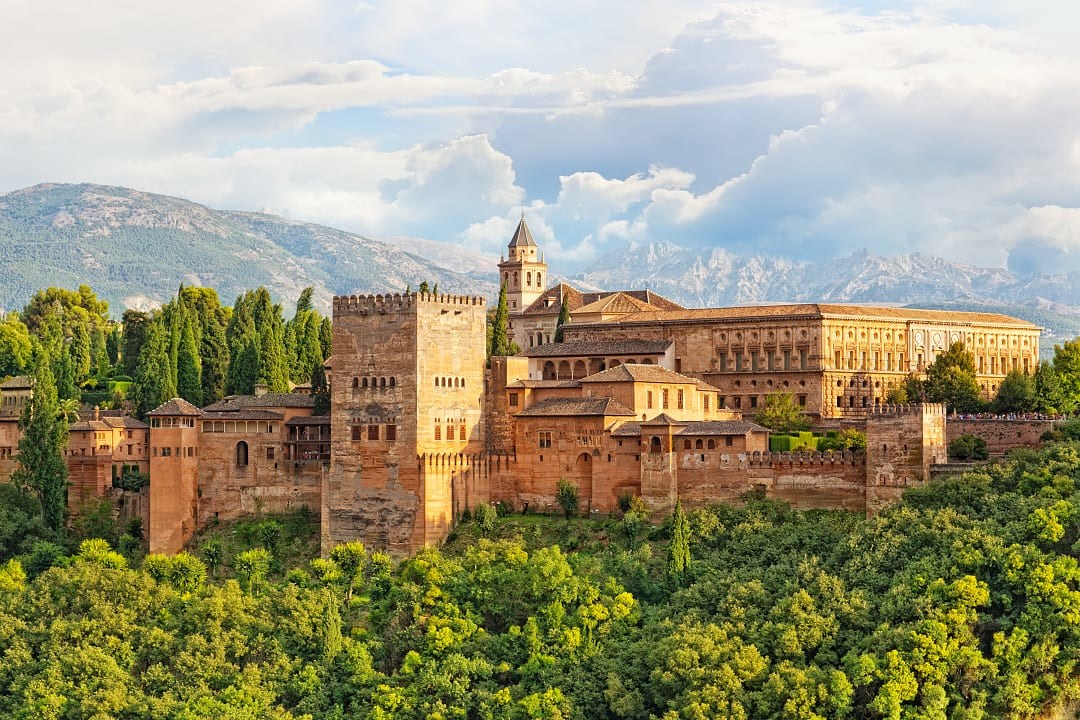
Alhambra palace and fortress in Granada, Spain.
The Alhambra in Granada, Spain

Why Granada Works for Families

Granada was the last stronghold of Nasrid Muslim rule on the Iberian Peninsula and the Alhambra it left behind gives families of any age something to hold onto: towers to explore, gardens to wander, and water everywhere, in channels, fountains, and pools that turn a history lesson into something closer to a scavenger hunt.

A History Worth Walking Through

The Alhambra and Generalife anchor Granada's UNESCO-recognized cluster of Nasrid-era sites. Inside the Nasrid Palaces, carved plasterwork, tilework, inscriptions, and carefully designed sightlines built around water reveal how deliberate the Nasrid court was about atmosphere and proportion. The Generalife functioned as a garden and leisure estate tied directly to that royal world. Beyond the Alhambra itself, the Alhambra and Generalife Trust manages a wider network of Andalusi monuments through its Dobla de Oro route.

What to Expect

  • Nasrid Palaces: The ceremonial and residential core of the Alhambra, carved plasterwork and tile dense enough that a rushed visit misses most of it entirely. Reserve timed entry well in advance and build the rest of the day around that fixed slot rather than anything else.
  • Water as a theme: The Nasrid court built the entire complex around water, channels, fountains, and reflecting pools designed as deliberately as the architecture itself, which gives families a single thread to follow through a site that can otherwise feel enormous. Have your family track every instance across the Alhambra and Generalife as a running game rather than a passive walkthrough.
  • Generalife gardens: Originally a royal leisure estate separate from the main palace, the gardens offer open-air space and a change of pace that the dense, decorated palace interiors don't. Alternate palace time with time here to keep younger children from losing focus indoors.
  • Court of the Lions: One of the most deliberately engineered spaces in the complex, its colonnade and central fountain were built to be viewed from multiple angles rather than head-on. Stand still in it long enough for your family to notice the sightlines shift as they move around the fountain.

Beyond the Highlights

The Dobla de Oro route deserves wider recognition because it takes families past the Alhambra to monuments including the Bañuelo Arabic Baths, Dar al-Horra Palace, Casa de Zafra, and Corral del Carbón, none of which draw the crowds the Alhambra does. The Alhambra Museum's collections add texture that the palaces alone don't: everyday objects that explain court life and artistic production beyond the architecture itself.

Recommended length of stay: 2–3 days
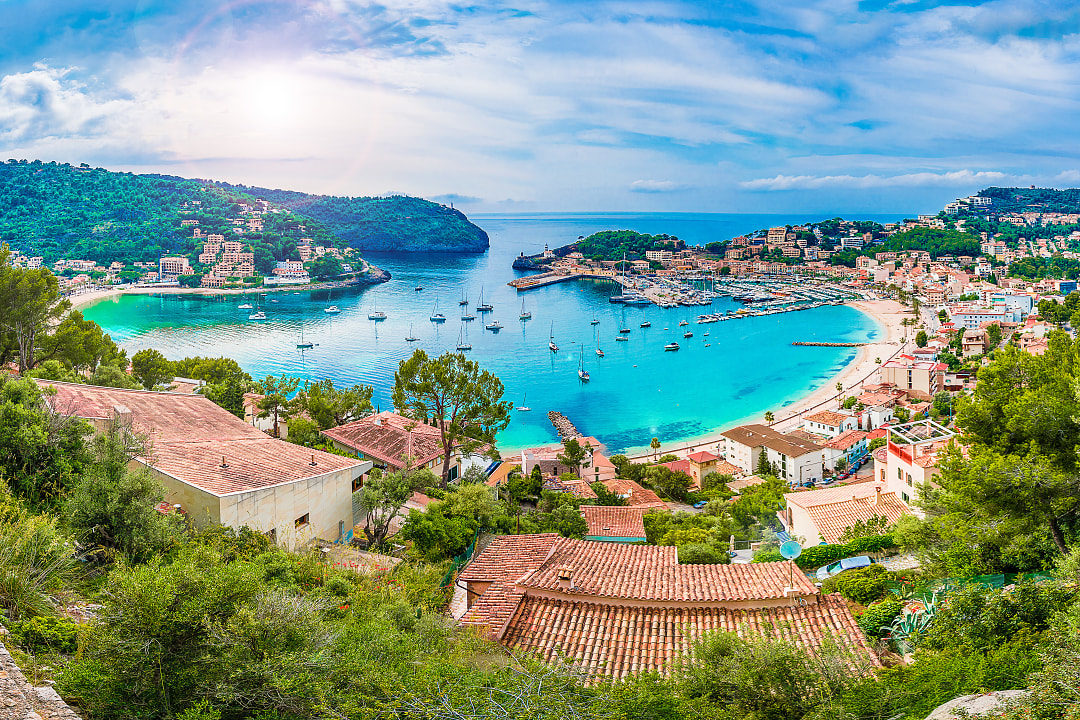
6. Mallorca

View of Porte de Soller in Palma de Mallorca, Spain.
Porte de Soller in Palma de Mallorca, Spain

Why Mallorca Works for Families

Mallorca's position in the Mediterranean made it a crossing point for Phoenician, Roman, Islamic, Catalan, and maritime cultures, and that history shows up today in a rare combination: beaches, caves, and a walkable historic capital all within a short drive of each other.

A History Worth Walking Through

The earliest written record of the Coves del Drach dates to 1338, in a message from the island's governor to the mayor of Manacor. French speleologist Édouard-Alfred Martel explored the caves in 1896 and discovered the underground lake now named after him. Palma's historic center still holds the layered legacy of Islamic Madina Mayurqa beneath its later Christian and maritime-era additions.

What to Expect

  • Coves del Drach: Home to Lake Martel, one of the largest underground lakes in the world, discovered by a French speleologist in 1896 and documented in written record as far back as 1338. Follow the roughly three-quarter-mile route through stalactites and stalagmites, and stay for the classical-music performance and, when available, the boat crossing across the lake.
  • Cap de Formentor: A dramatic headland and lighthouse at Mallorca's northern tip, worth the drive for the coastal views alone, but the road gets crowded and hot fast. Go early, before it gets busy, which matters most with younger children in tow.
  • Palma: The island capital holds the layered history of Islamic Madina Mayurqa beneath its later Christian and maritime-era streets, making it a walkable history lesson rather than just a stopover. Cover the cathedral quarter, lanes, and waterfront on foot, with a gelato or market stop built in to keep the pace family-friendly.
  • Valldemossa: A stone-built mountain village in the Tramuntana foothills, a slower, quieter counterpoint to the coast. Wander it without a fixed agenda; the village itself is the activity.

Beyond the Highlights

Diana's Bath, a smaller and more fragile lake inside the Coves del Drach complex, deserves attention because it shows how easily the cave's underground balance of water and rock can be disturbed, a contrast to Lake Martel's scale. Castell de Capdepera is worth the detour for families who want medieval walls and village views without the crowds that gather elsewhere on the island.

Recommended length of stay: 3–4 days

7. San Sebastian

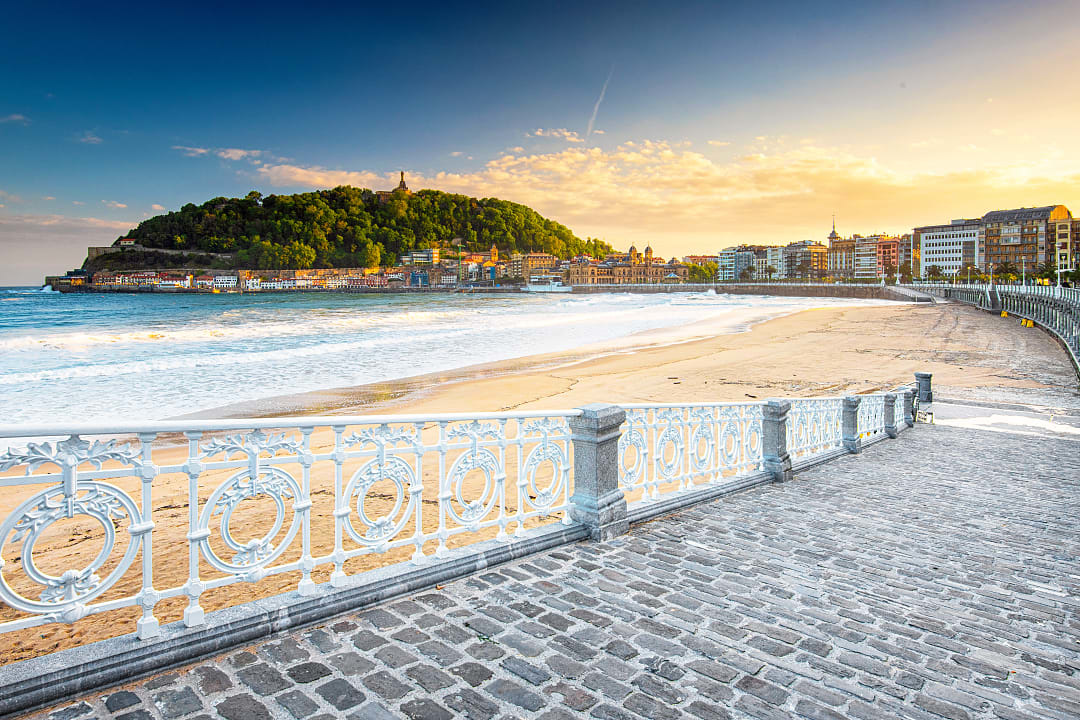
Sunrise at La Concha Beach in San Sebastian, Spain
La Concha Beach in San Sebastian, Spain

San Sebastián built its identity as a resort city from the late-18th-century popularity of therapeutic sea bathing and that legacy still shapes the city: a crescent beach, a walkable old quarter, and a food culture built around small plates that work naturally for families.

A History Worth Walking Through

By 1927, the city had leaned further into tourism, adding beach huts and turning Monte Igueldo into an amusement destination. The Parte Vieja, the old quarter of the former walled city, is still its social center. The city's maritime character survives through its Aquarium, Maritime Museum, and waterfront, and its modern cultural standing was reinforced when it was named European Capital of Culture in 2016.

What to Expect

  • La Concha Beach and Parte Vieja: A sheltered, crescent-shaped urban beach sits a five-minute walk from a pintxos culture built entirely around small, shareable plates, a pairing that suits families who want to graze rather than sit through a long formal meal. Combine a beach morning with a pintxos walk, letting each child choose one small dish of their own.
  • Monte Igueldo funicular: The oldest funicular in the Basque Country, running since August 25, 1912, and still the best way up to panoramic bay views without a long uphill walk. Ride it up to the amusement park at the summit and let the ride count as part of the day.
  • San Sebastián Aquarium or Eureka! Zientzia Museum: Both offer indoor, hands-on alternatives that keep a family's day moving, even when the coastal weather doesn't cooperate. Keep one in reserve rather than planning around it from the start.
  • The Wind Comb: Eduardo Chillida's sculpture ensemble sits exactly where the city meets the open Atlantic, built so the sea and the steel work as one piece together. Walk to it and treat the wind and waves as part of the art, not a backdrop.

Beyond the Highlights

Albaola, the Sea Factory of the Basques, deserves more recognition for preserving and demonstrating traditional Basque boatbuilding, a maritime counterpart to the city's beach-and-food reputation. The House of History is an easy, overlooked stop that uses original objects, reconstructions, and historic recordings to bring the city's past to life for families who want context beyond the beach.

Recommended length of stay: 3–4 days

8. Madrid

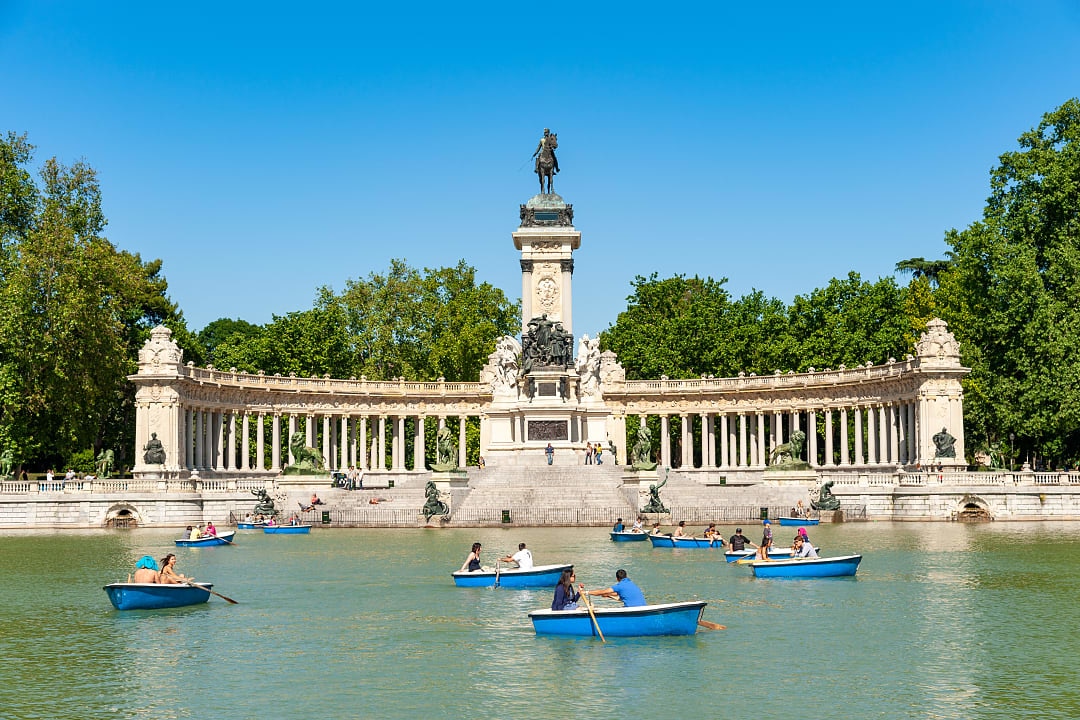
Families enjoying boat rides at El Retiro Park in Madrid, Spain
El Retiro Park in Madrid, Spain

Why Madrid Works for Families

Madrid evolved from a medieval settlement into Spain's permanent capital and that history is stacked in layers you can walk through in a single day: medieval districts, royal precincts, 19th-century parks and boulevards, and a contemporary cultural scene that keeps adding to the mix.

A History Worth Walking Through

The Royal Palace housed Spanish monarchs from Charles III through Alfonso XIII, and its Royal Armoury preserves weapons and armor used by Spanish kings and other royals dating back to the 13th century. The Prado opened in 1819 with an initial catalog of 311 paintings, drawn from a royal collection of more than 1,510 works, a scale that still shapes how the museum is organized today.

What to Expect

  • Why San Sebastián Works for Families
  • Royal Palace: Home to Spanish monarchs from Charles III through Alfonso XIII, its Royal Armoury holds objects that make dynastic history tangible in a way paintings alone don't. Time your visit for the weekly Changing of the Guard, typically held Wednesdays and Saturdays, and check the official schedule beforehand for weather or event exceptions.
  • Prado Museum: Opened in 1819, with over 1,500 works drawn from Spain's royal collection, the Prado is large enough that an unplanned visit exhausts most families before it inspires them. Set a "five masterpieces" goal instead and, before you go, consider previewing works through the Prado's virtual visit, which includes 89 digitized artworks.
  • El Retiro Park: A 19th-century green space built into the middle of a dense capital, with a boating lake and open paths that give a family's legs and attention span a reset. Use it as a deliberate break between museum visits rather than an afterthought at the end of the day.
  • Santiago Bernabéu Stadium: Real Madrid's home ground, a stadium widely known well beyond Spain and a draw for sports-minded family members regardless of match schedules. Book a stadium tour if a live match doesn't fit your dates, so that interest still gets its moment.

Beyond the Highlights

The Changing of the Guard is a no-cost spectacle that adds real ceremonial weight to a Royal Palace visit and it's easy to miss if you don't plan around the schedule. The Royal Armoury works well for families with children drawn to knights and armor, since it makes Spanish dynastic history immediately tangible.

Recommended length of stay: 2–3 days
9. Segovia

Alcazar of Segovia in Segovia, Spain
Alcázar of Segovia in Spain

Why Segovia Works for Families

Segovia's Roman Aqueduct rises directly over the old town and the sheer improbability of it, granite blocks stacked without mortar, still carrying water into the last third of the 20th century, tends to land with children the moment they see it up close.

A History Worth Walking Through

Segovia and its aqueduct were inscribed as a UNESCO World Heritage Site in December 1985. The aqueduct was built in the 1st century CE, likely under Trajan or Hadrian, using roughly 24,000 granite blocks and no mortar at all. It stands about 92 feet high and runs just under half a mile through the city, part of a route that carried water some nine miles from the Sierra de Fuenfría. Segovia's character beyond the aqueduct comes from its medieval walls, its Gothic cathedral, and an Alcázar built on a rock spur where two rivers meet, its pointed slate turrets visible from most of the old town.

What to Expect

  • Roman Aqueduct: A 2,000-year-old structure that was in daily use within living memory. Start at the Aqueduct Visitor Reception Centre and walk beneath the arches before heading uphill into the old town.
  • Guided aqueduct walk: The engineering, gravity, stacked granite, zero mortar, is the attraction here, more than the monument's size. Book a guided walk specifically to make that engineering understandable to children rather than just impressive to look at.
  • City walls: A roughly 1.9-mile fortified route that still rings the old town, giving your family gates, viewpoints, and a panoramic angle on the aqueduct that the ground-level plaza view doesn't offer. Walk as much of it as your family's pace allows; even a partial stretch delivers the view.
  • Alcázar of Segovia: Its pointed slate turrets rise from a rock spur above the meeting point of two rivers, a shape distinctive enough that it needs no historical framing to land with young children. Let them compare its towers to their own idea of a castle; it rarely disappoints.

Beyond the Highlights

Postigo del Consuelo deserves more attention as one of the most striking aqueduct viewpoints along the city-walls route, easy to miss if you stick only to the main plaza views. The Church of the True Cross, a compact Romanesque building, is a worthwhile diversion for families who've done the aqueduct-cathedral-Alcázar circuit and want something less traveled.

Recommended length of stay: 2–3 days
Explore the Best Places to Visit in Spain with Family

Mother and son playing at Plaza de Espana in Seville, Spain.
Plaza de Espana in Seville, Spain

The best places to visit in Spain with family offer exciting perspectives on local history, heritage, and the authenticity of daily Spanish life. Spain can captivate your entire family, from the quiet ambiance of a traditional plaza to the colorful aesthetic of a historic town.

Our Spain family vacations and tours have the right combination of excursions and explorations for your next trip, and Zicasso’s Spain travel guide and Top 8 Things to Do in Spain with Family can give you new insight into how to explore the country.

30,000+ Verified Traveler Reviews