9 Best Museums in Spain and Where to Find Them

City of Arts and Sciences in Valencia, Spain

City of Arts and Sciences in Valencia, Spain

Spain's best museums hold centuries of art inside buildings that are part of the story. A former royal residence, a converted convent, and a theater where a young Salvador Dalí once exhibited as a teenager. Walking into any of these museums means stepping into a room where a specific person once stood, painted, prayed, or dreamed something that changed how the rest of us see.

A great museum visit in Spain rewards patience and personal attention far more than a rushed checklist ever could. The value sits in the quiet minutes alone with a single canvas, the door opened early before the crowds arrive, the guide who knows exactly which gallery light catches a painting's texture at its best. That is the kind of value no price tag captures on its own.

Extraordinary travel begins with the human touch and our destination specialists design every journey with the same close attention these collections deserve, shaping a visit to any of these museums around your particular curiosities, whether that means a private morning with Velázquez before the doors open to the public or an afternoon tracing Picasso's earliest brushstrokes through the streets of Barcelona that shaped him.

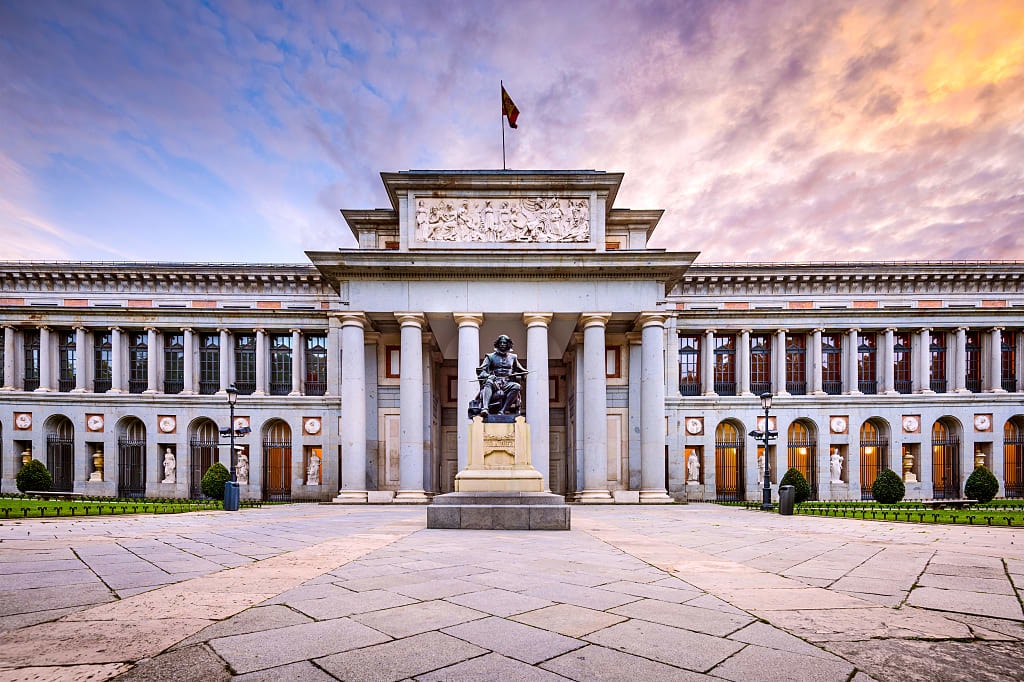
1. Prado Museum, Madrid

Prado Museum in Madrid, Spain

The Prado opened its doors in 1819 as a gallery built to hold the personal treasures of Spain's royal family, and its first catalog recorded 311 paintings. Within that same opening, the collection already held more than 1,510 works, most gathered from the royal residences by generations of Habsburg and Bourbon monarchs across the 16th and 17th centuries. More than 200 years later, the Prado is still one of the world's defining art institutions, its galleries carrying drawings, prints, photographs, sculpture, and decorative arts alongside its famous paintings.

Stand in front of Velázquez's Las Meninas in Room 012 and something curious happens: the painting seems to look back. The Infanta Margarita, her attendants, a mirror reflecting the king and queen, and the artist himself all share the frame, turning a simple court portrait into a puzzle that historians still debate centuries later. A private morning with an art historian in this single room can feel more rewarding than an entire afternoon rushing past a hundred other canvases.

Goya's presence anchors another side of the museum entirely. The Third of May 1808 captures the violence of a nation under occupation, while his Black Paintings, including Saturn Devouring His Son, were never meant for public eyes at all. Goya painted them directly onto the walls of his home, Quinta del Sordo, in his final years and they were later transferred to canvas so the world could see what he had kept private.

A traveler's perspective on the Prado:

  • Follow a single dynasty's taste in art, from Habsburg formality to Bourbon splendor, through the royal portrait galleries
  • Study Titian's Charles V at the Battle of Mühlberg, an imperial portrait painted to project power on horseback
  • Set aside time for the Bosch triptych, The Garden of Earthly Delights, a fantastical vision of paradise and consequence unlike anything else in the collection
  • Seek out Clara Peeters, whose meticulous still-life paintings add a rare and rewarding woman's perspective to the Prado's Old Master galleries

Your travel specialist can arrange early, unhurried access to the Prado's most celebrated rooms, so the only crowd you contend with is the one Velázquez painted into the canvas. Craft a Madrid morning that belongs entirely to you. See our best Barcelona and Madrid vacation packages for more inspiration.

2. Thyssen-Bornemisza Museum, Madrid

Thyssen-Bornemisza Museum in Madrid, Spain
Thyssen-Bornemisza Museum in Madrid, Spain. Photo by Emilio/ Flickr

Where the Prado tells Spain's royal story, the Thyssen-Bornemisza tells a private family's story of collecting nearly a millennium of Western art. The Thyssen family began assembling the collection around the end of the 1920s, gathering milestone paintings from the late 13th century through the 20th. Spain acquired the entire collection in 1993, transforming decades of one family's personal taste into a public museum nearly 1,000 paintings strong.

The result feels less like a national gallery and more like walking through someone's extraordinary, deeply personal library of images. Jan van Eyck's The Annunciation rewards close inspection, its jewel-toned symbolism packed into a panel small enough to study from a single vantage point. Albrecht Dürer's Jesus among the Doctors, painted during his stay in Venice, captures faces so precisely rendered they seem to hold private thoughts. Caravaggio's Saint Catherine of Alexandria brings his signature dramatic light into a single, quietly intense portrait of martyrdom.

A traveler's perspective on the Thyssen-Bornemisza:

  • Walk the collection in chronological order to watch seven centuries of European painting unfold in a single afternoon
  • Pair a Van Gogh landscape, Les Vessenots in Auvers, painted near the end of his life, with earlier Impressionist works to see how his brushwork changed under pressure
  • Consider Gauguin's Mata Mua, a dreamlike Tahitian scene worth discussing with a guide who can unpack its complicated history
  • Use the museum as a bridge, connecting the Prado's Old Masters to the Reina Sofía's modern galleries in a single, thoughtfully sequenced day

Ask your travel specialist to design a single Madrid day around all three of the city's great art museums, sequenced so each one deepens the last. That turns 700 years of art into a single, coherent story. Customize our Spain Culture and History Itinerary to your preferences.

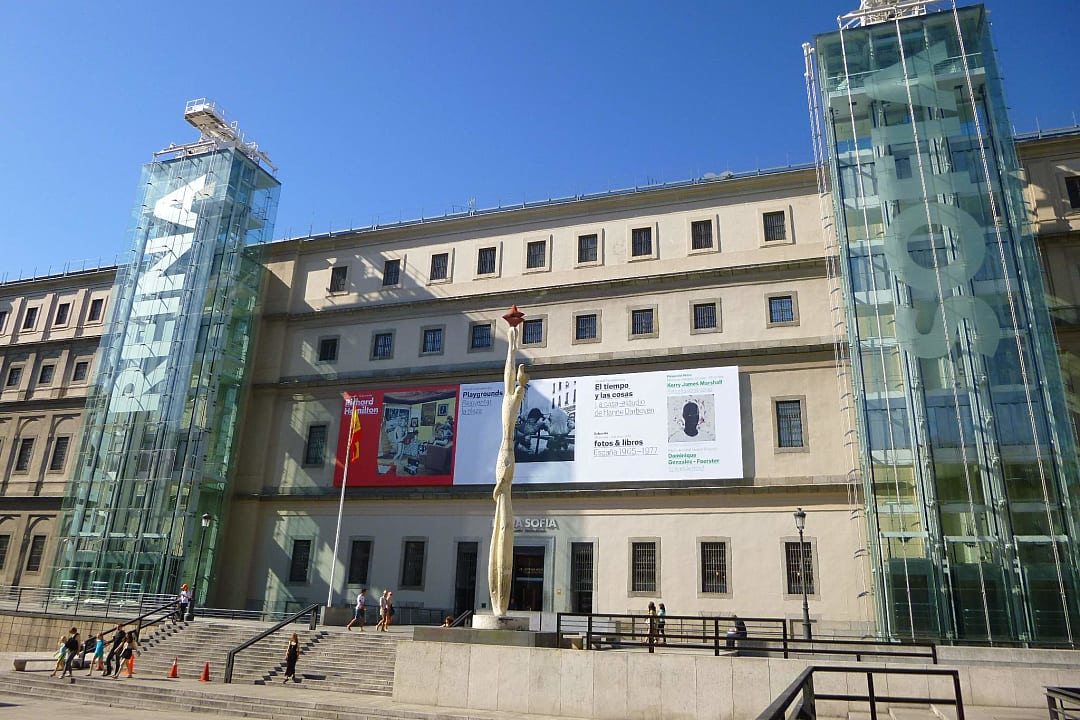
3. Reina Sofia Museum, Madrid

Reina Soffia Museum in Madrid, Spain
Reina Soffia Museum in Madrid, Spain. Photo by Zarateman / Wikimedia CC BY-SA 4.0

The roots of the Reina Sofía reach back to 1894, when Spain founded its first museum dedicated to contemporary art. That institution eventually consolidated the country's state collections of modern and contemporary work, and today the museum holds close to 25,000 pieces spanning the final decades of the 19th century to the present, with a particular strength in Latin-American art.

Every visit here moves toward one painting. Picasso created Guernica for the Spanish Pavilion at the 1937 Paris International Exposition and the museum built its identity around this single, enormous canvas depicting the horror of the Basque town's bombing during the Spanish Civil War. Standing before it in person carries a different weight than any reproduction can offer, the scale alone changing how the fractured horses and screaming figures land on you.

Beyond Guernica, the museum's galleries hold major paintings by Salvador Dalí and Joan Miró, both artists who moved in the same avant-garde circles as Picasso and helped define Spain's 20th-century artistic identity. The museum occupies two buildings that speak to each other across time: the historic Sabatini building and Jean Nouvel's striking contemporary extension, connected by a rooftop terrace worth the climb when it's open to visitors.

A traveler's perspective on the Reina Sofía:

  • Begin at Guernica with a guide who can walk you through its historical and political context before exploring the surrounding galleries
  • Trace the connections between Picasso, Dalí, and Miró as members of one interconnected, mutually influential artistic movement
  • Explore the museum's substantial Latin-American holdings, an emphasis the museum considers central to its collection
  • Save time beyond the icon: nearly 25,000 works extend far past a single painting, however famous

Let your travel specialist arrange an interpretation-led visit to Guernica, timed to the quiet hours when a single painting can command the room it deserves. Some encounters are worth planning an entire morning around. Spain’s Shining Jewels: Barcelona to Madrid Itinerary has more details to inspire your trip.

4. Picasso Museum, Barcelona

Hall of Las Meninos at the Picasso Museum in Barcelona, Spain. Photo by cea + / Flickr

Five adjoining medieval palaces on Carrer de Montcada hold the Picasso Museum, where the setting tells part of the story. Picasso's close friend and secretary Jaume Sabartés helped establish the museum through his own donations and the artist later gave major gifts, including his celebrated Las Meninas series. This was the first museum dedicated to Picasso to open during his lifetime and its nearly 5,000 works focus specifically on his formative years in Barcelona.

Wander through stone courtyards and Gothic staircases before reaching Sala 02, where Man in a Beret, painted when Picasso was barely a teenager, already shows a command of character and expression well beyond his years. Continue through the galleries toward Sala 14, home to Picasso's 1957 Las Meninas, the first large composition in his sustained reinterpretation of Velázquez's Prado masterpiece. Seeing both paintings within weeks of each other, one in the Prado and one here, gives a traveler a rare, direct line into how one master answered another across three centuries.

The museum also holds a warm, personal portrait of Sabartés wearing a ruff and bonnet, a quiet reminder that this collection grew from genuine friendship as much as artistic legacy. Nearby galleries hold portraits connected to Picasso's father, José Ruiz Blasco, a painter and teacher whose early guidance shaped his son's formal training before Picasso broke from it entirely.

A traveler's perspective on the Picasso Museum:

  • Walk the collection as a coming-of-age story, watching Picasso's technical mastery emerge years before his famous later styles
  • Make Sala 14 your final stop, letting the Las Meninas series close the visit on Picasso's most personal artistic conversation
  • Ask your guide to point out the medieval architecture: stone vaults and linked courtyards that stand in quiet contrast to Picasso's restless modernity
  • Seek out the Sabartés portrait as a personal footnote to the collection's larger public story

A specialist guide can trace Picasso's Barcelona for you well beyond these five palace walls, connecting the museum to the streets, cafês, and bohemian circles that shaped him. The city becomes part of the exhibition on a customizable itinerary like our Immersive Food and Culture Tour of Barcelona.

5. The City of Arts and Sciences, Valencia

City of Arts and Sciences in Valencia, Spain

Valencia transformed the former bed of the Turia River into one of the most striking architectural landscapes in Europe and the City of Arts and Sciences stands at its center as a sprawling cultural, scientific, and entertainment complex. It is home to landmark buildings, gardens, and living exhibits. The Valencian government founded the project's institutional company in July 1996, with architect Santiago Calatrava designing most of the complex and Félix Candela contributing to the Oceanogràfic. The site now stretches across roughly 1.2 miles and 86 acres, and L'Hemisfèric, the first structure completed, opened its doors in 1998.

Walking the complex at different hours of the day changes it entirely. White structures multiply in the reflecting pools at midday, then soften into something closer to sculpture as evening light angles across the concrete. L'Hemisfèric resembles a giant eye, its planetarium and IMAX programs typically running for 45 to 50 minutes, a perfect pause between longer stretches of walking.

A traveler's perspective on the City of Arts and Sciences:

  • Take an architecture-focused route through six major buildings, including areas normally closed to the general public
  • Pair the interactive science museum with the Oceanogràfic for a full day balancing hands-on discovery with marine life, roughly three hours for one and four for the other
  • Walk the Umbracle's landscaped promenade as an open-air gallery of Mediterranean planting and contemporary sculpture
  • Return after dark, when the complex's lighting design reveals angles the daytime crowds rarely notice

Your travel specialist can build a Valencia day that moves at exactly your pace, whether that means an early architectural walk before the heat arrives or a slow, golden-hour return once the crowds have thinned. Some places reward a second visit more than a first. See our Spain Tour for Well-Aged Travelers for more information.

6. Museu Nacional d'Art de Catalunya, Barcelona

Museum of National Art in Barcelona, Spain

Palau Nacional crowns the hill of Montjuïc, originally built for Barcelona's 1929 International Exposition and later transformed into home to Catalonia's national art collection. Inside its grand halls, centuries of Catalan visual culture unfold, but the museum's true signature lives in its Romanesque galleries, where entire church apses were rescued from remote Pyrenean villages and reassembled here.

The apse from Sant Climent de Taüll holds the museum's defining image: a 12th-century Maiestas Domini, Christ in Majesty, painted with an intensity that has made it one of Europe's essential Romanesque works. Nearby, the murals from Santa Maria de Taüll represent the most complete surviving example of a fully painted Catalan Romanesque church interior anywhere in the world. Recent conservation work has added newly recovered fragments from Sant Pere del Burgal and Sant Joan de Boí, evidence that this history continues to grow, decades after the first murals arrived.

A traveler's perspective on the MNAC:

  • Begin in the Romanesque galleries, where murals installed on reconstructed church apses recreate their original architectural setting
  • Compare the Taüll murals with those from Santa Maria de Taüll to understand two related but distinct medieval monuments
  • Step out onto the Palau Nacional terraces for one of the broadest views in Barcelona, stretching across Plaça d'Espanya and beyond
  • Follow the museum's timeline from medieval spirituality through Catalan modernism for a complete regional story

Ask your travel specialist to arrange a guide who can walk you through the Romanesque collection with the eye of an art historian, explaining how these murals traveled from remote mountain chapels into this grand hall on Montjuïc. Nine centuries of devotion deserve that kind of attention. Embark on our Best of Barcelona Itinerary in 7 Days.

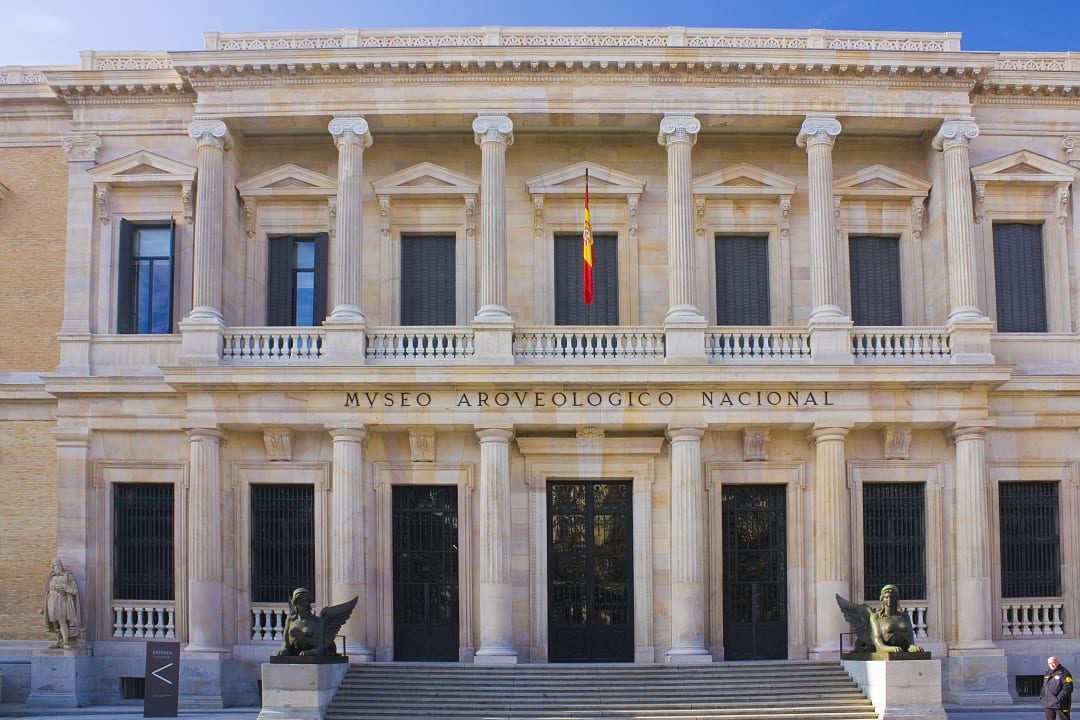
7. National Archaeological Museum, Madrid

National Archaeological Museum in Madrid, Spain

Queen Isabella II founded the National Archaeological Museum in 1867 to gather Spain's archaeological and decorative heritage under one roof. Its collection now spans from prehistory through the modern era, with particular depth across the Iberian Peninsula alongside notable Egyptian, Greek, and Roman holdings. Two of the museum's most celebrated treasures, the Lady of Elche and the Guarrazar crowns, entered the collection following a mid-20th-century exchange of artworks with France.

The Lady of Elche is still one of the museum's great mysteries. This 5th- or 4th-century BCE limestone bust, originally painted in vivid color, likely served a funerary or religious purpose, though scholars continue to debate her exact role. A hollow cavity at the back of the sculpture suggests she may once have held cremated remains, a detail that turns quiet contemplation of her elaborate headdress into something considerably more personal.

Nearby, the Treasure of Guarrazar tells a different story: six gold crowns and five jeweled crosses, created for Visigothic royalty and the church in the 7th century, glittering with pearls and colored glass in a display that captures an entire vanished kingdom's ambition. The museum's Egyptian galleries hold their own quiet standout in the Coffin of Bak, dated between 1539 and 1191 BCE and identified by the museum as its oldest and simplest coffin.

A traveler's perspective on the National Archaeological Museum:

  • Move chronologically through Iberian, Roman, Visigothic, and Islamic-era Spain to watch the peninsula's identity shift across centuries
  • Pair the Lady of Elche with the Guarrazar treasure to compare pre-Roman and Visigothic visions of power and belief
  • Visit the museum's reproduction of the Altamira cave ceiling as an introduction to Paleolithic imagery, then continue to the original portable artifacts nearby
  • Look for the Statue of Livia, wife of Emperor Augustus, anchoring the museum's presentation of Roman Hispania

Your travel specialist can arrange a private route through the museum's Essentials collection when you take our Madrid and La Rioja Tour: A Tale of Two Cultures Through Tradition, Food, 

8. Dali Theatre-Museum, Figueres

Dali Theatre-Museum in Figueres, Spain

Salvador Dalí held his very first public exhibition in 1919 inside the Figueres Municipal Theatre, as a teenager. Decades later, after the original theater suffered damage during the Spanish Civil War, Dalí returned to the same building and transformed it into something the world had never seen: a museum built entirely as a single surreal artwork, inaugurated in 1974 and now home to more than 1,500 of his pieces. It’s the largest collection of his work anywhere in the world.

Giant eggs crown the rooftop. Bread rolls decorate the exterior walls. A glass geodesic dome catches the Catalan sun overhead. Every detail carries Dalí's fingerprint, right down to the courtyards and theatrical interiors that blur the line between building and installation. The Mae West Room reveals its full illusion only from one exact vantage point, transforming an assembly of ordinary furniture into the actress's unmistakable face, a moment worth confirming with current visitor information before your visit, since access to individual installations can shift.

The Masterpieces Room offers a quieter, more personal glimpse into Dalí's taste: paintings he collected from artists including El Greco, Marcel Duchamp, Ernest Meissonier, and William-Adolphe Bouguereau, revealing the influences he studied before inventing something entirely his own.

A traveler's perspective on the Dalí Theatre-Museum:

  • Treat the entire building as the primary artwork, letting the rooftop, courtyards, and dome carry equal weight alongside the paintings inside
  • Look past the famous melting clocks toward Dalí's recurring, quieter obsessions with optical illusion, faith, and Catalan identity
  • Spend real time in the Masterpieces Room to understand the artists Dalí admired most
  • Connect the museum back to 1919, when a teenage Dalí first exhibited in this exact building, decades before he transformed it

Ask your travel specialist to time your visit around Figueres' quieter hours during our sample Spain Gastronomy Tour. Some museums ask to be experienced slowly. This is one of them.

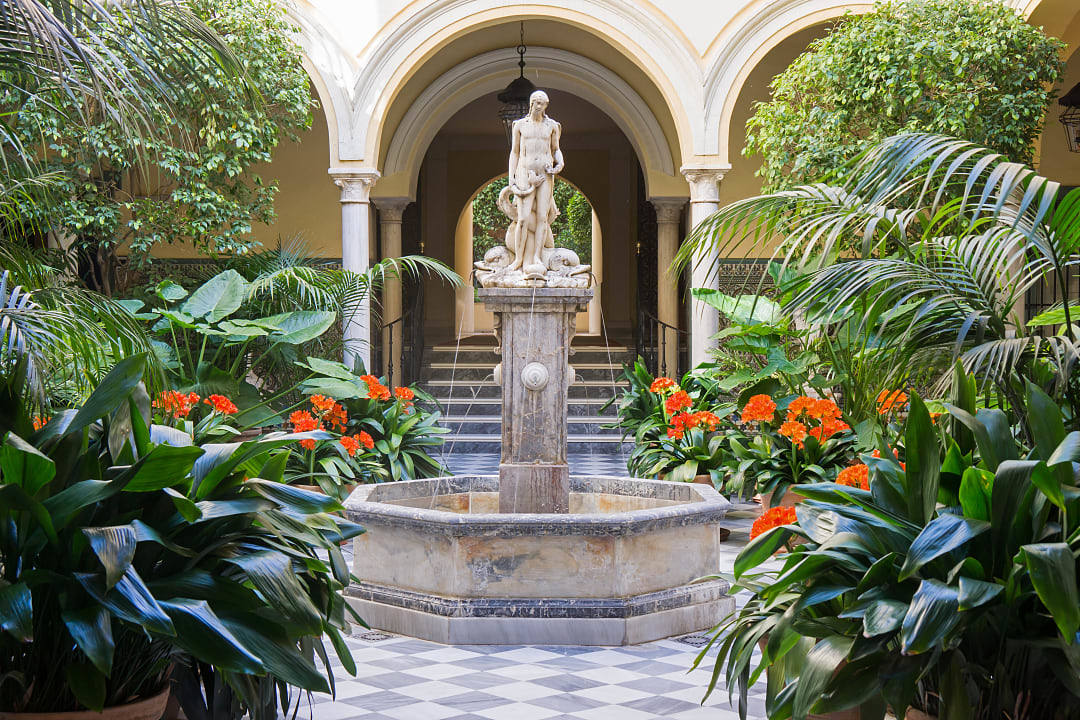
9. Museum of Fine Arts of Seville, Seville

Courtyard at the Museum of Fine Arts of Seville in Spain
Courtyard at the Museum of Fine Arts of Seville in Seville, Spain

Spain suppressed dozens of religious orders in 1835 and in the disruption that followed, the city founded the Museum of Fine Arts of Seville to preserve the artworks left behind from dissolved monasteries and convents. The museum settled into the former Convent of La Merced Calzada and its cloisters and church spaces are still part of the visitor experience today, giving the collection a setting almost as evocative as the paintings themselves.

Seville's Golden Age produced some of Spain's most emotionally direct religious art and this museum holds its finest examples. Bartolomé Esteban Murillo's The Virgin of the Napkin radiates a gentle, almost domestic warmth, rare in devotional painting of its era, while Francisco de Zurbarán's Saint Hugh in the Carthusian Refectory offers something starkly different: a monumental, quietly severe scene of monastic life rendered with stunning realism. Standing between these two paintings captures the full emotional range of Sevillian Baroque art in a single gallery.

The museum's collection extends further still, holding works by Juan de Valdés Leal, Diego Velázquez, and El Greco, each adding depth to Seville's story as one of Spain's great artistic centers during its wealthiest and most devout era.

A traveler's perspective on the Museum of Fine Arts of Seville:

  • Focus your visit on the Sevillian Baroque galleries to see how local artists transformed Counter-Reformation devotion into something dramatic and deeply human
  • Compare Murillo's tender, luminous saints against Zurbarán's austere, sculptural figures for two entirely different devotional languages
  • Spend time in the museum's former convent church spaces, where large altarpieces regain some of their original scale and spiritual force
  • Look for a rare early work by Velázquez, connecting the museum directly to the beginnings of Seville's greatest painter

Your travel specialist can pair this museum with a walk through Seville's historic churches and convents, extending the collection's religious visual world well beyond its own galleries. Some cities are museums in their own right. See our Barcelona, Seville, and Madrid tours for more inspiration.

Visit the Best Museums in Spain on Vacation

Dali Theatre-Museum in Figueres, Spain

These museums and the centuries of art rendered in particular detail rarely give up their best moments to a rushed itinerary. The real value in a journey like this lives in the details a specialist can arrange on your behalf: an early entry before the crowds, a guide who knows exactly which gallery deserves an extra 20 minutes, and a sequence of cities that lets each museum deepen the one before it.

Connect with your Zicasso travel specialist to design a Spain journey built entirely around your own curiosities, whether that means a single unforgettable morning with Velázquez or a slow, considered path through every one of these remarkable collections. Discover the Spain that waits quietly behind each frame after taking a look at our Spain travel guide.

30,000+ Verified Traveler Reviews