10 Best Places to Visit in Spain

Plaza d'Espańa in Seville, Spain

Plaza d'Espańa in Seville, Spain

When exploring the 10 best places to visit in Spain, each region is not an interchangeable stop on a checklist, but a place with its own history, cuisine, and light. Catalonia moves at a coastal pace, Andalusia carries its Moorish architecture, Basque Country builds its reputation on food, and Castile holds the country's royal history. Each asks to be experienced on its own terms, not compressed into a single itinerary.

The country's character shows in its details: orange blossoms drifting through Seville's Santa Cruz quarter at dawn, cool mountain air from the Sierra Nevada settling over Granada at night, the salt-and-iodine breeze off the Bay of Biscay in San Sebastián. It can also overwhelm a first-time visitor, with crowded plazas at midday, fatigue from moving between cities, and transit systems that reward planning over improvisation.

Extraordinary travel begins with a human touch and our destination specialists design every journey with care, insight, and personal attention. Zicasso's network of destination experts and vetted local guides knows which hours the Alhambra sits empty, which Andalusian courtyards never make the guidebooks, and which private driver can turn a transfer between cities into part of the trip.

1. Madrid

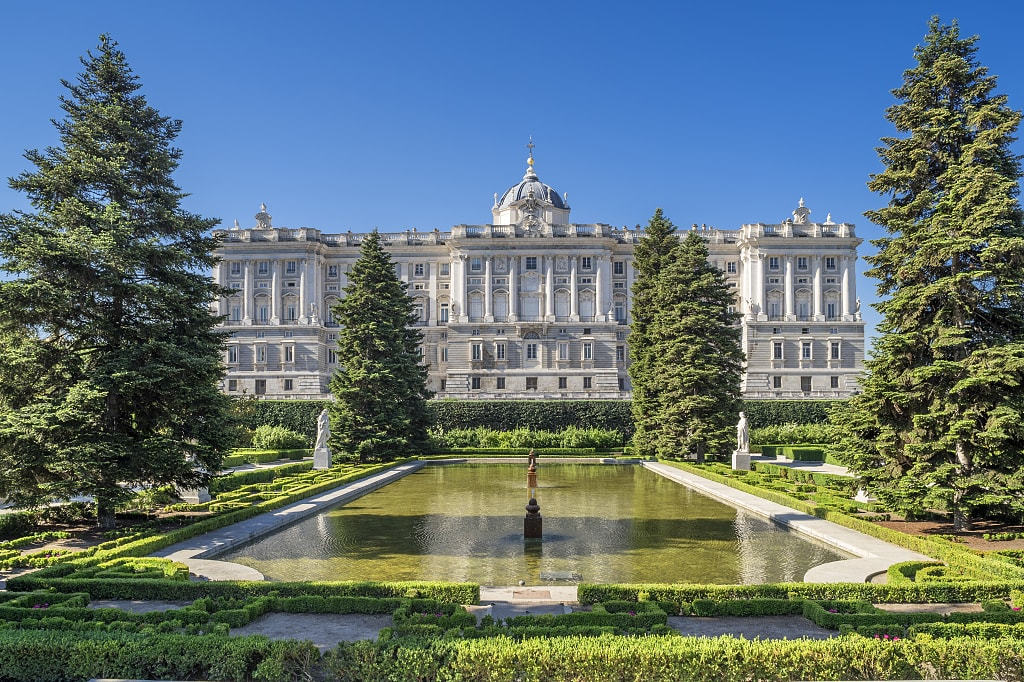
Royal Palace in Madrid, Spain.
Royal Palace in Madrid, Spain

Madrid is Spain's seat of power in more ways than one. Golden-hour light spreads across the Royal Palace facades, roasted coffee drifts through the cafés of Barrio de las Letras, and plaza strolls stretch into long dinners. The city holds no single unmissable monument; instead it offers an open supply of art, food, and street life for a traveler willing to wander.

Madrid's identity was shaped less by ancient conquest than by a royal decision: in 1561, King Philip II moved his court here from Toledo and the fortress town grew into a capital almost overnight. Private, closed-door access to the Prado Museum before public hours, guided by an art historian, turns that royal legacy into a one-on-one encounter with Velázquez and Goya.

From Fortress Town to Royal Capital

Madrid's history is short by Spanish standards, but decisive, built on a single strategic choice that reshaped the entire country's center of gravity.

  • A Moorish Foundation: Emir Muhammad I of Córdoba built a fortress here in the 9th century, naming the settlement Mayrit, "place of abundant water," making Madrid one of the few European capitals with Islamic origins.
  • The Court Arrives: In 1561, King Philip II relocated the Spanish court from Toledo to Madrid and the city was formally declared national capital by his son Philip III a generation later.
  • A Golden Age Address: Barrio de las Letras earned its name from Golden Age writers Cervantes, Lope de Vega, and Calderón de la Barca, who lived and wrote within its narrow streets in the 17th century.
  • The Bourbon Boulevards: King Carlos III laid out grand arteries like the Paseo del Prado in the 18th century, the same avenues that still frame the city's museum district today.

What to Expect

Madrid will reward you if you trade a checklist for a slower pace, one built around light, food, and conversation rather than monuments alone.

  • Feel the golden-hour light settle over the Royal Palace facades as the scent of roasted coffee drifts through the cafes of Barrio de las Letras.
  • Taste rare Ribera del Duero vintages in a centuries-old cellar or enjoy a reserved table at a Michelin-starred address like DiverXO for a modern read on Spanish cuisine.
  • Hear the hum of an evening paseo as plazas fill and conversations stretch across long, unhurried dinners late into the night.
  • Evening light turns the Puerta de Alcalá and Plaza Mayor's arcades warm and amber, drawing locals out for a final stroll before dinner.

Where to Enjoy Your Visit

Madrid's core sits within walking distance, but the difference between a crowded visit and a private one comes down to timing and access.

  • Prado Museum: Enter before public hours on a private, closed-door tour with a credentialed art historian for an unhurried read of Velázquez and Goya.
  • Royal Palace: Explore the largest functioning royal palace in Western Europe, still used for state ceremonies, with rooms that trace three centuries of Bourbon rule.
  • Plaza Mayor: Walk the 17th-century square built under Philip III, once the site of markets, bullfights, and royal coronations, now Madrid's central gathering point.
  • Puerta del Sol: Stand at kilometer zero, the point from which all of Spain's radial roads are measured, in the square that sparked the 1808 revolt against Napoleon.
  • Centro de Arte Reina Sofía: See Picasso's Guernica alongside Spain's finest 20th-century collection, housed in a former 18th-century hospital.

Recommended length of stay: 2-3 days

Explore our Barcelona and Madrid tours or connect with our specialists to plan your visit.

2. Seville

Real Alcazar in Seville, Spain.
Real Alcazar in Seville, Spain

Seville's charm is not in any single monument, but in the pace of daily life, set centuries ago when the city was the Moorish capital of Spain. Orange blossoms drift through the Santa Cruz quarter, a guitar echoes from a private courtyard, and horse-drawn carriages move over cobblestones worn smooth by history.

The city's Mudejar palaces and Gothic cathedral trace back to its years as capital of the Almoravid and Almohad dynasties, when it rivaled Córdoba as a center of wealth and learning. Priority access to the Real Alcázar, guided by a historian who reads its Mudejar architecture layer by layer, avoids the crowds that gather by midmorning.

Capital of Al-Andalus

Seville's architecture reads like a layered history book, each dynasty building over the last, without erasing what came before.

  • Almoravid and Almohad Rule: Seville served as capital of the Almoravid dynasty from 1091 and the Almohad dynasty from 1146, rivaling Córdoba as the intellectual and commercial heart of Muslim Spain.
  • The Giralda's Origins: The cathedral's bell tower began as the minaret of the city's Almohad-era mosque, its lower two-thirds still standing exactly as built in the 12th century.
  • The Reconquest of 1248: King Fernando III of Castile conquered Seville in 1248 and legend holds he rode his horse up the Giralda's internal ramps to claim the tower for Christian Spain.
  • Gateway to the Americas: After the Christian conquest, Seville became Spain's main port for trade with the New World, a role that funded its 16th-century Golden Age of art and architecture.

What to Expect

Seville’s pace is shaped by its climate and its history, best absorbed slowly rather than rushed between landmarks.

  • Feel the intoxicating scent of orange blossoms drift through the Santa Cruz quarter as horse-drawn carriages move over cobblestones worn smooth by centuries of foot traffic.
  • Hear a Spanish guitar echo from a private courtyard during an intimate flamenco performance, staged in an 18th-century palacio far from the tourist tablaos near the cathedral.
  • Taste olive oil straight from a rural estate on a private day trip beyond the city walls, guided by the families who have pressed it for generations.
  • Evening brings the golden light of the Guadalquivir riverbank, where locals gather along Triana's promenade as tapas bars fill for the night.

Where to Enjoy Your Visit

Seville's landmarks sit close together in the old quarter, but each rewards a different kind of attention.

  • Seville Cathedral: Stand inside the largest Gothic cathedral in the world, built atop the city's Almohad mosque and home to the tomb of Christopher Columbus.
  • Real Alcázar: Walk the oldest royal palace still in use in Europe, a working residence for Spain's royal family that blends Mudejar, Gothic, and Renaissance styles.
  • Barrio Santa Cruz: Wander the former Jewish quarter's narrow lanes, where whitewashed walls and hidden courtyards preserve the medieval street plan almost unchanged.
  • Museum of Flamenco Dance: Trace the art form's roots through interactive exhibits founded by flamenco dancer Cristina Hoyos in a restored 18th-century house.
  • Museum of Fine Arts: See one of Spain's finest collections of Golden Age painting, housed in a former convent and second only to the Prado.

Recommended length of stay: 3-4 days

Explore our Barcelona, Madrid, and Seville tours or connect with our specialists to plan your visit.

3. Barcelona

Park Guell in Barcelona, Spain.
Park Guell in Barcelona, Spain

Barcelona pairs Gaudí's surrealist architecture with a coastal ease. Salt air drifts in from Barceloneta, kaleidoscope light filters through the stained glass of the Sagrada Família, and the sizzle of fresh seafood carries through La Boqueria market. Beyond the beaches and La Rambla, the city holds Gothic alleys, avant-garde kitchens, and Mediterranean views.

Barcelona's foundations run far deeper than Gaudí. The city began as a Roman colony called Barcino and its medieval wealth as capital of the Crown of Aragon still shapes the Gothic Quarter today. Early-morning private entry to the Sagrada Família and Park Güell, ahead of the crowds, lets that architectural lineage stand on its own.

From Roman Colony to Mediterranean Power

Barcelona's 2,000-year history moves from a modest garrison town to one of the Mediterranean's most powerful trading capitals.

  • Roman Barcino: Emperor Augustus founded the colony around 15 BC as a walled settlement organized around a forum, remnants of which still stand beneath the Gothic Quarter.
  • The Crown of Aragon: An 1137 dynastic marriage between Count Ramon Berenguer IV and Queen Petronilla of Aragon created the Crown of Aragon, turning Barcelona into a major Mediterranean trading power.
  • A Medieval Golden Age: During the 13th and 14th centuries, Barcelona reached its peak as a maritime and commercial center, financing the Gothic Quarter's cathedrals and palaces.
  • Gaudí's Modernisme: Antoni Gaudí began the Sagrada Família in 1883, a project so ambitious it remains unfinished more than a century after his death.
What to Expect

Barcelona's sensory range runs from the sea to the mountains, with architecture connecting nearly every stop in between.

  • Feel salt air drift in from Barceloneta as fresh seafood sizzles through the stalls of La Boqueria market, steps from the crowds of La Rambla.
  • See kaleidoscope light filter through the stained glass of the Sagrada Família, a spectacle that shifts by the hour as the sun moves across the nave.
  • Taste a private sunset charter's Costa Brava pour, decanted by a local sommelier as the coastline catches the day's last light.
  • Evening brings live guitar and quiet conversation through the narrow lanes of the Gothic Quarter, where medieval stone still holds the day's heat.

Where to Enjoy Your Visit

Barcelona's landmarks reward early access more than almost any other city on this list, since midday crowds can double wait times at its top sites.

  • La Sagrada Família Basilica: Enter ahead of the crowds on a private early-morning visit to see Gaudí's nature-inspired columns and stained glass without the midday queue.
  • Gothic Quarter: Trace the walls of Roman Barcino through narrow medieval lanes that still follow the ancient city's original street plan.
  • Park Güell: Walk through Gaudí's mosaic-tiled terraces, designed as a garden city and now one of the clearest expressions of Catalan Modernisme.
  • Palace of Catalan Music: See Lluís Domènech i Montaner's 1908 concert hall, a UNESCO-listed masterpiece of stained glass and ceramic ornament.
  • Montjuïc: Climb the hill overlooking the port for views that stretch from the Mediterranean to the city's Gothic core.

Recommended length of stay: 3-4 days

Find more ideas for structuring your stay in our Barcelona itineraries and vacation packages.

4. Málaga

Alcazaba de Malaga in Spain.
Alcazaba de Malaga in Malaga, Spain

Málaga has moved past its old reputation as a layover on the way to the Costa del Sol. Coastal air carries the sweetness of vino dulce and the renovated port promenade fills with tapas plates and conversation. Roman ruins and Moorish fortifications sit alongside Picasso's legacy, giving the city a depth its beaches alone don't suggest.

Málaga's history stretches back nearly 2,800 years, making it one of the oldest continuously inhabited cities in Western Europe. A private, after-hours viewing at the Picasso Museum Málaga, guided by a curator, connects that ancient port city directly to the artist born within its walls.

One of Europe's Oldest Ports

Málaga's age is easy to overlook next to its beaches, but few European cities have been inhabited this long without interruption.

  • Phoenician Origins: Phoenician traders founded Malaka around 770 BC as a fish-salting and trading post, giving the city roughly 2,800 years of continuous habitation.
  • A Name Built on Salt: The city's name likely derives from the Phoenician word for salt, malaha, referencing the industry that first made the port valuable.
  • The Moorish Alcazaba: The current Alcazaba fortress was built in the 11th century over the ruins of earlier Phoenician and Roman defenses, and remains one of Spain's best-preserved Moorish citadels.
  • Picasso's Birthplace: Pablo Picasso was born in Málaga in 1881 and the Picasso Museum now traces his early development a short walk from his birthplace.

What to Expect

Málaga blends beach-town ease with a depth of history that rewards those who look past the Costa del Sol label.

  • Feel coastal air carry the sweetness of vino dulce as the renovated port promenade fills with tapas plates and easy conversation.
  • Taste fresh seafood at a secluded Mediterranean cove, reached by private yacht transfer away from the crowded beach clubs.
  • See Roman ruins sit directly alongside Moorish fortifications, a physical record of the layered civilizations that built the old town.
  • Evening brings warm light over the port's renovated promenade as diners spill onto terraces for a late Andalusian dinner.

Where to Enjoy Your Visit

Málaga's sites cluster around its historic center, easily explored on foot between the port and the Alcazaba hill.

  • Alcazaba de Málaga: Climb through the 11th-century Moorish fortress's gardens and courtyards, built over earlier Phoenician and Roman defensive walls.
  • Málaga Cathedral: See the unfinished 16th-century cathedral known locally as "La Manquita," or "the one-armed lady," for its incomplete second tower.
  • Botanical Gardens: Walk La Concepción's 19th-century subtropical gardens, planted with species collected from across Spain's former colonial trade routes.
  • Pablo Ruiz Picasso Foundation Birthplace Museum: Visit the house where Picasso was born in 1881, now a museum tracing his family and earliest artistic influences.

Recommended length of stay: 2 days

Explore our Southern Spain tours or connect with our specialists to plan your visit.

5. Granada

Alhambra in Granada, Spain.

Granada is monumental without being loud. Water runs through the fountains of the Generalife, jasmine scents the narrow lanes of the Albaicín, and the snow-capped Sierra Nevada rises on the horizon, striking in early morning or at dusk, when day-trip crowds thin.

The Alhambra's story begins with a single dynasty: the Nasrids, the last Islamic rulers of Western Europe, who built their palace complex in stages across two centuries. A private night tour of the Alhambra, its palaces lit only by moonlight and free of daytime visitors, is the closest you can come to experiencing it as its builders intended.

The Last Islamic Kingdom in Western Europe

Granada's history is inseparable from the Nasrid dynasty, whose 260-year rule produced the most complete surviving example of Islamic palace architecture in Europe.

  • The Nasrid Dynasty Begins: Muhammad I ibn Nasr founded the dynasty in 1232 and began construction of the Alhambra in 1238, on a hilltop fortified since at least the 9th century.
  • Two Sultans, One Masterpiece: The Alhambra's most celebrated spaces, the Court of the Lions and the Palace of Comares, were built under Sultans Yusuf I and Muhammad V in the mid-14th century.
  • The Last Muslim Kingdom Falls: The Emirate of Granada was the final Islamic state in Western Europe, surrendering to Ferdinand and Isabella on January 2, 1492, ending nearly 800 years of Muslim rule in Spain.
  • A UNESCO Trio: The Alhambra, the Albaicín quarter, and the Generalife gardens were jointly named a UNESCO World Heritage Site in 1984, recognizing them as a single historic complex.

What to Expect

Granada rewards a traveler who slows down, since its best moments come at the edges of the day rather than at midday.

  • Feel water run through the fountains of the Generalife as jasmine scents the narrow lanes of the Albaicín at dusk.
  • See the snow-capped Sierra Nevada rise on the horizon behind the Alhambra's red walls, striking in early morning or evening light.
  • Taste a private tea tasting and dinner in a historic carmen overlooking the illuminated Alhambra, extending the day's quiet into the evening.
  • Hear a private driver navigate the Albaicín's steep, restricted lanes without the friction of public buses climbing the same narrow streets.

Where to Enjoy Your Visit

Granada's core sites sit on two hills facing each other across the Darro River valley, the Alhambra on one side and the Albaicín on the other.

  • Alhambra: Tour the Nasrid palaces by moonlight on a private night visit, free of the daytime crowds that fill the complex by mid-morning.
  • Albaicín: Wander the old Moorish quarter's whitewashed lanes and hidden carmen gardens, largely unchanged since the Nasrid era.
  • Capilla Real: See the tombs of Ferdinand and Isabella, the Catholic monarchs who completed the Reconquista and financed Columbus's voyages.
  • Santa María de la Encarnación Cathedral: Explore the Renaissance cathedral built on the site of Granada's former Great Mosque after the 1492 conquest.
  • La Alcaicería: Walk the reconstructed silk market's narrow lanes, once the commercial heart of Nasrid Granada's textile trade.

Recommended length of stay: 2 days

Explore our Best Places to Visit in Spain with Family guide or connect with our specialists to plan your visit.

6. San Sebastián

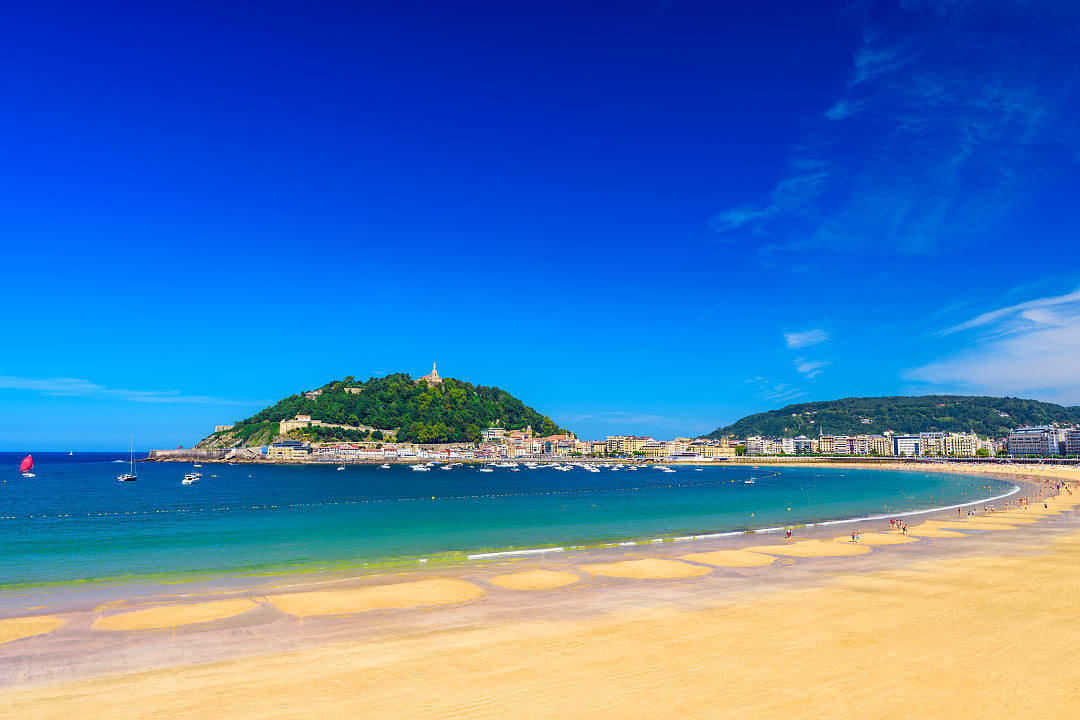
La Concha beach in San Sebastian, Spain

San Sebastián carries its reputation as Spain's culinary capital with quiet confidence. Mist off the Atlantic sweeps across La Concha Bay, charcoal-grilled turbot sizzles in open kitchens along the old town, and a glass of crisp local Txakoli accompanies nearly every plate.

That reputation is recent by Basque standards, built in the 1970s when a group of young local chefs applied French nouvelle cuisine techniques to Basque ingredients and rewrote the region's food culture. A private pintxos crawl led by a local insider connects that culinary revolution directly to the bar counters where it still plays out nightly.

Where Basque Cuisine Was Reinvented

San Sebastián's food culture rests on two pillars, one built by home cooks and one by professional chefs, that developed side by side over more than 150 years.

  • The First Gastronomic Society: San Sebastián's txoko tradition dates to at least 1870, when private culinary clubs began forming so men could cook and share meals as equals, regardless of social class.
  • A Tradition That Spread: By 1920, gastronomic societies had spread across Gipuzkoa province; today the Basque Country counts more than 1,500 of these private food clubs.
  • New Basque Cuisine: In the 1970s, a group of young Basque chefs applied French nouvelle cuisine techniques to local ingredients, launching a culinary movement that reshaped Spanish gastronomy.
  • A Michelin Density Like No Other: San Sebastián now rivals Kyoto for the most Michelin stars per capita of any city in the world, a legacy of that 1970s revolution.

What to Expect

San Sebastián is built for travelers who plan their day around meals rather than fitting meals around sightseeing.

  • Feel mist off the Atlantic sweep across La Concha Bay as charcoal-grilled turbot sizzles in open kitchens along the old town's pintxos bars.
  • Taste a glass of crisp local Txakoli alongside nearly every dish, a semi-sparkling white wine made for pairing with seafood.
  • Hear the low hum of a private txoko kitchen, a gastronomic society traditionally closed to outsiders, where cooking is treated as a shared craft.
  • In the evening, the old town's bars come to life, each counter loaded with off-menu pintxos reserved for regulars and insiders.

Where to Enjoy Your Visit

San Sebastián's food culture is best explored on foot, moving between the old town's bars and the coastline that frames them.

  • La Concha Beach: Walk the curved promenade along one of Europe's most celebrated urban beaches, framed by the Bay of Biscay's mist and light.
  • San Sebastián Old Town: Navigate the narrow streets of Parte Vieja, birthplace of the city's gastronomic society tradition and its densest concentration of pintxos bars.
  • Pintxos Tours: Join a private, VIP crawl led by a culinary insider who bypasses crowded bars for reserved tables and off-menu dishes.
  • Monte Urgull: Climb the hill overlooking the bay for views over the old town and the Atlantic beyond.
  • Museo San Telmo: Explore Basque history and art inside a former 16th-century Dominican monastery.
  • Palacio de Miramar: Walk the gardens of the former royal summer palace, perched on the cliffs above La Concha Bay.

Recommended length of stay: 2-3 days

Explore our Top Things to Do in San Sebastián guide or connect with our specialists to plan your visit.
7. Valencia

City of Arts and Sciences in Valencia, Spain

Valencia balances a forward-looking skyline with Mediterranean tradition, moving at a gentler tempo than Madrid or Barcelona, while holding the origin of a dish both cities have since borrowed: paella. The aroma of wood-fired saffron rice drifts from countryside kitchens, citrus scents the Turia Gardens, and the white futurist forms of the City of Arts and Sciences catch the coastal light.

Valencia's roots go back further than its paella: the city was founded in 138 BC as a Roman veterans' colony, destroyed in a civil war, and rebuilt to become one of Spain's wealthiest medieval trading ports. A private paella masterclass at a countryside alquería teaches the dish from broth to socarrat, tracing that agricultural legacy back to the rice paddies that still ring the city.

From Roman Veterans' Colony to Silk Capital

Valencia's history moves from a small Roman settlement, through Moorish prosperity, to a medieval Golden Age built on trade rather than conquest.

  • A Colony for Veterans: Roman consul Decimus Junius Brutus founded Valentia in 138 BC as a settlement for roughly 2,000 discharged soldiers, making it one of the oldest cities in Spain.
  • Destroyed and Rebuilt: Pompey razed the city in 75 BC during a Roman civil war; it was rebuilt decades later and grew rapidly under new waves of Italian colonists.
  • The Reconquest of 1238: King James I of Aragon retook Valencia from Moorish rule in 1238, founding the independent Kingdom of Valencia within the Crown of Aragon.
  • A Silk Trade Golden Age: Valencia's medieval prosperity peaked with the silk trade, financing landmarks like La Lonja de la Seda, the Gothic silk exchange that still anchors the old city.

What to Expect

Valencia moves at its own pace, closer to the Mediterranean's tempo than to the urgency of Spain's larger capitals.

  • Feel the aroma of wood-fired saffron rice drift from countryside kitchens as a chef teaches the dish from broth to socarrat at a rural alquería.
  • See the white futurist forms of the City of Arts and Sciences catch the coastal light, a striking contrast to the medieval silk exchange nearby.
  • Taste citrus scenting the Turia Gardens, a park built along the riverbed that once flooded the city and now threads green space through its center.
  • High-speed AVE Preferred Class service connects Valencia smoothly to Madrid and Barcelona, turning the city into an easy addition rather than a detour.

Where to Enjoy Your Visit

Valencia's landmarks span from Roman-era ruins to some of Europe's most striking contemporary architecture.

  • The City of Arts and Sciences: Explore Santiago Calatrava's futurist complex of museums, an opera house, and Europe's largest aquarium, built along the former Turia riverbed.
  • Valencia Old Town: Wander medieval streets where Roman, Moorish, and Gothic architecture sit within a few blocks of each other.
  • La Lonja de la Seda: Step inside the 15th-century Gothic silk exchange, a UNESCO World Heritage Site built at the height of Valencia's trading wealth.
  • Mercado Central: Browse one of Europe's oldest working markets, housed in an early 20th-century Art Nouveau building.
  • San Nicolás de Bari: See the Baroque ceiling frescoes inside a church often called "Valencia's Sistine Chapel."

Recommended length of stay: 2-3 days

Explore our Barcelona, Valencia, and Madrid tours or connect with our specialists to plan your visit.

8. Córdoba

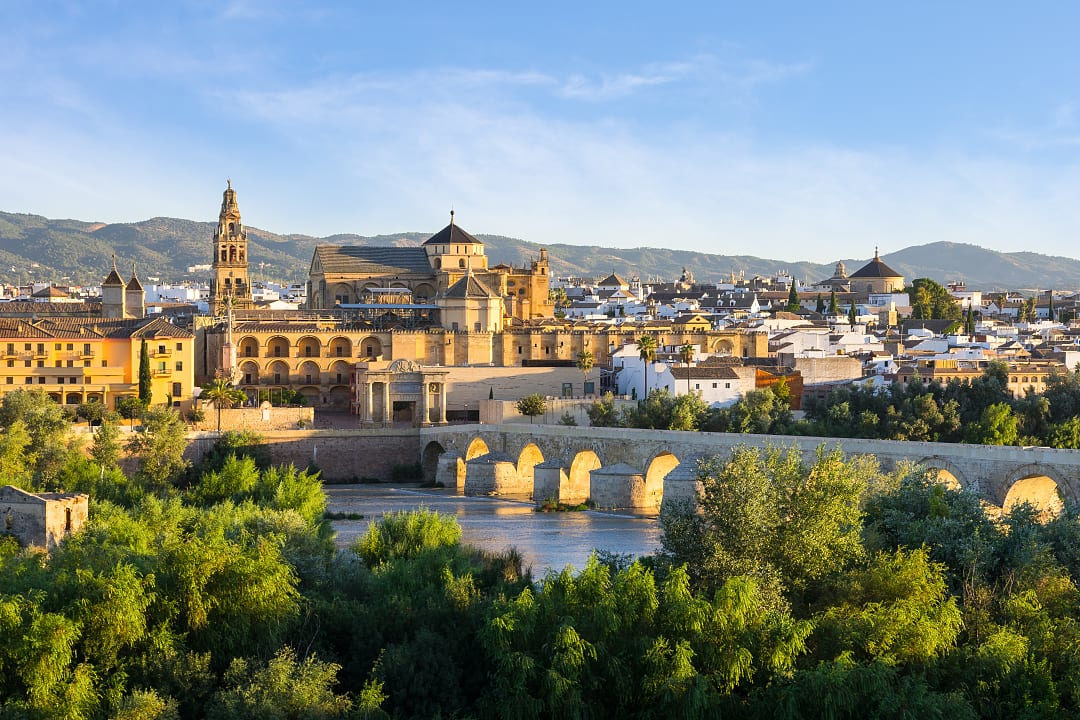
Roman bridge and Mosque–Cathedral of Córdoba
Cordoba, Spain

Córdoba sits at the crossroads of Moorish, Jewish, and Christian Spain, and its architecture holds that layered history intact. Cool shadow pools beneath the forest of arches inside the Mezquita, orange blossoms scent quiet stone courtyards and the narrow lanes of the old Jewish quarter carry little of the noise found in Spain's larger cities.

The Mezquita itself charts Córdoba's rise and fall. It began in 785 under the first Umayyad emir, expanded over two centuries, and still stands as the seat of a Renaissance cathedral built inside its arches. Private, early-morning access, ahead of public entry, lets you see the arches and horseshoe columns in near silence.

From Umayyad Emirate to Christian Cathedral

Córdoba's single greatest monument tracks the city's entire political history, from an exiled prince to a Catholic emperor.

  • A Mosque Begun in Exile: Abd al-Rahman I, a Umayyad prince who fled Damascus, began construction of the Great Mosque in 785, building a rival to the mosques of the caliphate that had exiled him.
  • The Caliphate's Golden Age: In 929, Abd al-Rahman III declared himself caliph, making Córdoba the capital of the Caliphate of Cordoba and, by the 10th century, one of the largest and most learned cities on Earth.
  • A Cathedral Built Within: After Ferdinand III's conquest in 1236, the mosque was consecrated as a cathedral; in 1523, Charles V authorized a full Renaissance cathedral to be built inside the mosque's arches.
  • A UNESCO Landmark: Córdoba's historic center, including the Mezquita, was named a UNESCO World Heritage Site in 1984

What to Expect

Córdoba's pace is quieter than Seville's or Granada's, a city built for slow mornings and unhurried courtyards.

  • Feel cool shadow pool beneath the forest of arches inside the Mezquita, where horseshoe columns stretch in near silence before the public crowds arrive.
  • Smell orange blossoms scent quiet stone courtyards, a legacy of the Moorish irrigation systems that still water the city's private patios.
  • Hear little of the noise found in Spain's larger cities along the narrow lanes of the old Jewish quarter, the Judería.
  • In the evening, families sit in flower-filled courtyards, hosted by the local homeowners who maintain them year-round.

Where to Enjoy Your Visit

Córdoba rewards travelers who look past the Mezquita to the residential quarter that surrounds it.

  • Mezquita: Walk the forest of more than 850 horseshoe arches inside the Mosque-Cathedral, begun in 785 and expanded across two centuries of Umayyad rule.
  • Judería: Wander the medieval Jewish quarter's narrow, whitewashed lanes, one of the best-preserved historic Jewish neighborhoods in Europe.
  • Alcázar of the Christian Monarchs: Explore the fortress-palace where Ferdinand and Isabella planned the final campaign of the Reconquista and met with Christopher Columbus.
  • Calleja de las Flores: Photograph the narrow, flower-draped alley that frames the Mezquita's bell tower at its far end.
  • Palacio de Viana: Visit a 14th-century palace built around 12 distinct courtyard gardens, each with its own character and planting scheme.

Recommended length of stay: 2 days

Explore our Granada, Córdoba, Seville tour for more inspiration or connect with our specialists to plan your visit.
9. Bilbao

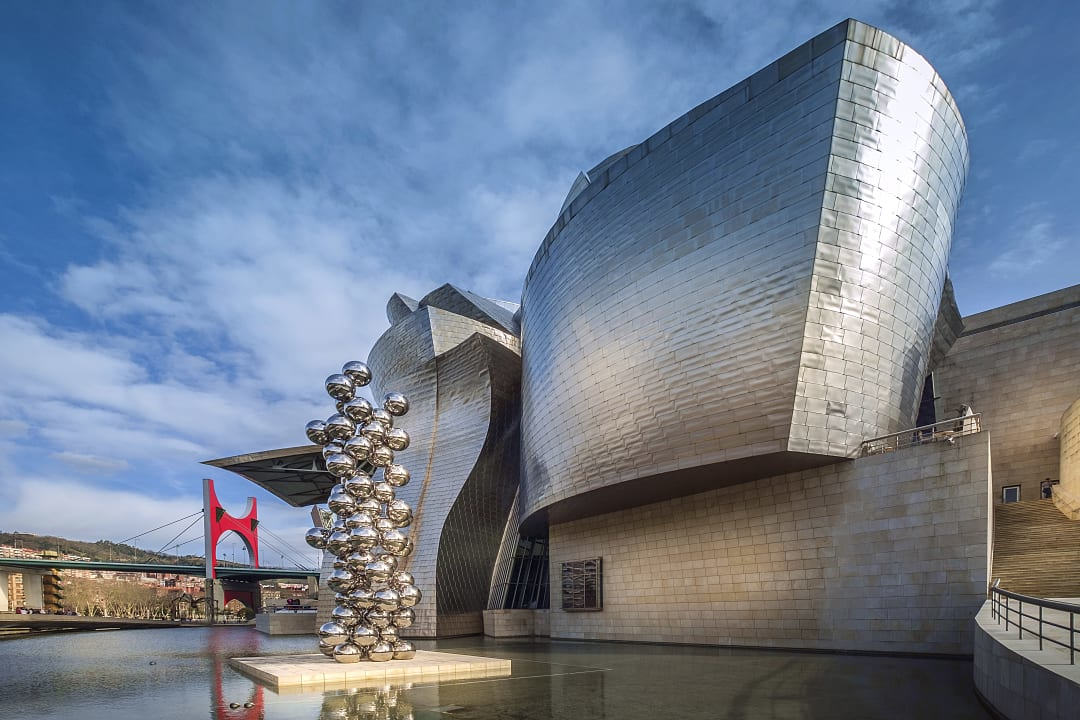
Guggenheim Museum in Bilbao, Spain

Bilbao moved from industrial port to art capital within a generation. The Frank Gehry-designed Guggenheim catches light in shifting titanium panels along the Nervión River and the city's Basque kitchens serve some of northern Spain's sharpest cooking.

Bilbao's transformation is a documented case study: a 700-year-old trading port that collapsed with the steel industry in the 1980s, then rebuilt itself around a single museum. A private tour of the Guggenheim, guided by a contemporary art scholar, goes past the building's exterior into the substance of its collection.

The Bilbao Effect

Few cities anywhere have reinvented themselves as deliberately as Bilbao. The story runs from a medieval trading charter to a titanium museum.

  • A Chartered Port Town: Diego López V de Haro, Lord of Biscay, founded Bilbao on June 15, 1300, granting it a trading charter that made it a required stop for goods moving from Castile to the sea.
  • Iron and Industry: Bilbao's port grew rich exporting iron ore and wool through the 19th century, fueling rapid industrialization and a booming steel and shipbuilding economy.
  • Crisis in the 1980s: The global steel industry's collapse and a catastrophic 1983 flood devastated Bilbao's economy, forcing a complete rethink of the city's future.
  • The Guggenheim Effect: The Guggenheim Museum opened in 1997 and its success at reviving the city gave rise to the term "the Bilbao Effect," now studied by urban planners worldwide.

What to Expect

Bilbao rewards travelers who come for design as much as food, since both define the city equally.

  • See the Frank Gehry-designed Guggenheim catch light in shifting titanium panels along the Nervión River, a building that changed how cities think about culture-led renewal.
  • Taste some of northern Spain's sharpest cooking in the city's Basque kitchens, where pintxos culture runs as deep as in San Sebastián.
  • Feel the cool river breeze off the Nervión as it winds past the museum toward the Bay of Biscay.
  • Evening brings Casco Viejo's Seven Streets to life with poteo, the Basque custom of moving bar to bar for a single pintxo and a small glass of wine at each stop.

Where to Enjoy Your Visit

Bilbao's transformation is best understood by pairing its industrial past with its cultural present.

  • Guggenheim Museum: Join a private tour guided by a contemporary art scholar, moving past the building's titanium exterior into the substance of its collection.
  • Basque Museum: Explore Basque ethnography and history inside a restored 17th-century Jesuit college.
  • Museum of Fine Arts of Bilbao: See one of Spain's most significant art collections outside Madrid, spanning medieval to contemporary Basque and European work.
  • Casco Viejo: Wander the Seven Streets of Bilbao's old town, the commercial heart of the city since its 1300 founding.
  • Plaza Nueva: Sit beneath the neoclassical arcades of Bilbao's 19th-century main square, ringed by pintxos bars.

Recommended length of stay: 2 days

Explore our Northern Spain tours and vacations or connect with our specialists to plan your visit.
10. Segovia

Alcázar de Segovia in Segovia, Spain

Segovia feels like a fairytale built in stone, an easy addition to a Madrid stay rather than a detour. The Roman aqueduct's granite blocks dominate the skyline, the aroma of slow-roasted cochinillo drifts from centuries-old taverns, and the Sierra de Guadarrama rises behind the Alcázar's turrets.

The aqueduct is nearly 2,000 years old and was built without a drop of mortar, a feat of Roman engineering that still captures tourists' imaginations, if not water. A VIP tour of the Alcázar of Segovia, including access to its tower vantage points closed to standard ticket holders, connects that Roman precision to the castle that may have inspired Walt Disney himself.

A Roman Engineering Feat Turned Royal Seat

Segovia's two defining monuments, one Roman and one medieval, were built more than a thousand years apart, but now define the same skyline.

  • A Roman Masterwork: The aqueduct was built under the Flavian emperors, likely between the late 1st and early 2nd centuries AD, using granite blocks held together entirely by their own weight.
  • 166 Arches, No Mortar: The aqueduct's two tiers span 166 arches and carry water more than 10 miles from the Frío River, a structure that still stands nearly unchanged after 2,000 years.
  • A Fortress Fit for a Queen: The Alcázar was first documented in the 12th century and became the site where Isabella I was proclaimed Queen of Castile on December 13, 1474.
  • The Disney Connection: The Alcázar's turrets are widely cited as an inspiration for Walt Disney's Sleeping Beauty castle, a detail that surprises most first-time visitors.

What to Expect

Segovia condenses centuries of engineering and royal history into a walkable old town, best explored slowly over a day or two.

  • See the Roman aqueduct's towering granite blocks dominate the skyline, held together without a single drop of mortar.
  • Taste slow-roasted cochinillo at a centuries-old tavern, complete with a traditional carving ceremony performed tableside.
  • Feel the Sierra de Guadarrama rise behind the Alcázar's turrets, a mountain backdrop visible from the castle's private tower vantage points.
  • Evening brings a chauffeured Mercedes sedan through the Guadarrama mountains back toward Madrid, bypassing the public bus routes entirely.

Where to Enjoy Your Visit

Segovia's old town is compact enough to see everything on foot in a single day, anchored by two landmarks built a millennium apart.

  • Aqueduct of Segovia: Walk beneath the 166-arch Roman aqueduct, built without mortar and still standing nearly 2,000 years after construction.
  • Alcázar de Segovia: Tour the fairytale castle where Isabella I was proclaimed queen in 1474, with VIP access to towers closed to standard visitors.
  • Palacio Real de la Granja: Visit the 18th-century royal summer palace and gardens, modeled after Versailles by the Bourbon king Philip V.
  • Catedral de Segovia: See the last great Gothic cathedral built in Spain, begun in 1525 and completed nearly two centuries later.
  • La Judería: Walk the old Jewish quarter's quiet lanes, a reminder of Segovia's once-significant medieval Jewish community.

Recommended length of stay: 1-2 days

Explore our Self-Drive Spain World Heritage Sites Tour or connect with our specialists to plan your visit.

Explore the Best Places to Visit in Spain

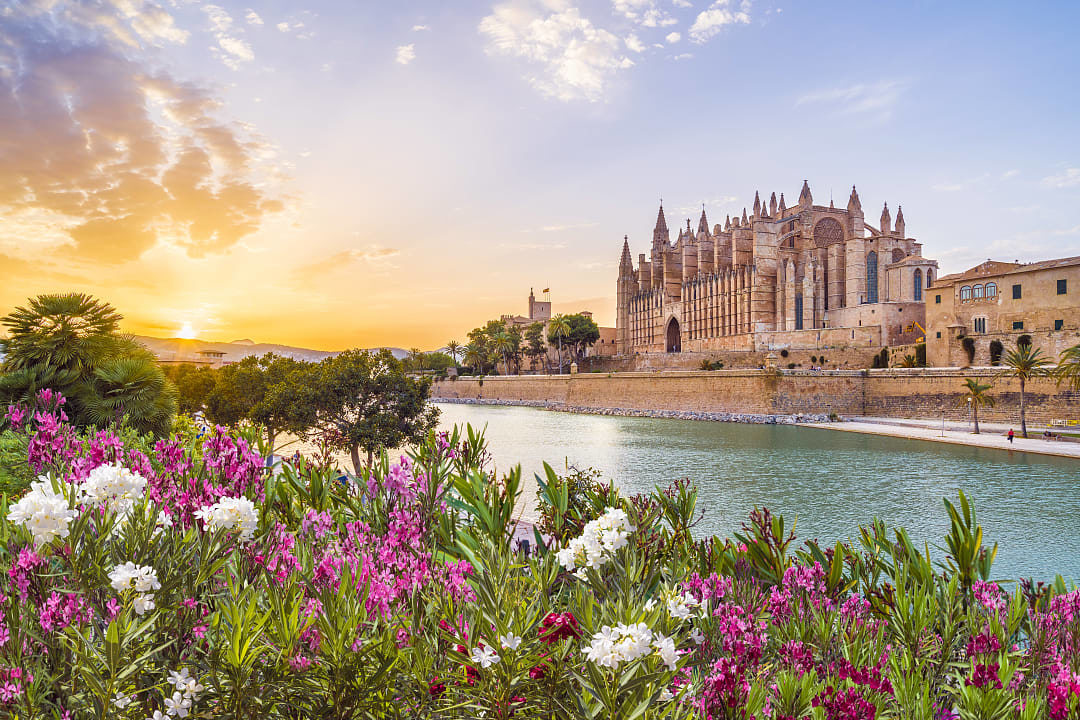
Cathedral La Seu at sunet time in Palma on Mallorca island, Spain
Cathedral La Seu on Mallorca island, Spain

Combining a few of these destinations calls for pacing, season-specific planning, and transit that connects easily rather than eating into your days. That is the value of Zicasso's verified local ecosystem: handpicked guides, vetted boutique stays, and chauffeured transfers built around how each region works, not a template applied across the country.

Every trip built through Zicasso is backed by the Zicasso Guardian Promise, covering financial security and 24/7 on-trip support, and matched through Zicasso Match Assurance, which connects travelers with Spain specialists rather than a general booking pool. Explore our Spain tours and vacations for sample itineraries or start with our Spain travel guide for planning details before your trip.

30,000+ Verified Traveler Reviews