Top 6 Reasons to Visit Spain on Vacation

City view and Toledo Alcazar, Toledo, Spain

Toledo, Spain

The top reasons to visit Spain on vacation start with a fact many first-time travelers miss: Spain doesn’t feel like one country. It reveals itself as several, each with its own language, table, and pace of daily life. A traveler who understands this from the outset gets a different trip than one who treats Spain as a single destination.

The shift happens in a single day: morning light on the horseshoe arches of the Alhambra, the scent of orange blossom drifting through Granada's Albaicín, and by evening, a glass of Albariño on a Galician quay 800 miles north, where the light, the language, and the food have changed. Spain holds both of these places, and dozens more between them, inside one itinerary.

Extraordinary travel begins with the human touch, and a Zicasso specialist designs each of the six reasons below into a single trip built around your particular interests, sequencing regions, reservations, and border crossings so your only task is noticing the differences as they arrive.

1. Two Distinct Cultural Identities Worth Experiencing Separately

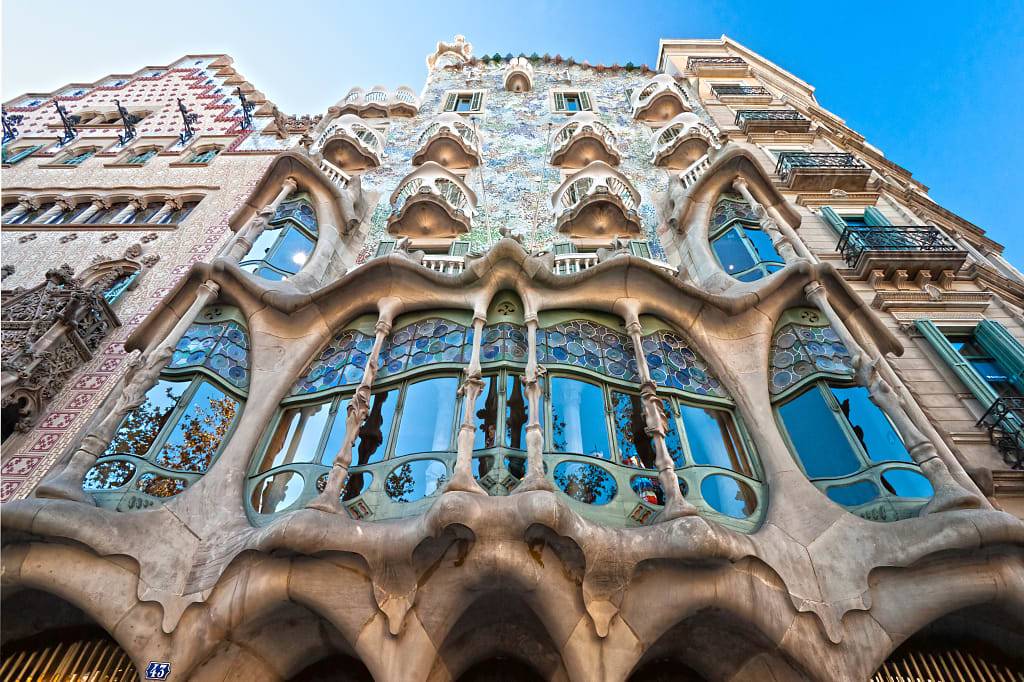
Casa Batlló by Gaudi in Barcelona, Spain

Spain rewards travelers who resist collapsing it into a single image. The country holds a set of distinct regions, each carrying its own history, language, and table, and a north-south comparison remains a useful starting point for a first visit, even though the fuller picture holds far more texture than two halves.

Where Islamic Andalusia Still Stands

Southern Spain carries the visible imprint of centuries of Islamic and Andalusian rule. Granada's Alhambra, Generalife gardens, and Albaicín quarter form one of the most complete medieval quarters in Europe, a UNESCO World Heritage complex where horseshoe arches, carved stucco, and reflecting pools stand largely as they were built. Water still moves through the Generalife's channels the way it did centuries ago, filling the gardens with a constant, quiet sound that shaped how these palaces were designed to feel cool through the hottest months of the year. Flamenco, tapas culture, and whitewashed hill towns extend that same Andalusian character across Seville, Córdoba, and the Costa del Sol, each city adding its own layer to a heritage that reaches back through medieval Muslim rule and the cultural exchange it left behind.

A Different Pace in the North

Northern Spain moves at a slower pace entirely, though slower does not mean quieter. San Sebastián's pintxos bars fill with conversation and clinking glasses along La Concha Bay, giving way inland to La Rioja's vineyards, where the air smells of crushed grapes during harvest. Galicia's Atlantic coastline carries its own identity, tied to Santiago de Compostela and centuries of pilgrimage, while Bilbao's titanium-clad Guggenheim Museum reflects the sky differently depending on the hour. Barcelona, technically northeastern rather than northern coastal Spain, adds another layer through Catalan language, identity, and the architecture that grew from it.

A Traveler's Perspective

  • Entry to the Alhambra timed around its limited nightly visitor slots, arranged well ahead of the general release
  • A pintxos crawl through San Sebastián's old town led by your guide, who knows which counters sell out by 8pm
  • A Rioja estate visit timed to harvest, arranged directly with the family rather than through the tasting room
  • Flamenco in an intimate Jerez bodega, not a tourist-circuit stage show
  • A walk through the Albaicín at dusk, when the call to prayer's historical echo and the scent of jasmine from private courtyards define the neighborhood's character

Two regions, two rhythms of daily life, and a single trip that can hold both. Let your Zicasso specialist build the sequence that lets each side of Spain feel like its own discovery.

Learn more: Northern Spain Tours and Vacations or Tours and Vacations of Southern Spain
2. Frictionless Multi-Country Travel for a Broader Narrative

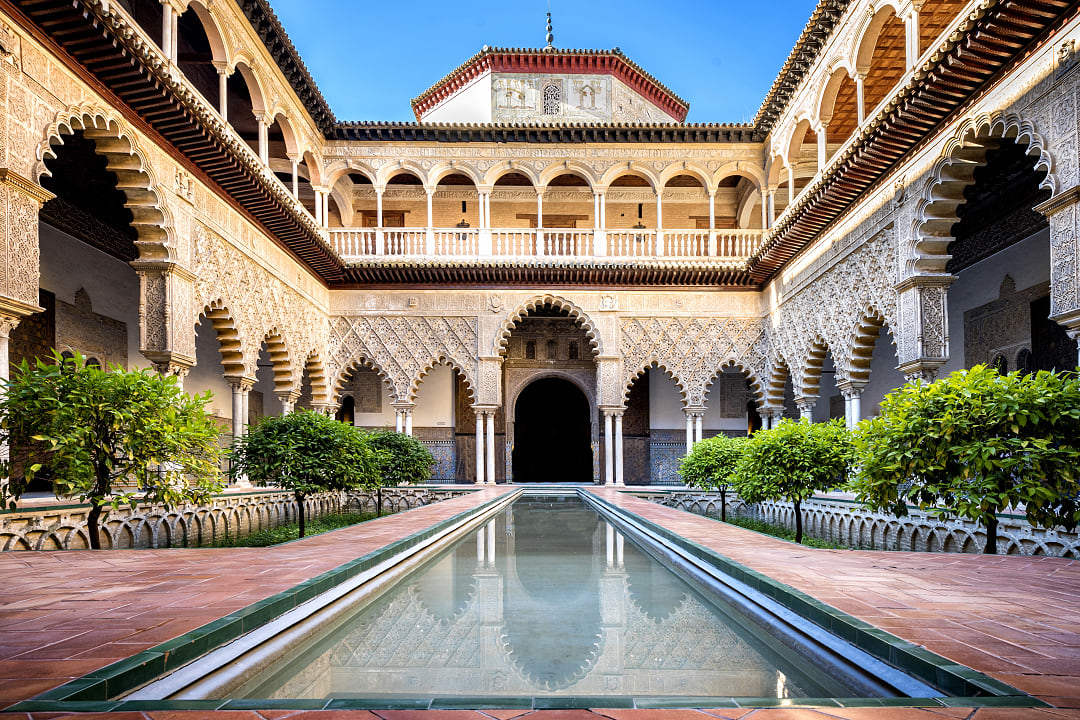
Royal Alcázar of Seville

Time is your most precious asset on a trip like this, and expert routing turns what could be an exhausting border-hopping itinerary into a single, continuous narrative across the Iberian Peninsula and into North Africa. Spain sits at the center of three distinct travel stories, and the right routing removes the friction of self-planned transfers, visa questions, and mistimed connections, the kind of logistics that otherwise eat into days that should belong to the places themselves.

Iberia as One Continuous Story

Portugal shares the Iberian Peninsula with Spain, close enough that Seville's Moorish courtyards and Lisbon's hillside neighborhoods can both fit into a single week. The transition feels less like crossing a border and more like turning a page: the language shifts, the light along the Atlantic softens, and Lisbon's centuries of maritime history replace Andalusia's centuries of Islamic architecture as the backdrop.

The Pyrenees as a Bridge, Not a Barrier

To the north, the Pyrenees connect rather than divide. A traveler can move between San Sebastián and the French Basque coast, tasting variations on the same pintxos culture on either side of an invisible line, or travel from Barcelona through mountain passes toward Toulouse.

Crossing Into North Africa

The Strait of Gibraltar has carried people and ideas between Iberia and North Africa for centuries, and that history gives a Spain-and-Morocco itinerary a narrative depth a typical two-country trip lacks. The legacy of medieval Muslim rule in Iberia connects directly to the living culture found across the Strait today, and a well-sequenced itinerary lets a traveler feel that connection instead of reading about it on a placard.

A Traveler's Perspective

  • Frictionless transitions: Wake up inside Seville's Moorish history and arrive in Lisbon's hillside neighborhoods by afternoon, the transfer itself arranged so you never think about it
  • Basque Country without a border: Move between San Sebastián and the French Basque coast on a route that treats the mountains as connective tissue instead of an obstacle
  • Cross-continental curation: Cross the Strait of Gibraltar from Andalusia into Morocco with the historical throughline explained before you land, not pieced together after
  • A single specialist coordinating every transfer, so a three-country trip reads as one story instead of three separate vacations stitched together
  • A food-and-wine thread that runs from Andalusian olive groves through Portuguese vineyards, tasted in sequence rather than isolation

Three countries, one continuous story, and not a single transfer left to chance. Ask your Zicasso specialist to map the version of this journey that matches exactly how much time you have.

Learn more: Spain and Portugal Tours or Spain and Morocco Tours

3. A Rare Balance of Privacy and Abundance on the Islands

Cala Mitjaneta Beach in Menorca, Spain

The Balearic Islands offer something hard to find in Mediterranean travel now: real privacy alongside the caliber of experience a discerning traveler expects. Mallorca, Menorca, Ibiza, and Formentera each hold a distinct character, and none of them requires competing for space with the crowds that now define islands like Mykonos or Capri at their peak.

What Privacy Means

The value has little to do with price. What that relative quiet buys is a chartered catamaran gliding into a cove with no other boat in sight, salt air and the specific blue of water over white sand that photographs never quite capture, a table held at a chef's counter that seats eight, a stretch of coastline where the only sound is water against the hull. Timing still matters. Summer brings real crowds to the marquee resort towns and Ibiza's event season specifically, so late spring or early autumn tends to deliver the fuller version of what these islands offer, warm enough for the water, quiet enough for the coves to feel like your own.

Four Islands, Four Moods

Mallorca pairs mountain villages with beaches and full-service luxury resorts, a balance few Mediterranean islands manage this well. Menorca moves slower still, its coves and coastal paths built for walking rather than performing. Ibiza's rural interior and vineyards sit only a short drive from its nightlife reputation, a different island entirely once the sun sets on the beach clubs. Formentera holds the clearest water of the four, small enough that a relaxed beach day never turns into a long transfer.

A Traveler's Perspective

  • A chartered sailing route to coves accessible only by water, planned around wind and light instead of a fixed excursion schedule
  • Boutique properties on Menorca where the staff-to-guest ratio makes every request feel anticipated
  • A market-to-table lunch built around whatever the day's Formentera catch happens to be
  • Access to Ibiza's rural interior and vineyards, arranged with a specialist who knows the island beyond its clubs
  • A sunset sail off Mallorca's western coast, timed to the exact hour the cliffs turn gold

This is the version of the Mediterranean most travelers assume no longer exists. Let your Zicasso specialist show you it still does, on the right island, at the right time of year.

Learn more: Luxury Spain Tours and Vacations or Mediterranean Vacation Packages and Tours

4. Spanish Food and Wine Run Deeper Than Tapas and Paella

Pintxos bar in San Sebastian, Basque Country, Spain

Spain holds the world's largest vineyard area and ranks among its leading wine producers by volume, generally third behind Italy and France, a distinction worth getting right given how often it's misstated. That scale delivers regional range: Albariño from Galicia's Atlantic coast, Cava from Catalonia, and the structured reds of Rioja and Ribera del Duero all taste like their specific corner of the country, not a single national style.

Beyond the Introduction

Tapas and paella are real, and they matter, but they function as an introduction rather than the destination. Galicia serves pulpo a feira, octopus dressed sparingly enough that the ingredient itself has to carry the dish, the paprika dusted on at the last second so it doesn't dull on contact with the warm plate. La Rioja has patatas a la riojana, a chorizo-laced potato stew built for mountain evenings when the temperature drops fast after sunset. Andalusia serves gazpacho cold enough to feel like relief from the summer heat, while nearby Córdoba prefers its thicker cousin, salmorejo, topped with jamón and hard-boiled egg. Andalusia and Extremadura together produce jamón ibérico worth planning a meal around on its own, the marbled fat dissolving on contact rather than requiring much chewing at all.

San Sebastián's Concentration of Excellence

San Sebastián alone holds one of the highest concentrations of Michelin-starred kitchens per capita anywhere in the world, a fact that turns a single weekend in the city into a genuine culinary education. Pintxos culture runs alongside that fine-dining scene rather than beneath it, small plates built with the same precision as a tasting menu, served standing at a counter with a glass of Txakoli poured tableside.

A Traveler's Perspective

  • A reservation at a counter-only pintxos bar that doesn't take walk-ins, arranged before you land
  • A tasting with the winemaker at a family-run Ribera del Duero estate, arranged directly rather than through the public tasting room
  • A jamón-cutting demonstration with a maestro cortador, followed by the tasting it deserves
  • A Galician seafood lunch timed to the morning's catch instead of a printed menu
  • A Cava house tour in Catalonia's Penedès region, ending in the same cellar where the bottles still age

The cost of the meal is one number. The cost of learning why that specific plate tastes the way it does, from the person who made it, is the part no menu can price. Let your Zicasso specialist build the table that teaches you Spain one region at a time.

Learn more: Food and Wine Tours in Spain

5. Spain's Scenery Echoes Its Architectural Imagination

Drach Caves in Mallorca, Spain

Barcelona's Gaudí landmarks belong to Catalan Modernisme rather than Surrealism proper, but the effect on a first-time visitor is close enough that the distinction rarely matters in the moment. La Sagrada Família's stone forests, Casa Milà's undulating stone facade, and Park Güell's trencadís-tiled terraces all share a visual language with organic form, curves that feel invented rather than built, the way a wave or a shell might have inspired a column.

A City Built From Curves

Casa Batlló extends that same visual language further, its facade shifting color depending on the angle of the afternoon sun. Standing beneath Sagrada Família's towers, the stone seems to grow upward rather than sit still, a building still under construction more than a century after it began.

Where Nature Answers the Architecture

Spain's countryside carries an evocative echo of that same imagination. Mallorca's Drach Caves hold chambers with spires that catch the light the way Sagrada Família's towers do, an underground world that stretches for over a mile beneath the island's surface. Asturias' Lakes of Covadonga curve through green hills with the same unhurried, undulating line as Casa Milà's balconies, the water so still at dawn it holds a near-perfect reflection of the peaks above. Navarra's Bardenas Reales badlands and Málaga's Caminito del Rey walkway offer a starker, more dramatic register, closer to the surreal than Gaudí's own work is technically, with eroded rock formations rising like something built rather than worn away by centuries of wind. Ronda's El Tajo gorge splits the city almost in two, a drop of nearly 400 feet that turns a simple bridge crossing into a genuine moment of vertigo.

A Traveler's Perspective

  • An evening visit to Park Güell timed after the day-trip crowds clear, booked through advance timed entry
  • A guided route through the Drach Caves timed for its underground concert, rarely mentioned to travelers booking independently
  • A walk along Caminito del Rey's cliffside boardwalk with your guide, who explains its century-old history as a workers' access route alongside its current thrill
  • A slow drive through the Bardenas Reales at golden hour, when the badlands' colors shift by the minute
  • A sunset crossing of Ronda's Puente Nuevo, timed for the exact moment the gorge below falls into shadow first

Architecture this alive deserves more than a photograph through a bus window. Let your Zicasso specialist build the days that let you stand still in front of it.

Learn more: Barcelona Itineraries and Vacation Packages or Spain Vacation Ideas

6. Football as a Window Into Spanish Daily Life

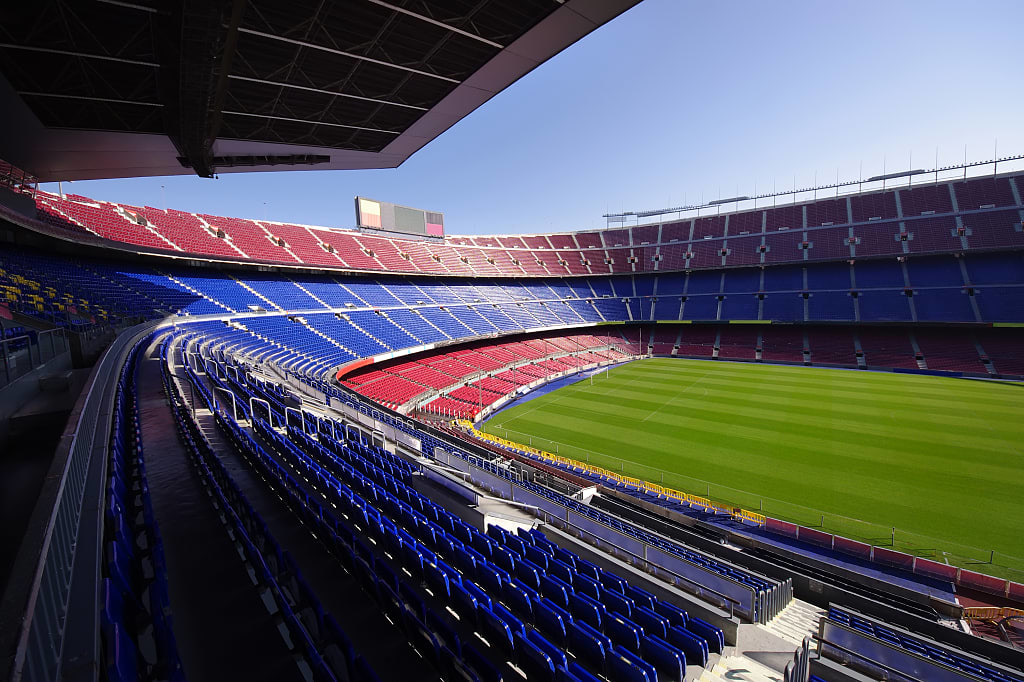
Camo Nou stadium, home to FC Barcelona

Fútbol in Spain extends well past the stadium. Matchday reshapes entire neighborhoods, filling cafes and corner bars with unscripted energy no ticketed experience can fully replicate, and Spain's own tourism authority frames the sport as a travel experience in its own right, not a niche interest reserved for die-hard fans. Millions of fans follow their teams with a devotion that shapes daily conversation, corner-store banter, and the specific volume of a city on a Sunday afternoon.

Beyond the 90 Minutes

The access goes deeper than a seat in the stands. Major clubs run their own stadium tours through trophy rooms, press areas, and tunnel access to the pitch itself, and the character of that experience shifts noticeably by city. Real Madrid's Santiago Bernabéu carries an institutional grandeur befitting one of football's most decorated clubs, trophy cases lined with silver that took decades to fill. Athletic Club's San Mamés in Bilbao channels a fiercer, more regional pride, tied closely to Basque identity in a way few other clubs match. FC Barcelona's museum and stadium experience adds Catalonia's own layer of civic identity to the sport, the club's history inseparable from the city's broader story.

The Neighborhood Bar Version

A stadium seat is one way to experience Spanish football. A neighborhood bar during a rivalry match is another, and often the more honest one. Strangers become temporary allies over a shared team, the noise rising and falling with every near miss, and a traveler seated among locals rather than tourists gets something a ticket alone cannot buy.

A Traveler's Perspective

  • Match-day tickets secured through channels beyond general public sale, when fixtures allow
  • A stadium tour through the club's own trophy room and tunnel access, scheduled during its quieter hours
  • An evening in a local bar during a rivalry match, seated among supporters instead of tourists
  • A Bilbao itinerary that pairs Athletic Club's culture with the Guggenheim, two very different sides of the same city's pride
  • A Madrid weekend built around a Bernabéu match and a walking tour of the neighborhoods that come alive before kickoff

Ninety minutes of football can teach a traveler more about a city's character than a week of sightseeing. Let your Zicasso specialist build the fixture, the seat, and the evening around it into your Spain itinerary.

Learn more: Barcelona and Madrid Vacation Packages and Tours

Experience the Top Reasons to Visit Spain

Alhambra in Granada, Spain

The Alhambra's Islamic heritage, Barcelona's Modernisme, a chartered cove on Menorca, and a match-day bar in Bilbao can all belong to the same trip, sequenced so each one gets the time it deserves instead of competing for a rushed afternoon. Spain rewards the traveler willing to let it unfold region by region rather than rushing to see everything at once.

Connect with a Zicasso travel specialist to design a Spain journey built around exactly which of these six reasons matters most to you, or explore our Spain Tours & Vacations and Spain Travel Guide for further inspiration before you begin.

30,000+ Verified Traveler Reviews