Top 8 Things to Do in Spain with Family

Mother and daughter at Park Guell in Barcelona, Spain

Park Guell in Barcelona, Spain

The top things to do in Spain with family start with the truth that a generic "family" itinerary rarely survives past the first afternoon. Spain solves that problem better than most countries because its landmarks were not built for a single kind of visitor. A palace with water channels doubles as a cooling break for tired legs. A century-old construction site still fascinates a 10-year-old the same way it fascinates an architecture student.

The experiences we’ve collected span five regions and cover the ground between a toddler's attention span and a teenager's patience for history, from an unfinished Barcelona basilica to a paella pan in Valencia.

Extraordinary travel begins with the human touch and a Zicasso specialist designs every journey around the ages in your family, not an average of them, sequencing any combination of these eight experiences into a single trip built for your children specifically.

1. Step Inside the World of Gaudi in Barcelona

Architectural interior of Gaudi's La Sagrada Familia
La Sagrada Familia in Barcelona, Spain

Construction of the Sagrada Família began in 1882 and five generations of Barcelona families have watched the basilica grow taller within their lifetimes. Architect Francisco de Paula del Villar drew the original plans before Antoni Gaudí took over the project and transformed it into something closer to a stone forest than a conventional church, a building still under construction more than 140 years later.

A Living Construction Site

That ongoing construction is the detail that works for children. A crane moving overhead, scaffolding wrapped around an unfinished spire, and stonemasons still working from Gaudí's models turn the basilica into something closer to a working workshop than a static monument. The basilica's museum explains those working methods directly, showing the plaster models and hanging-chain designs Gaudí used to calculate the building's curves before computers existed to do it for him.

Where to Spend the Day

A guided visit, which the basilica estimates at roughly 50 minutes, gives children architectural context a self-guided walk rarely provides. Families who prefer a calmer start can choose the basilica's quiet hour, offered from 9 to 10 a.m., before the day's crowds arrive. Older children comfortable with heights can add a tower ticket, which pairs naturally with the museum visit. Park Güell is a short ride away and requires a different kind of attention from your family: send children looking for animal shapes hidden in the trencadís-tiled benches, the colorful salamander at the base of the monumental staircase, and the curved terrace bench built long enough to seat an entire extended family at once.

  • A hands-on trencadís workshop near Park Güell, where children cut and place ceramic shards to build a take-home piece of their own
  • A stained-glass watercolor workshop on the basilica grounds, exploring Gaudí's use of light before children paint their own pane
  • A visit to the crypt workshop below the basilica, where Gaudí's original plaster models, some pieced back together after damage like reassembled fossils, are still on display
  • The basilica's free child ticket for under-11s, reserved alongside the adult tickets in advance, since walk-up entry is no longer an option

Let a Zicasso specialist time your Sagrada Família visit around the quiet hour so your family can experience Gaudí's stone forest before the crowds arrive. See our customizable Barcelona’s Best: 7-Day Family Vacation.
2. Witness Montjuïc’s Magic Fountain Spectacle

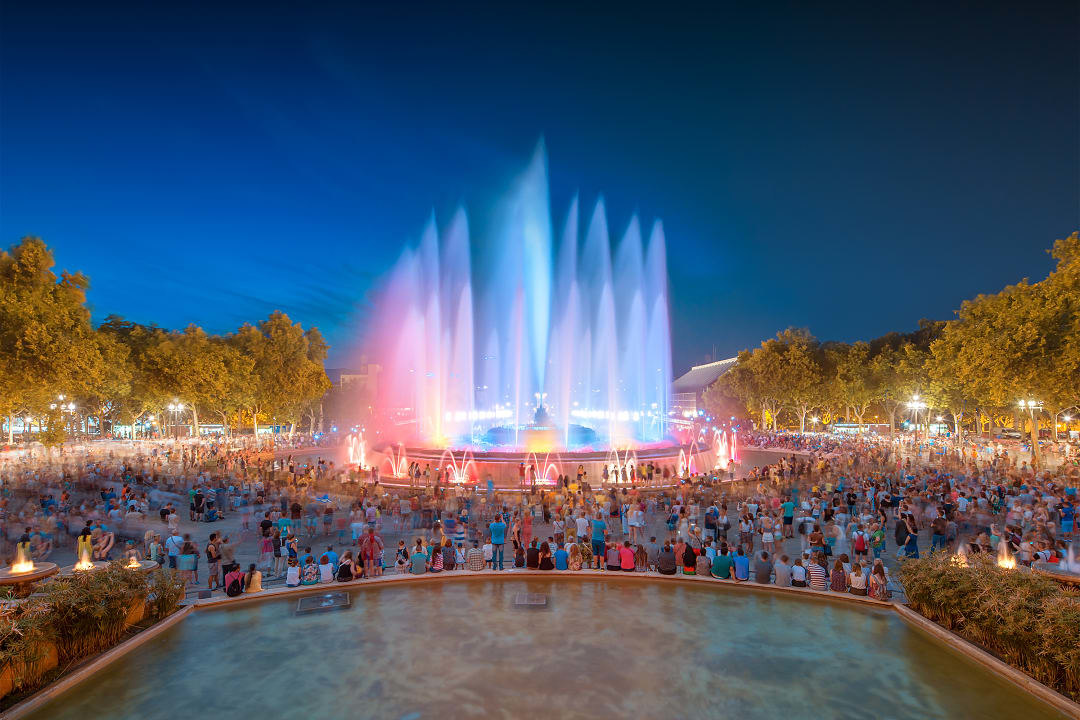
People watching the Magic Fountain at night in Barcelona, Spain
Magic Fountain in Barcelona, Spain

Barcelona built the Magic Fountain in 1929 for the city's International Exposition and designer Carles Buïgas rebuilt its damaged features by hand in 1954 and 1955, after years of neglect during and after the Spanish Civil War. The fountain saw further restoration ahead of the 1992 Olympic Games and reopened fully renovated in 1998. Since 2010, it has run on groundwater, a practical detail tied to Barcelona's broader water-management strategy.

An Evening Without a Museum Pass

None of that history requires a ticket or a reservation. The fountain sits at Plaça de Carles Buïgas, at the base of Avinguda de la Reina Maria Cristina, with the grand Palau Nacional lit up behind it as a backdrop the choreography was designed around. Water rises and falls in time with colored light and recorded music, a show built for an audience standing on an open plaza instead of seated in rows. This means children can move, react, and lose interest for a few minutes without disrupting anyone around them.

Planning the Evening

Check the official show calendar before building an evening around it, since performances shift by season. Arrive early for a clear sightline on busy weekend nights and bring a light jacket, since the open plaza cools after sunset. Treating the fountain as the closing act of a Montjuïc afternoon, after the surrounding gardens and museums, gives younger children a low-pressure finish to a day that may have included more formal sightseeing earlier.

  • An evening built around Poble Espanyol's 117 full-scale buildings, where children can watch glassblowers, potters, and leatherworkers at open studios before the fountain show
  • The Montjuïc funicular paired with the cable car ride, ending at the ramparts of the 17th-century Montjuïc Castle
  • A weekend puppet show or hands-on arts session inside Poble Espanyol's dedicated children's space
  • A picnic in the gardens above the fountain, timed for before the crowds for a clear sightline once the show starts

Ask your Zicasso specialist to build your Montjuïc afternoon around the evening's confirmed showtime, so the fountain becomes the natural close to your family's day. Ask our experts to customize the Family Getaway to Barcelona to your preferences.

3. Experience Andalucia’s History and Flamenco

Alhambra in Granada, Spain

The Alhambra rose under Nasrid rulers during the final centuries of Muslim rule in southern Spain, and the complex still holds palaces, defensive towers, gardens, and water systems inside the same walls. Granada's connection to flamenco runs deeper than performance venues alone: composer Ángel Barrios organized the city's 1923 Festival of Arts as a direct Spanish answer to the Ballets Russes, cementing flamenco's place in Granada's broader artistic identity.

A Palace Built Around Water

The Generalife gardens turn history into tactile and tangible elements a child can feel. Channels, fountains, and reflecting pools run throughout the grounds, part of the same water system that once cooled the palace through Granada's hot summers. Tracing that water from source to fountain works as an exciting activity instead of a forced one. The Court of the Lions, centered on its marble fountain and ring of slender columns, remains the Nasrid Palaces' most recognizable space, while the Alcazaba's defensive towers offer wide views across the city for families who want a break from close architectural detail.

Beyond the Alhambra

The Alhambra and Generalife Trust connects the complex to Granada's wider Hispano-Muslim heritage through the Dobla de Oro cultural route, which links the palace to the Albaicín's Bañuelo Arabic Baths, the Dar al-Horra Palace, and other sites most visitors never reach. Reserve Nasrid Palace tickets well in advance, since timed entry sells out, and choose a flamenco performance with an earlier start or a shorter format for younger children who won't sit through a late-night show.

  • A two-hour Hispano-Muslim craft workshop with a working artisan in central Granada, making an original tiled panel, a gold-leaf plaster piece, or a taracea marquetry chessboard
  • Flamenco inside a Sacromonte cave run by a local family, many of whom arrange hotel pickup as part of the evening
  • A stop at Carmen de los Mártires, a quiet garden estate near the Alhambra with peacocks and reflecting pools, as a break between palace rooms
  • Nasrid Palace tickets reserved three months ahead in high season, since same-week entry regularly sells out

Have your Zicasso specialist secure your Nasrid Palace timing when you embark on our 8-Day Andalusia Culture Tour. Pair the palace it with a flamenco evening scaled to your children's ages, so Granada's history reaches every member of the family.

4. Bask in Active Adventure on the Basque Coast

Father and daughter walking with surfboards on the beach in Spain
Zarautz, Spain

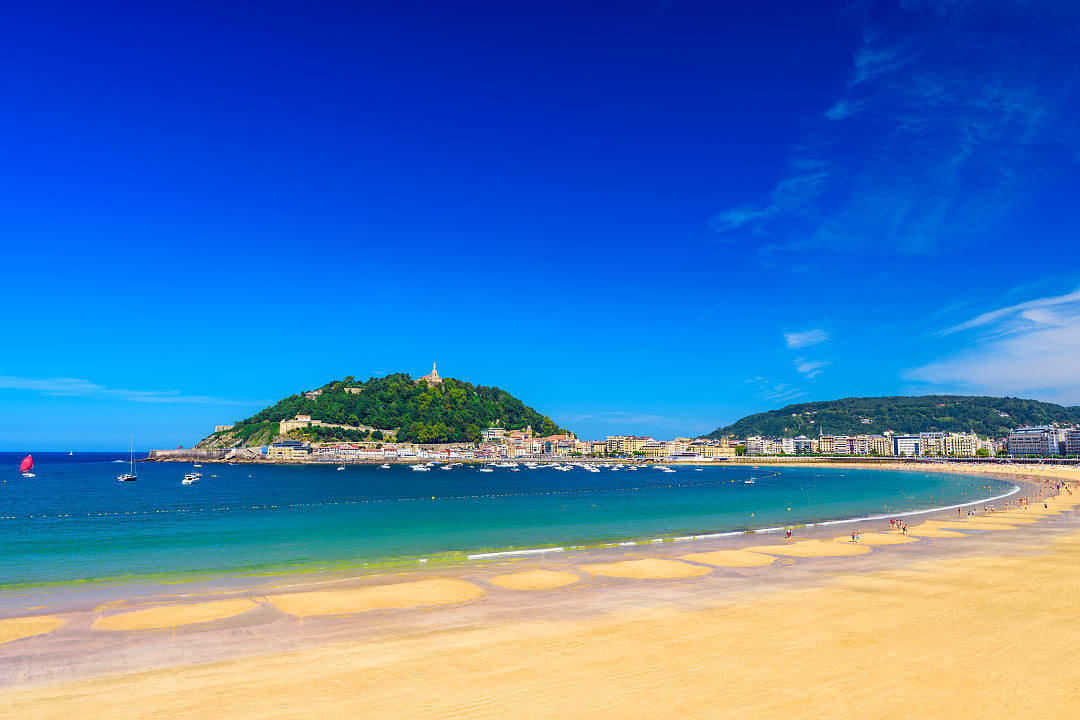
The Basque Country ranks among Europe's principal surfing destinations, a reputation built over generations by coastal communities whose maritime traditions run through fishing, seafaring, and reading Atlantic weather. San Sebastián's La Concha Beach sits inside that same tradition, an urban shoreline framed by hills and historic neighborhoods rather than isolated resorts.

A Sculpture Built for the Sea

Eduardo Chillida's Peine del Viento anchors three steel sculptures directly into the rocks at the edge of the Atlantic, a protected heritage work the city of San Sebastián maintains as part of its cultural fabric. The piece changes with the sea: on a calm day, the steel forms sit quietly above the water and on an active day, the waves crash directly beneath them, turning wind and sound into as much of the artwork as the metal.

Where Beginners Belong

Bakio Beach offers regular, beginner-suited waves and distinct surf zones, making it a stronger first-lesson choice than San Sebastián's busier stretches. Official active-tourism providers run lessons across age groups and a family that doesn't want to surf can still watch from the sand, since the coast draws attention for its surf culture as much as the sport itself. Monte Urgull, the hill above San Sebastián's old town, makes a manageable family hike when taken slowly, with harbor and bay views as the reward.

  • A children's cooking course, ages eight to 14, at a Basque cooking school founded by a local family in 1989, learning knife work and pintxos technique alongside the class
  • A market-to-txoko cooking morning, shopping for the day's ingredients before cooking together inside a Basque gastronomic society kitchen
  • A walk to Peine del Viento on an active sea day, kept at a safe distance from the rocks
  • A beginner surf lesson at Bakio Beach, chosen for its regular, learner-friendly waves

Let your Zicasso specialist match your family to the right beach for your children's surfing experience, from Bakio's gentle break to San Sebastián's livelier stretches. See our best Northern Spain tours and vacations for more ideas.

5. Explore Capital City Highlights in Bustling Madrid

Family boating on the lake at  Retiro Park in Madrid
Retiro Park in Madrid, Spain

Madrid grew from a royal seat into Spain's modern capital and that history still shapes its boulevards, palace precincts, and museum district. The Prado opened in 1819 around a royal painting collection that became one of the world's defining art institutions, while Retiro Park evolved from private royal grounds into the city's best-known public green space.

A Museum Built for a Focused Visit

Families rarely need the Prado's full collection in a single afternoon. A short, focused plan built around two or three specific masterpieces works better than an exhaustive pass through every gallery. Children can help choose the target works in advance through the museum's virtual visit, which previews 89 digitized pieces and full panoramic galleries before you ever set foot inside. The museum's collection of drawings, prints, and photographs, often overshadowed by its paintings, offers a quieter, less crowded alternative gallery worth a detour.

A City Built Around a River and a Neighborhood

Madrid Río transformed the Manzanares riverfront into a public recreation corridor after the city buried a major highway beneath it, creating open space for cycling, scootering, and picnics between more structured sightseeing. La Latina, one of the city's oldest neighborhoods, still follows a street pattern shaped by medieval and early modern Madrid, now filled with tapas bars suited to a shared, informal family meal. The Teleférico cable car offers a fascinating vantage point entirely, carrying riders over Casa de Campo for skyline views that reframe the whole city.

  • A churros-making class built around a recipe passed down through a Madrid family, mixing, shaping, and frying the dough by hand
  • A stop at Chocolatería San Ginés, serving the same recipe since 1894, timed for a quieter mid-morning visit
  • A rowboat rental on Retiro's lake, paired with a weekend puppet show at the park's own Teatro de Títeres
  • A market visit to Antón Martín with a chef before a family paella class, letting children choose ingredients themselves

Ask your Zicasso specialist to build your Madrid days around the Prado's quieter galleries and Madrid Río's open space, so a single city trip holds culture and room to run. They can tailor our Spain Family Vacation Tour: Madrid and Barcelona to your preferences.

6. Spend Time in the Sun on Family-Friendly Beaches

La Concha Beach in San Sebastian

Spain's coastline changes character entirely depending on which sea you're standing beside. The Costa Brava's sheltered coves sit in calmer Mediterranean water, Galicia's Atlantic shoreline carries stronger tides and dramatic rock formations, and the Balearic coastline, around Mallorca, has built its reputation on calm, resort-ready beaches suited to families with younger children.

Reading the Water Before You Choose

Playa de las Catedrales in Galicia is the clearest example of why timing matters more than reputation. Its famous rock arches, carved by the sea over centuries, are only fully visible and accessible during specific tide windows, and a family arriving at the wrong hour presents a very different beach than the one in the photographs. Checking tide times and safety flags matters here more than almost anywhere else on the Spanish coast.

Matching the Beach to the Age Group

Sheltered coves and calm bays suit younger swimmers better than the more exposed Atlantic stretches near the Bay of Biscay, though that same Basque coastline rewards older children with surf culture and cooler summer temperatures. Mallorca's coves pair calm water with accessible resort infrastructure, useful for a family that wants beach time without complicated logistics. A short kayak trip or snorkeling session added to any beach day tends to hold a restless 10-year-old's attention longer than sand alone.

  • A glass-bottom kayak tour through Menorca's Addaia Bay, paddling calm, sheltered water while watching the seabed pass directly underneath
  • Las Canteras Beach in Gran Canaria, which turns into a natural swimming pool at low tide, calm enough for snorkeling within a few feet of shore
  • A tide-timed visit to Playa de las Catedrales, checked against the day's safe access window before setting out
  • A short kayak or snorkeling add-on to any Mediterranean cove, extending a restless child's interest past sandcastles

Have your Zicasso specialist check tide timing before any Galicia beach day, so your family sees Playa de las Catedrales exactly when it looks like its photographs. For more inspiration, take a look at Zicasso’s sample Catalonian Coast Itinerary: Barcelona and Costa Brava.

7. Watch a LaLiga Fútbol Match

Fútbol match at Camp Nou in Barcelona, Spain
Camp Nou in Barcelona, Spain

Professional football sits close to the center of Spanish public life, run through LaLiga's two men's competitions, LALIGA EA SPORTS and LALIGA HYPERMOTION, under the Liga de Fútbol Profesional. Clubs like Atlético de Madrid, founded in 1903, carry more than a century of local identity into every home match, a history visible in the neighborhoods that surround their stadiums as much as inside them.

Four Stadiums, Four Personalities

Real Madrid's Santiago Bernabéu carries the weight of one of football's most decorated clubs, with trophy cases shaped by decades of continuous success. Atlético de Madrid's Metropolitano offers a newer, more modern stadium experience nearby. Valencia CF's Mestalla is still one of the country's enduring football landmarks, holding onto an older stadium character now rare in top-tier football. FC Barcelona's Camp Nou is currently mid-redevelopment, so families planning around it should confirm current access before booking.

Making the Match Work for Younger Fans

Daytime fixtures and earlier kickoff times suit younger children better than late-evening matches, and checking LaLiga's official calendar before booking transportation or hotels helps avoid scheduling surprises from fixture changes. A stadium tour or fan museum works as a strong substitute when a match doesn't fit the itinerary, and smaller clubs or LALIGA HYPERMOTION fixtures often deliver a more intimate atmosphere with easier ticket access than a marquee Madrid or Barcelona game.

  • A trophy-room-and-tunnel stadium tour, roughly two hours and covering nearly three miles of walking, with pitch and changing-room access depending on how close the visit falls to a match date
  • A smaller club or LALIGA HYPERMOTION fixture for an easier-access, more intimate matchday
  • A daytime or early-kickoff match, checked against the official LaLiga calendar before booking transport
  • A tapas bar viewing option for families who want the atmosphere without a late stadium crowd

Let your Zicasso specialist confirm your match date against LaLiga's official calendar before locking in hotels, so a schedule change never catches your family off guard. Our Best of Barcelona and Madrid Vacation has more information to inspire your soccer-focused trip.

8. Cook Traditional Spanish Paella in Valencia

Spanish Paella
Spanish Paella

Paella began in the wetlands of l'Albufera, south of Valencia, in the 16th century, made by rural workers from whatever was at hand: rice, rabbit, beans, and vegetables from the Valencian orchard. The word comes from Valencian and means "pan," a reminder that the dish takes its identity from how it's cooked as much as what goes into it.

A Dish Built on One Wide Pan

That wide, shallow pan is the point. Round Valencian rice spreads thin across its surface, absorbing broth evenly while the base caramelizes into socarrat, the crisped layer prized above the rest of the dish. Paella Valenciana is still the most traditional version, built from chicken, rabbit, ferradura green beans, garrofó beans, tomato, olive oil, saffron, paprika, and rosemary, a combination that reads less like a restaurant menu and more like a list of what an Albufera farmhouse grew.

Cooking It Yourself

A hands-on workshop lets children select, measure, and prepare ingredients. They participate instead of watching a chef work alone, and pairing the class with a market visit beforehand turns grocery shopping into part of the lesson. Some Valencia workshops, including sessions based around Ruzafa's markets, offer Valencian, seafood, and vegetable versions side by side, useful for families balancing a variety of appetites or dietary needs. Ask the chef running the class to explain socarrat directly, since understanding why the bottom layer matters changes how a child eats the whole dish afterward.

  • A wood-fired paella class with a competition-winning paella maestro at a rice farm on the Albufera, followed by a boat ride through the lagoon
  • An Albuferenc boat ride through the wetlands, spotting some of the 350 bird species that pass through, flamingos included in season
  • A visit to a preserved barraca, the traditional reed-roofed Valencian farmhouse, at a working rice estate
  • A market-to-kitchen morning at Mercado Central, choosing ingredients with a chef before the class begins

Ask your Zicasso specialist to pair your Valencia cooking class with a morning at l'Albufera, so your family tastes paella after seeing exactly where its story began. See our Spain food and wine tours for more details.

Experience the Top Things to Do in Spain with Family

Family on the beach in the Canary Islands, Spain

Gaudí's unfinished basilica, a flamenco evening in Granada, a surf lesson on the Basque coast, and a paella pan in Valencia can all belong to the same itinerary, sequenced so a six-year-old and a 16-year-old can find elements built for them. None of these experiences requires choosing one age group's interests over another's.

Connect with a Zicasso travel specialist to build a Spain itinerary around exactly which of these eight experiences fits your family, sequenced by the ages traveling with you. For more information on visiting Spain, see our Spain travel guide.

30,000+ Verified Traveler Reviews